

Ən yaxşı oyuncaq markalarının uğurunu tərsinə çevirmək üçün mübarizə aparırsınız? İstehsal prosesi tam bir sirr olaraq qaldıqda, öz məhsulunuzu planlaşdırmaq çətindir, bu da sizə xərclər və təchizatçılar haqqında təxmin etməyə imkan verir.
Melissa & Doug keyfiyyət və bazar cəlbediciliyi üçün fantastik meyardır. Bununla belə, dizaynerlər üçün əsl dərs onlardadır istehsal strategiyası[^1]. Onların taxta tapmacalarının əksəriyyəti Çində istehsal olunur, bu modeldən həm də qiymət və keyfiyyəti optimallaşdırmaq üçün düzgün birbaşa istehsalçı ilə əməkdaşlıq edərək istifadə edə bilərsiniz.

When I started in the mold industry, I saw firsthand how a great design can either succeed or fail based on its manufacturing plan. You've probably spent hours perfecting a CAD model, but that's only half the battle. The other half is figuring out how to get it made efficiently and to a high standard. You look at a brand like Melissa & Doug and see a finished product on the shelf, but I see a series of production decisions—material selection, tooling, finishing, and supply chain logistics[^2]. Bu qərarları başa düşmək dizaynınızı sərfəli reallığa çevirməyin açarıdır. Gəlin sadə bir taxta tapmacanın arxasındakı prosesi parçalayaq və öz layihələrinizə hansı dərsləri tətbiq edə biləcəyimizi görək.
Melissa & Doug bütün taxta oyuncaqlarını Konnektikutdakı bir müəssisədə istehsal edir.Yalan
Şirkətin baş ofisi Konnektikutda yerləşir və məhsullarını dizayn etsə də, istehsalının böyük əksəriyyəti, xüsusən də taxta oyuncaqlar üçün 2000-ci illərin əvvəllərindən bəri Çindəki fabriklərə verilir.
Keyfiyyətli taxta tapmaca parçalarının hamar, yuvarlaq kənarları tez-tez zımpara adlanan proses vasitəsilə əldə edilir.Doğrudur
After being cut, wooden pieces are placed in a large tumbling machine with abrasive media. This process smooths sharp edges and surfaces efficiently, ensuring the pieces are safe for small children.
Do You Know Where Melissa And Doug Puzzles Are Produced?
You see "Designed in the USA" on the box and wonder what that really means for the supply chain. This lack of clarity makes it hard to map out your own production strategy.
The vast majority of Melissa & Doug's wooden puzzles are manufactured in China. The company handles product design, development, and quality assurance[^3] from its US headquarters, but leverages the established and cost-effective toy manufacturing infrastructure in Asia for large-scale production.

Bir məhsul dizayn edərkən, uğurlu markaların harada və niyə istehsal etdiyini başa düşmək vacibdir. Bu, yalnız ən aşağı qiyməti tapmaq deyil; düzgün imkanları tapmaqdan ibarətdir. CNC ticarət şirkətinin yaradılması təcrübəm mənə öyrətdi ki, "Made In" etiket mürəkkəb bir hekayədən bəhs edir.
Why China for Toy Manufacturing?
Onilliklər ərzində Çin dünyanın oyuncaq emalatxanası olub. Bu, yalnız əmək xərclərinin azaldılması ilə bağlı deyil. Söhbət yetkin bir ekosistemdən gedir. Siz onilliklər təcrübəsi olan fabriklər, ağac və plastik üçün xüsusi maşınlar, materiallar və komponentlər üçün dərin tədarük zənciri və montaj və bitirmə sahəsində bacarıqlı işçi qüvvəsi ilə rastlaşırsınız. Melissa kimi bir şirkət üçün & Doug, bu o deməkdir ki, onlar istehsalı tez və etibarlı şəkildə genişləndirə bilərlər.
"Designed In" vs. "Made In"
This distinction is key for a product designer like you. It means the intellectual property (IP), brand identity, and quality standards are controlled by the home company. They make the blueprints. The factory in China executes them. This model allows a brand to focus on what it does best—creative design and marketing—while a manufacturing partner handles what they do best—production.
What This Means for Your Project
Möhtəşəm xəbər odur ki, bu istehsal gücü nəhəng brendlərə xas deyil. Müstəqil bir dizayner və ya orta ölçülü bir şirkət olaraq, eyni yüksək keyfiyyətli istehsala daxil ola bilərsiniz. Problem düzgün tərəfdaş tapmaq və yoxlamaqdır. Burada bir çox müştəriyə kömək etmişəm. Onları mən etibar etdiyim birbaşa istehsalçılarla birləşdirərək, biz vasitəçiləri kəsdik və şəffaf əlaqələr quraraq dizayn niyyətinizin mükəmməl şəkildə həyata keçirilməsini təmin edirik.
İstehsalın Çinə verilməsi həmişə daha aşağı keyfiyyətli məhsulla nəticələnir.Yalan
Məhsulun keyfiyyəti mənşə ölkəsi ilə deyil, dizayn spesifikasiyası, material seçimi və keyfiyyətə nəzarət prosesləri ilə müəyyən edilir. Ən yaxşı qlobal brendlər, o cümlədən Apple ciddi standartları tətbiq etməklə Çində yüksək keyfiyyətli məhsullar istehsal edir.
China is the world's largest toy exporter, accounting for over 70% of the global toy market.Doğrudur
The country's massive manufacturing infrastructure, experienced labor force, and extensive supply chains have made it the dominant player in toy production for decades.
What Materials Are Jigsaw Puzzles Made From?
Choosing the right material is a critical design decision. A wrong move can lead to a product that feels cheap, fails safety tests, or creates production headaches and drives up costs.
While puzzles can be made from paperboard, plastic, or wood, high-quality children's puzzles favor wood, specifically multi-layer plywood. This choice is driven by wood's durability, perceived value, and safety when finished correctly, making it ideal for the toddler market.
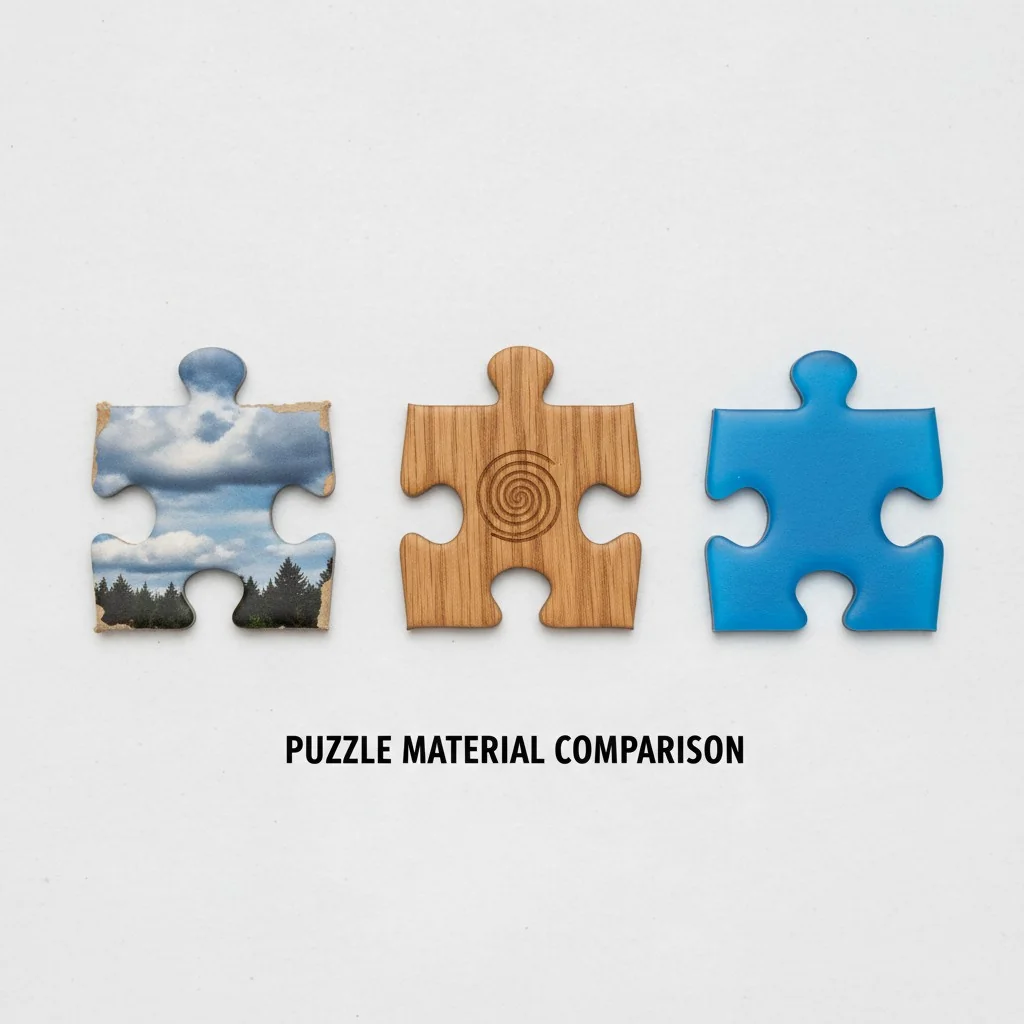
The material you choose defines the user's entire sensory experience with your product. It affects the weight, the sound the pieces make, and the feel in their hands. For a product designer, the material choice also dictates the manufacturing process. A plastic puzzle requires an injection mold, which is my area of expertise, while a wooden one involves CNC marşrutlaşdırma[^4] or laser cutting. Let's look at the options.
A Comparison of Common Puzzle Materials
Understanding the pros and cons of each material helps you align your product with your target market and price point. A puzzle for a 2-year-old has very different requirements than one for a 10-year-old.
| Material | Key Advantages | Key Disadvantages | Üçün ən yaxşısı |
|---|---|---|---|
| Paperboard | Very low cost, excellent for high-detail printing. | Least durable, easily bent or damaged by moisture. | Adult puzzles, promotional items. |
| Wood (Plywood) | Highly durable, premium feel, classic look, safe. | Higher material cost, heavier. | Toddler puzzles, öyrədici oyuncaqlar[^5], heirloom gifts. |
| Plastic (e.g., ABS) | Extremely durable, waterproof, easy to clean. | Requires expensive injection molds, can feel less "natural". | Bath toys, outdoor use, puzzles with unique interlocking shapes. |
For the toddler market that Melissa & Doug targets, wood is the clear winner. Parents perceive it as a safer, more natural, and more educational material. It withstands the rough handling of a toddler, and the weight of the pieces feels substantial and high-quality. Your design should leverage these strengths.
All wooden toys are made from 100% natural, solid wood.Yalan
Many high-quality wooden toys are made from engineered wood like plywood or MDF. These materials are often more stable, less prone to warping, and more cost-effective than solid wood for these applications.
The paints used on children's toys sold in the U.S. must meet federal safety standards outlined in ASTM F963-17.Doğrudur
This standard limits the amount of lead and other heavy metals in surface coatings to ensure toys are non-toxic and safe if a child puts them in their mouth.
Which Plywood Is Best for Making a Children's Puzzle?
You've decided on wood, but "plywood" is a huge category. Choosing the wrong type can ruin the cut quality, compromise safety, and negatively affect the final look and feel of your product.
Baltic Birch plywood[^6] is widely considered the best choice for premium children's toys and puzzles. Its multi-layer, void-free core provides exceptional stability and a clean edge when cut, while its smooth surface is perfect for printing or painting.
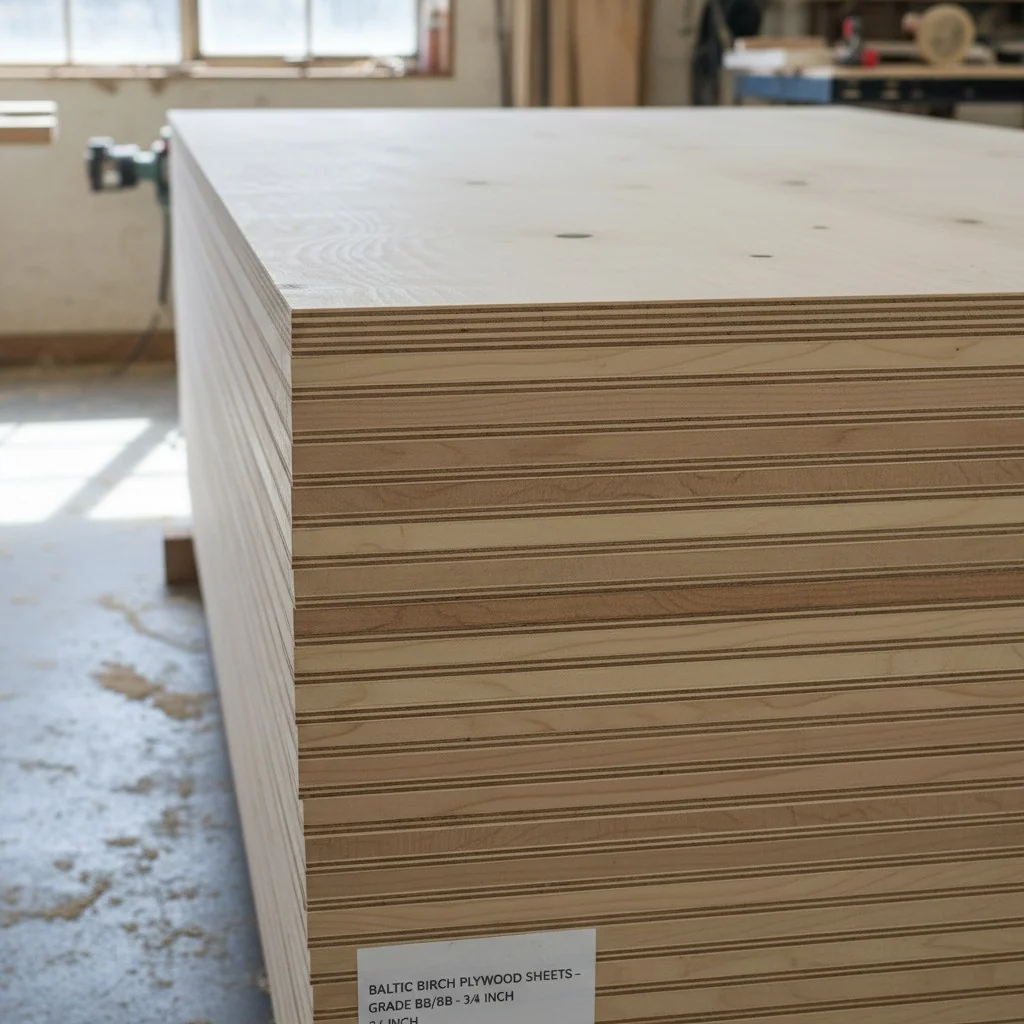
Getting into the specifics of materials is what separates a good designer from a great one. When you send a tech pack to a manufacturer, specifying the exact grade and type of material prevents ambiguity and ensures you get the quality you expect. I've seen projects get derailed because the designer just wrote "wood" on the spec sheet.
Why Baltic Birch Plywood Stands Out
Baltic Birch isn't your standard hardware store plywood. It's an engineered panel made specifically for applications where quality matters.
- Void-Free Core: It's constructed with multiple, equally thick layers of birch veneer, and the manufacturing process ensures there are no gaps or voids inside. This is critical when you are laser cutting or routing small, intricate puzzle pieces. Voids can cause the surface to collapse or create ugly blemishes on the edge.
- Strength and Stability: The cross-banded layers make it incredibly stable. It resists warping and stays flat, which is essential for a puzzle tray and its pieces.
- Clean Edge: When cut, the edge shows clean, attractive layers, which can be left exposed as a design feature.
Plywood Grades Matter
You'll often see grades like "B/BB". This refers to the quality of the face veneers. A "B" grade face is smooth and clear, with no patches, making it ideal for the "show" side of your puzzle. The "BB" grade back allows for small, circular patches. Specifying a grade like B/BB gives you a high-quality appearance without the cost of a perfect B/B grade.
The glue used in all plywood is waterproof and non-toxic.Yalan
Plywood is made with different glues for different purposes. Interior-grade plywood often uses urea-formaldehyde glues, which are not water-resistant. Exterior or marine-grade plywoods use waterproof glues, but material safety data sheets must be checked to ensure they are non-toxic for a toy application.
Laser cutting plywood is a popular manufacturing method for puzzles because it can cut intricate shapes with high precision and seals the wood edge, reducing splintering.Doğrudur
A focused laser beam vaporizes the wood, allowing for very fine details that would be difficult with a traditional saw. The heat from the laser also cauterizes the edge, leading to a smooth, dark, and splinter-free finish.
How Can You Design Puzzles and Their Storage for a Better User Experience?
A great product experience doesn't end when the puzzle is solved. If pieces get lost easily because of poor storage, parents get frustrated, and it reflects badly on your brand's thoughtfulness.
The best puzzle storage is designed as part of the product itself. Features like a wooden tray with raised edges, a durable box, or a purpose-built rack for a set of puzzles add immense practical and perceived value.

As a designer, you're not just creating an object; you're designing an entire user experience. From the moment the customer opens the box to the moment they put it away, every step matters. Thinking about storage from the beginning is a hallmark of great design. It shows you understand your customer's real-world challenges.
Design-Integrated Storage Solutions
Let's move beyond just throwing pieces in a plastic bag.
- The Puzzle Tray: This is the most common solution for toddler puzzles. A simple wooden board with a routed-out recess or raised edges serves three purposes: it's a building surface, it shows a picture of the finished puzzle, and it's the storage container. When designing this, consider the depth of the tray and the finger-scoops for easy piece removal.
- Value-Add Racks and Holders: If you are launching a "Wooden Puzzles Set Of 3," don't just shrink-wrap them together. Design a simple, elegant wooden rack to hold them. This transforms your product from three individual items into a cohesive "system." This rack can be easily manufactured using CNC-cut plywood slots and simple assembly. It's a small addition that dramatically increases the product's gift-ability and perceived value.
- Durable Packaging: Think of the box not just as retail packaging but as a long-term storage component. Use thicker cardstock, consider a magnetic closure, or design an inner tray that organizes the pieces. This costs a little more, but it communicates quality and care.
Adding a storage solution like a rack or case has little impact on a toy's sales.Yalan
Products that solve a problem for parents, such as organization and storage, have a distinct market advantage. This added convenience is a powerful selling point and can justify a higher retail price.
Good packaging design can reduce shipping costs by optimizing dimensional weight.Doğrudur
By designing compact, efficient packaging, you can minimize the volume of the shipping carton, which carriers use to calculate 'dimensional weight.' A smaller, lighter package directly translates to lower logistics costs.
Rəy
Understanding the manufacturing behind a simple wooden puzzle reveals key lessons in material choice, sourcing, and user-centered design. Apply these insights to make your next product a commercial success.
Arayışlar
[^1]: Exploring effective manufacturing strategies can help you optimize costs and quality in your toy design.
[^2]: Understanding supply chain logistics is crucial for efficient toy production and cost management.
[^3]: Quality assurance practices are essential for maintaining high standards in toy production.
[^4]: Understanding CNC routing can enhance your knowledge of precision manufacturing for toys.
[^5]: Explore the characteristics that define educational toys and their impact on child development.
[^6]: Discover the benefits of Baltic Birch plywood for creating high-quality, durable children's toys.
