
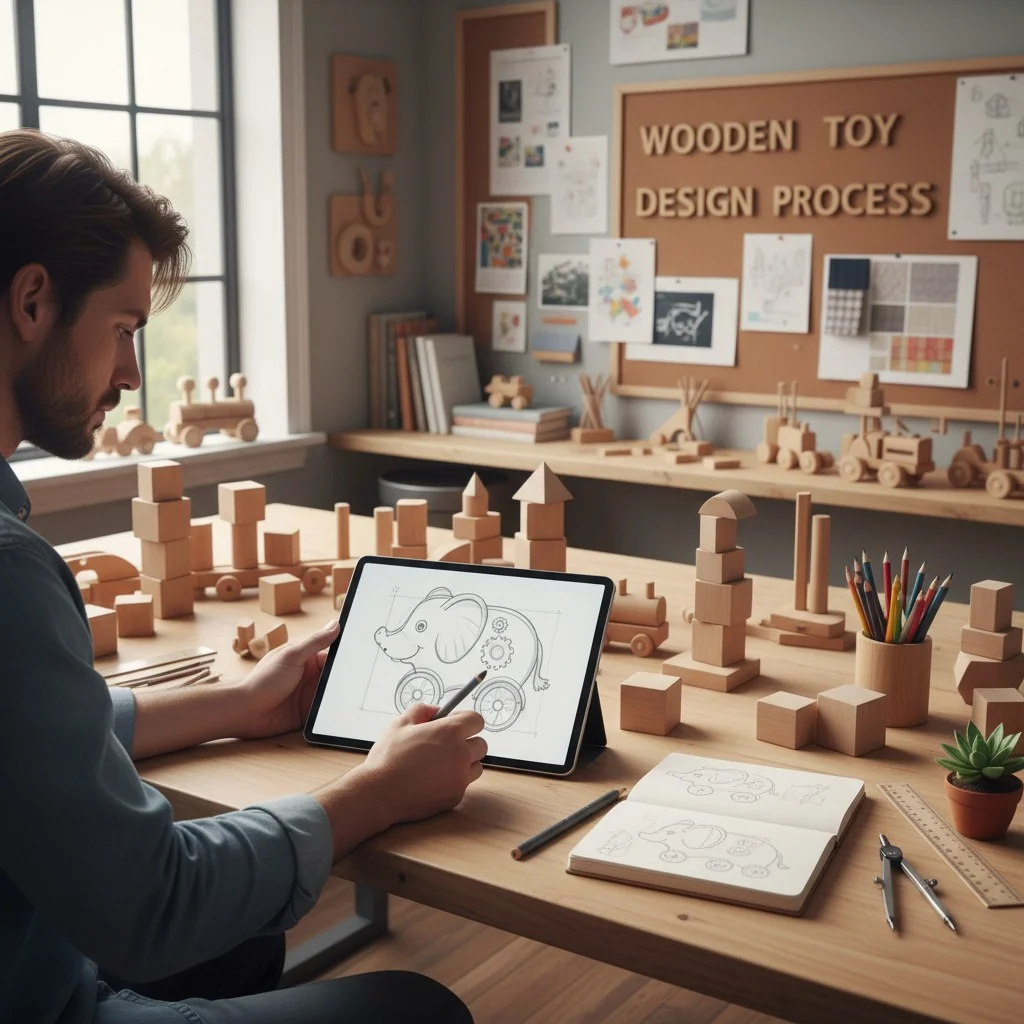
Es ist überwältigend, die Idee eines Holzspielzeugs zum Leben zu erwecken. Die Herstellung im Ausland birgt das Risiko schlechter Qualität und Verzögerungen. Ich zeige Ihnen, wie Sie diesen Prozess erfolgreich meistern.
Der beste Weg, ein Holzspielzeug zu entwickeln, ist die Zusammenarbeit mit einem erfahrener Hersteller[^1]. Sie sollten Sie vom Design und Prototyping über die Materialauswahl, Sicherheitstests bis hin zur endgültigen Lieferung begleiten. Dadurch wird sichergestellt, dass Ihr Spielzeug hochwertig, sicher und kostengünstig ist.
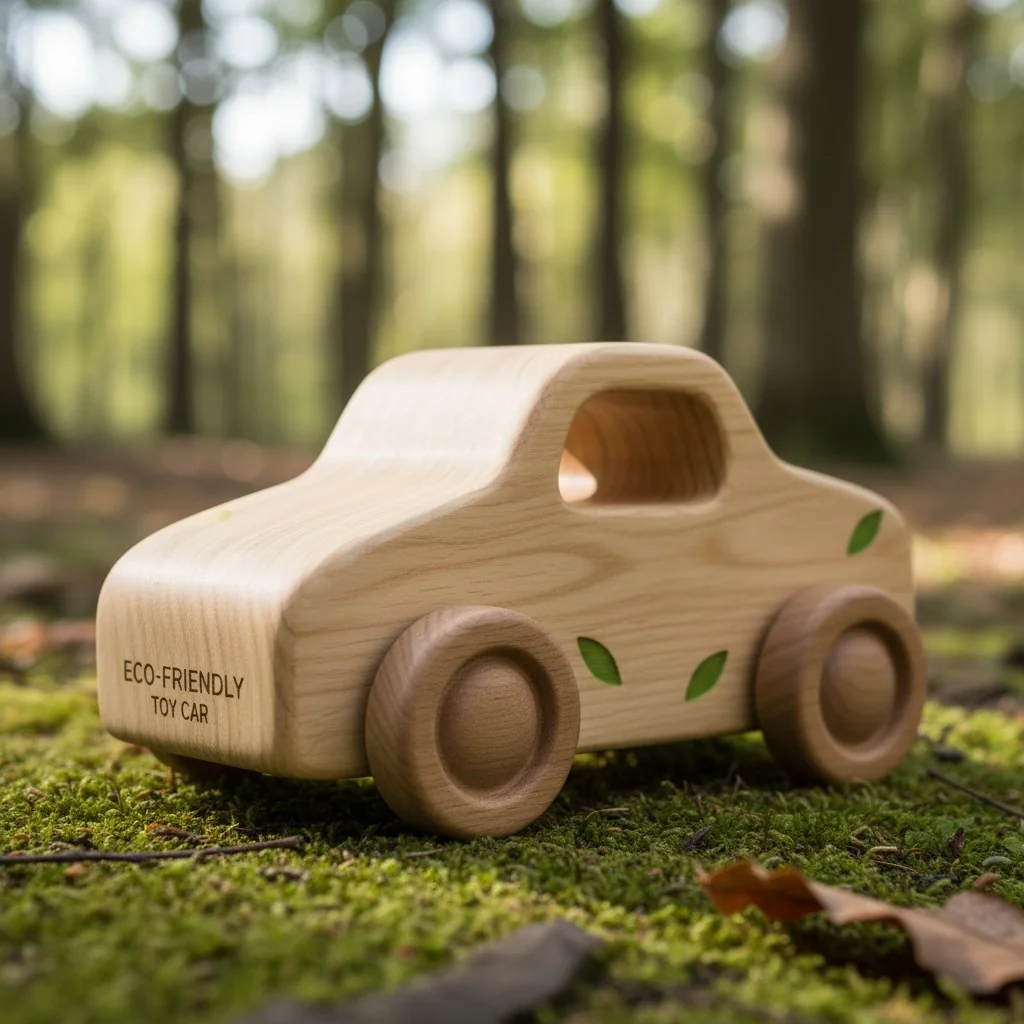
Als ich zum ersten Mal in der Formen- und Fertigungsindustrie anfing, sah ich, wie viele großartige Ideen scheiterten. Sie scheiterten nicht, weil die Idee schlecht war, sondern weil die Umsetzung fehlerhaft war. Der Weg von einer einfachen Skizze zu den Händen eines Kindes ist voller Herausforderungen, insbesondere bei einem natürlichen Material wie Holz. Sie brauchen eine klare Roadmap. Im Laufe meiner 15-jährigen Tätigkeit in diesem Unternehmen habe ich gelernt, wie man Konzepte in die Realität umsetzt, und dieses Wissen möchte ich mit Ihnen teilen. Lassen Sie uns Schritt für Schritt erklären, wie Sie Ihr Holzspielzeug entwickeln können.
Alle Holzspielzeuge sind von Natur aus umweltfreundlich.FALSCH
Nicht alles Holz stammt aus nachhaltigen Quellen. Achten Sie auf Zertifizierungen wie FSC (Forest Stewardship Council), um sicherzustellen, dass das Material aus verantwortungsvoll bewirtschafteten Wäldern stammt. Auch die verwendeten Farben und Lacke müssen ungiftig sein.
China ist ein weltweit führender Hersteller von Holzspielzeug.WAHR
China verfügt über eine riesige und gut etablierte Produktionsinfrastruktur für Spielzeug, einschließlich einer umfassenden Lieferkette für verschiedene Holzarten, Hardware und Verpackungen, was erhebliche Kosten- und Produktionsvorteile bietet.
Wie funktioniert die Forschung und Entwicklung von Holzspielzeug?
Sie haben eine brillante Idee für ein Spielzeug, aber die Umsetzung in ein physisches Produkt ist eine große Herausforderung. Die Forschung und Entwicklung (R&D) Der Prozess erscheint komplex und teuer.
Holzspielzeug R&D[^2] ist ein strukturierter Prozess. Es beginnt mit Ihrem Konzept und geht über Skizze, 3D-Modellierung, Materialauswahl und Prototyping. Ziel ist es, ein Spielzeug zu schaffen, das Spaß macht, sicher und einfach herzustellen ist.
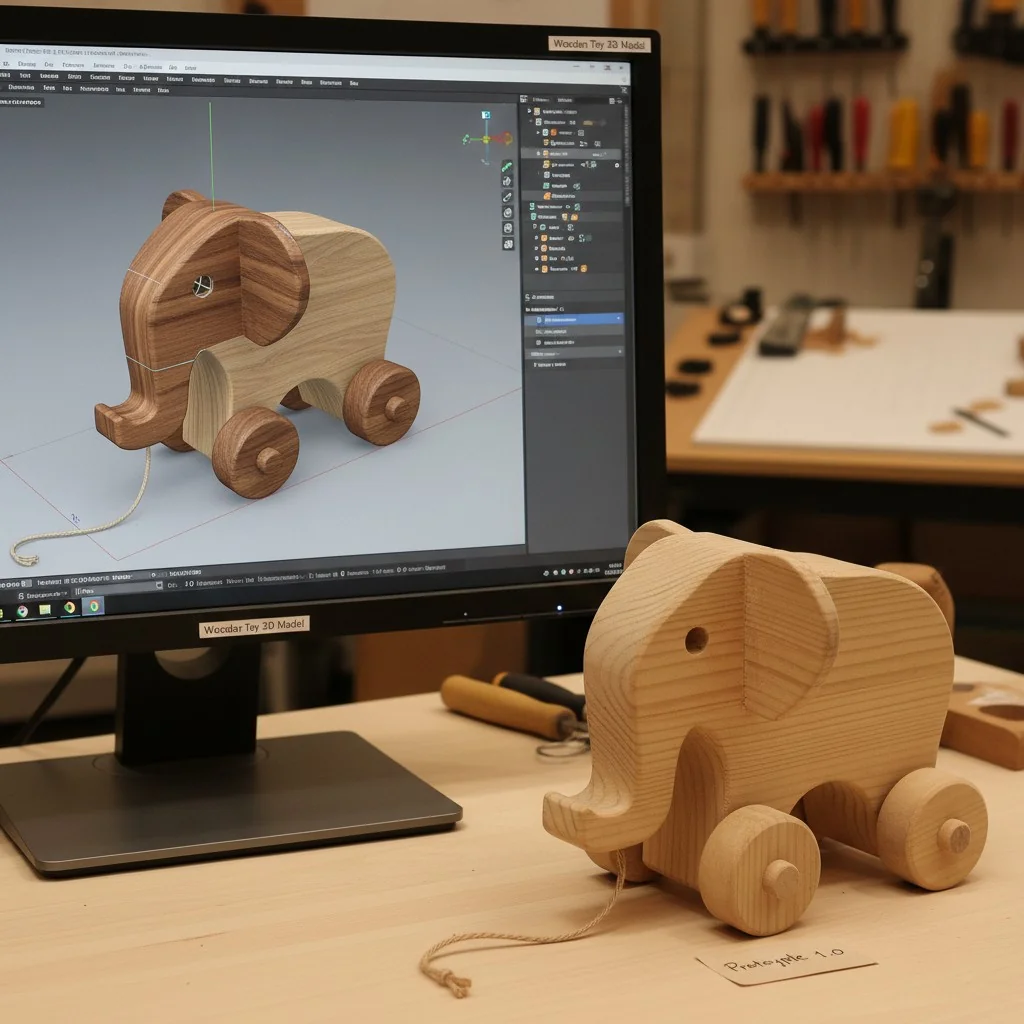
Der R&In der D-Phase nimmt Ihre Idee Gestalt an. Es ist die kritischste Phase, um alles richtig zu machen. Ein guter Partner kann oft kostenlose Designunterstützung bieten, um Ihr Konzept zu verfeinern. Mein Team und ich haben unzähligen Kunden dabei geholfen. Wir konzentrieren uns auf einige wichtige Schritte, um einen reibungslosen Ablauf zu gewährleisten.
1. Konzept und Skizze
Alles beginnt mit Ihrer Vision. Wir beginnen mit der Erstellung detaillierter Skizzen. Dies hilft uns, verschiedene Designs und Spielfunktionen zu erkunden. Wir denken über die Zielgruppe nach und darüber, wie ein Kind mit dem Spielzeug interagieren wird. Dies ist die günstigste und schnellste Möglichkeit, Änderungen vorzunehmen, bevor Sie sich auf ein physisches Modell festlegen.
2. 3D-Modellierung und Prototyping
Sobald die Skizze genehmigt ist, erstellen wir ein digitales 3D-Modell. Dadurch können Sie das Spielzeug aus jedem Blickwinkel sehen. Wir können mögliche Konstruktionsfehler prüfen. Nachdem das 3D-Modell fertiggestellt ist, erstellen wir einen physischen Prototyp. Den Prototypen in den Händen zu halten ist ein Game-Changer. Sie können seine Haptik, Balance und Funktion testen.
3. Material- und Sicherheitsanalyse
Wir analysieren die besten Materialien für Ihr Spielzeug. Bei Holzspielzeug ist dies entscheidend. Wir berücksichtigen Haltbarkeit, Aussehen und Kosten. Wir stellen außerdem sicher, dass alle Materialien, insbesondere Farben und Oberflächen, ungiftig und sicher für Kinder sind.
| Holzart | Hauptmerkmale | Am besten für |
|---|---|---|
| Buche | Harte, haltbare, glatte Maserung | Blöcke, Fahrzeuge, High-Impact-Spielzeug |
| Birke | Stark, feinkörnig, kostengünstig | Puzzles, kleinere Spielzeuge, bemalte Gegenstände |
| Kiefer | Weiche, leichte, sichtbare Maserung | Größere, einfachere Artikel, rustikaler Look |
Der 3D-Druck ist für die Herstellung von Holzspielzeug-Prototypen nutzlos.FALSCH
Obwohl sie nicht aus Holz bestehen, sind 3D-gedruckte Prototypen unglaublich nützlich und kostengünstig, um die Größe, Form und den Zusammenbau eines Designs zu überprüfen, bevor man sich auf eine teurere CNC-Bearbeitung oder Handschnitzerei aus Holz einlässt.
Die Wahl der Farbe ist für die Spielzeugsicherheit ebenso wichtig wie die Wahl des Holzes.WAHR
Spielzeug für Kinder muss ungiftige Farben auf Wasserbasis verwenden, die internationalen Sicherheitsstandards wie ASTM F963 und EN-71 entsprechen, die auf Blei und andere schädliche Schwermetalle testen.
Was ist der ultimative Leitfaden zum Kauf von Holzspielzeug in China?
Sie wissen, dass Sie durch die Fertigung in China Geld sparen können. Aber einen vertrauenswürdigen Partner zu finden, der pünktlich liefert und Ihre Qualitätsstandards erfüllt, ist wie die Suche nach der Nadel im Heuhaufen.
Der Schlüssel liegt in der Partnerschaft mit einem Hersteller, der umfassende OEM- (Original Equipment Manufacturer) und ODM- (Original Design Manufacturer) Funktionen bietet. Achten Sie auf eine nachgewiesene Erfolgsbilanz, transparente Kommunikation und Robustheit Qualitätskontrolle[^3] Systeme, die Sie von Anfang bis Ende begleiten.
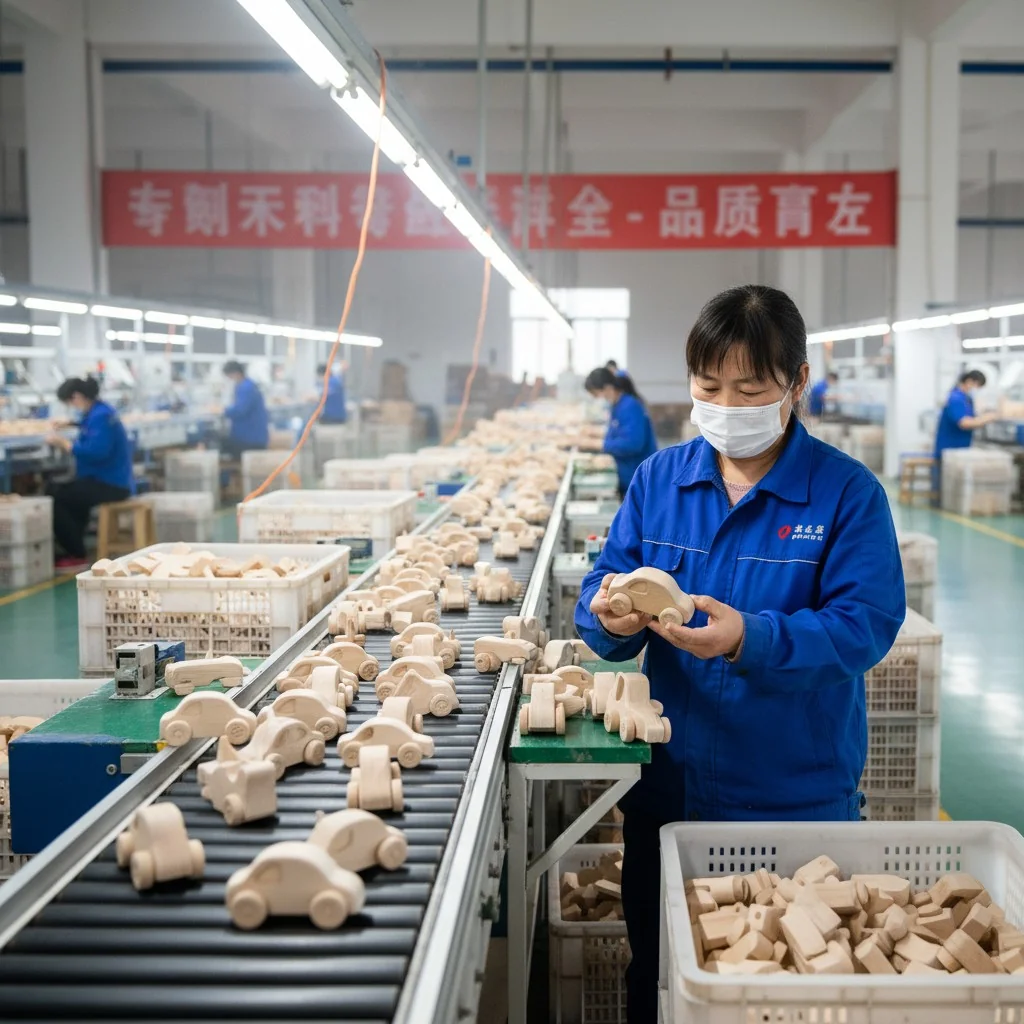
Ich habe mein Unternehmen aufgebaut, indem ich Kunden mit den richtigen Fabriken in China verbunden habe. Das Geheimnis besteht nicht nur darin, die günstigste Option zu finden. Es geht darum, einen zuverlässigen Partner zu finden, der Ihre Vision versteht und Ihre Interessen vertritt. Mit über 15 Jahren OEM und ODM[^4] Durch meine Erfahrung habe ich gelernt, was die großartigen Anbieter vom Rest unterscheidet. Ein guter Partner fungiert als Erweiterung Ihres Teams. Sie bieten personalisierte Dienste, um den Prozess reibungslos zu gestalten.
1. Überprüfen Sie Ihren Partner: OEM vs. ODM
- OEM: Sie liefern den kompletten Entwurf und die Fabrik fertigt ihn für Sie. Dadurch haben Sie die volle kreative Kontrolle.
- ODM: Sie wählen ein bereits vorhandenes Design aus dem Katalog der Fabrik aus und passen es mit Ihrem Branding an. Dies ist schneller und erfordert weniger R&D-Investition.
Ein toller Partner bietet beides. Sie können Ihr einzigartiges Design herstellen oder Ihnen bei der Anpassung eines ihrer vorhandenen Designs helfen. Fragen Sie nach ihrem Portfolio und Kundenreferenzen.
2. Kommunikation ist alles
Sprachbarrieren und Zeitunterschiede können zu großen Problemen führen. Ihr Partner sollte einen engagierten, englischsprachigen Projektmanager haben. Sie sollten regelmäßig Updates bereitstellen und auf Ihre Fragen reagieren. Eine klare, konsistente Kommunikation ist die Grundlage für eine pünktliche Lieferung.
3. Bestehen Sie auf Qualitätskontrolle
Qualität ist nichts, was man am Ende prüft. Es muss in jeden Schritt des Prozesses integriert werden.
| Produktionsphase | Qualitätskontrollkontrollpunkt |
|---|---|
| Rohstoffe | Untersuchen Sie das Holz auf Feuchtigkeit, Risse und Äste. Überprüfen Sie die Lacksicherheitszertifikate. |
| Während der Produktion | Überprüfen Sie Abmessungen, Ebenheit und Montage der Halbzeuge. |
| Endmontage | Führen Sie eine 100%-Prüfung auf Mängel, Funktion und Verpackungsgenauigkeit durch. |
| Vor dem Versand | Führen Sie eine abschließende Stichprobenkontrolle (AQL) durch, um sicherzustellen, dass die gesamte Charge den Standards entspricht. |
Sie sollten immer die Fabrik mit dem niedrigsten Preis wählen.FALSCH
Der niedrigste Preis ist oft mit versteckten Kosten verbunden, wie z. B. schlechter Qualität, Produktionsverzögerungen oder unsicheren Materialien. Ein etwas höherer Preis eines namhaften Herstellers ist eine Investition in Zuverlässigkeit und Sicherheit.
Eine Fabrik mit einer langen Geschichte von ODM-Projekten ist ein gutes Zeichen.WAHR
Umfangreiche ODM-Erfahrung bedeutet, dass die Fabrik Produktdesign, Markttrends und Sicherheitskonformität versteht. Sie verfügen über bewährte Designs, die schnell an Ihre Marke angepasst werden können und so Ihren R reduzieren&D Risiko und Time-to-Market.
Wie können Sie die Kosten für Holzspielzeug senken, ohne Abstriche bei der Qualität zu machen?
Ihr Budget ist knapp. Hohe Herstellungskosten können Ihr Projekt stoppen, bevor es überhaupt begonnen hat. Sie befürchten, dass Kostensenkungen dazu führen, dass Sie am Ende ein billiges Produkt von geringer Qualität erhalten.
Sie können die Kosten senken, indem Sie Ihr Design for Manufacturing (DFM) optimieren kostengünstige Materialien[^5] und Nutzung von Skaleneffekten. Ein guter Herstellungspartner hilft Ihnen dabei, diese Einsparungen zu erzielen, ohne die Sicherheit oder Attraktivität des Spielzeugs zu beeinträchtigen.
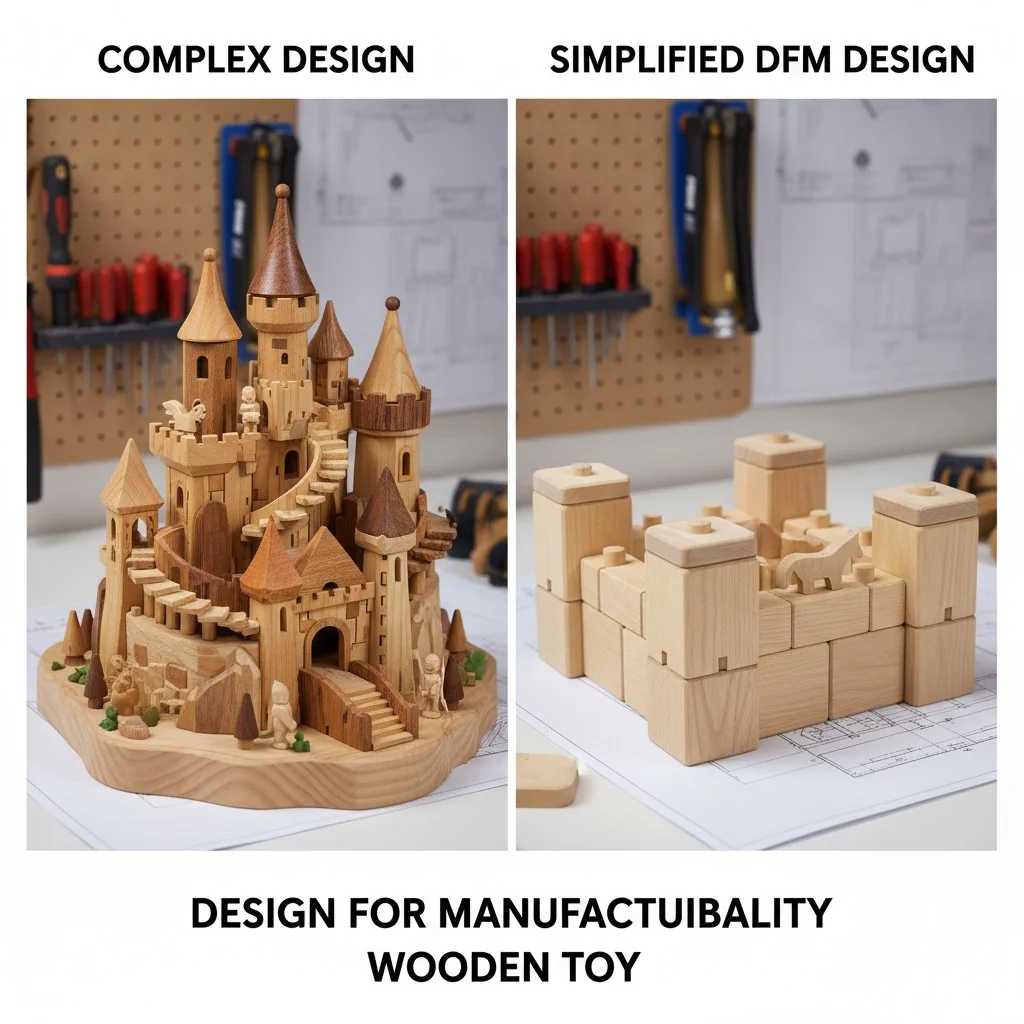
Jeder Designer, auch erfahrene wie Jacky, steht unter dem Druck, Kosten zu senken. In meinem Handelsgeschäft war es ein großer Teil meiner Aufgabe, Kunden bei der Verwaltung ihres Budgets zu unterstützen. Es ist ein Balanceakt. Sie wollen ein großartiges Produkt, aber es muss profitabel sein. Die gute Nachricht ist, dass es intelligente Möglichkeiten gibt, Kosten zu senken. Es geht nicht darum, billig zu sein; es geht darum, effizient zu sein.
1. Design for Manufacturability (DFM)
Dies ist die effektivste Möglichkeit, Kosten zu senken. Kleine Änderungen an Ihrem Design können große Auswirkungen auf die Produktionszeit und Materialverschwendung haben.
- Formen vereinfachen: Komplexe Kurven und komplizierte Schnitte erfordern auf CNC-Maschinen mehr Zeit. Durch die Vereinfachung der Formen können die Bearbeitungskosten drastisch gesenkt werden.
- Teile reduzieren: Können zwei Teile zu einem kombiniert werden? Weniger Teile bedeuten weniger Montagezeit und geringere Arbeitskosten.
- Komponenten standardisieren: Die Verwendung von Dübeln oder Rädern in Standardgröße ist günstiger als die Herstellung individueller Dübel oder Räder.
2. Intelligente Material- und Verpackungsauswahl
Während hochwertiges Holz wie Buche ausgezeichnet ist, ist manchmal Birke oder sogar hochwertiges Sperrholz für bestimmte Teile aus Kostengründen die bessere Wahl. Ein weiterer Bereich, in dem Sie sparen können, ist Ihre Verpackung. Ein gut gestalteter, aber einfacher Karton ist oft kostengünstiger und umweltfreundlicher als eine komplexe Kunststoffverpackung. Wir bieten eine große Auswahl an Spielzeugen und Verpackungsoptionen passend zu Ihrem Budget.
3. Nutzen Sie Skaleneffekte
Die Stückkosten eines Spielzeugs sinken, wenn Ihre Bestellmenge steigt. Dies liegt daran, dass die Einrichtungskosten der Fabrik auf mehrere Einheiten verteilt werden.
| Bestellmenge | Preis pro Einheit (Beispiel) |
|---|---|
| 500 Einheiten | 10,00 $ |
| 1.000 Einheiten | 8,50 $ |
| 3.000 Einheiten | 7,00 $ |
| 5.000 Einheiten | 6,25 $ |
Wenn möglich, ist die Planung einer größeren Produktionsserie eine der direktesten Möglichkeiten, die Kosten pro Spielzeug zu senken.
Die Verwendung von billigerem, weicherem Holz ist immer eine gute Möglichkeit, Geld zu sparen.FALSCH
Weichere Hölzer wie Kiefer sind zwar günstiger, aber auch weniger haltbar und können leicht verbeulen oder splittern. Dies kann zu Sicherheitsproblemen und einem schlechten Kundenerlebnis führen, was es zu einer schlechten Wahl für Spielzeug mit hoher Belastung macht.
Durch die Reduzierung der Farbmenge auf einem Spielzeug können dessen Kosten gesenkt werden.WAHR
Farbe und der Arbeitsaufwand für das Auftragen sind mit erheblichen Kosten verbunden. Durch die Gestaltung eines Spielzeugs, das die natürliche Holzmaserung mit minimalen Farbflächen zur Geltung bringt, können Kosten gesenkt und gleichzeitig eine wünschenswerte, umweltfreundliche Ästhetik geschaffen werden.
Welche Prüfungen und Werksaudits sind für Holzspielzeug notwendig?
Sie machen sich Sorgen um die Sicherheit. Ein Rückruf oder, schlimmer noch, die Verletzung eines Kindes durch Ihr Produkt wäre für Ihr Unternehmen und Ihren Ruf verheerend. International navigieren Sicherheitsstandards[^6] scheint unmöglich.
Ihr Spielzeug muss Sicherheitstests für Standards wie ASTM F963 (USA) und EN71 (Europa) bestehen. Ihre Fabrik sollte über soziale Compliance-Audits wie BSCI und Qualitätsmanagement-Zertifizierungen wie ISO 9001 verfügen. Dadurch wird sichergestellt, dass Ihr Produkt sowohl sicher als auch ethisch einwandfrei hergestellt ist.
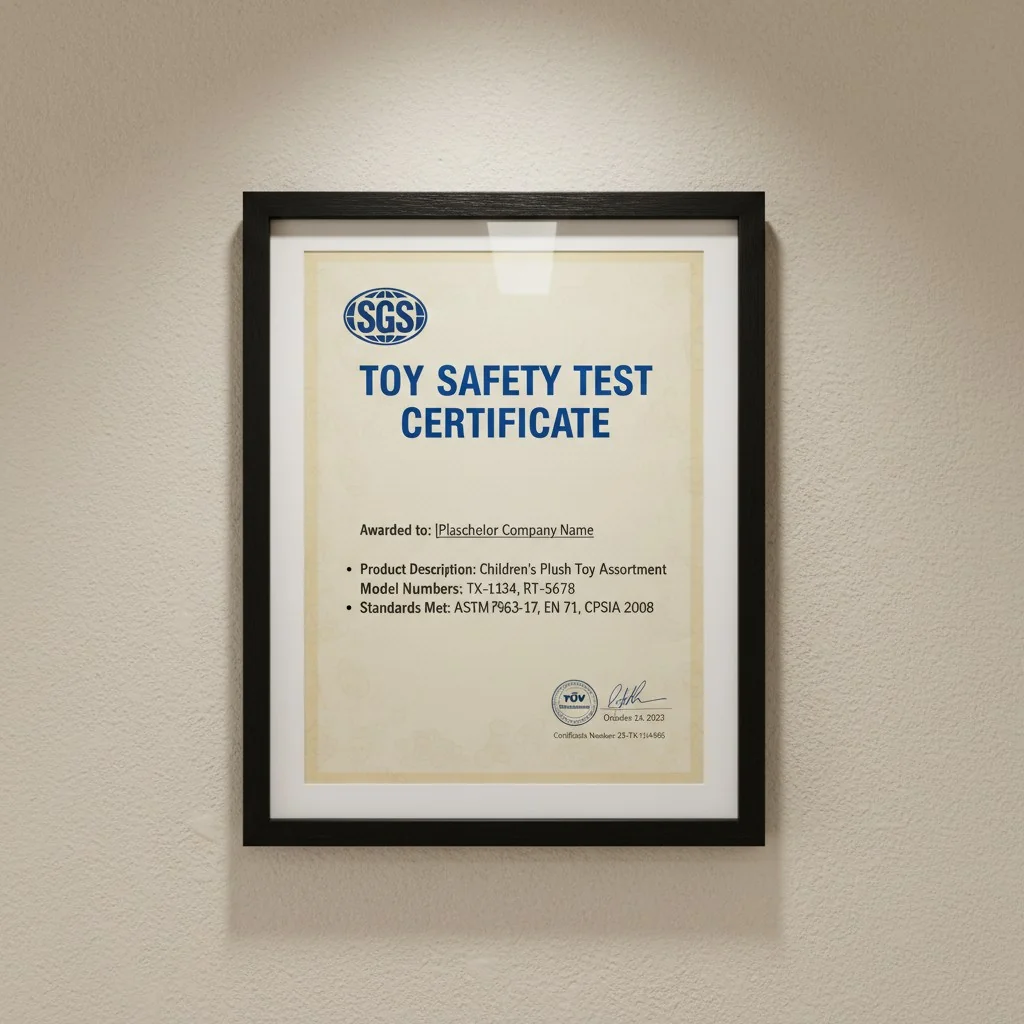
Das ist nicht verhandelbar. Im Laufe meiner Karriere habe ich erlebt, wie Unternehmen durch Abstriche bei der Sicherheit ruiniert wurden. Aus diesem Grund haben wir enge Partnerschaften mit führenden Prüflaboren wie SGS, TÜV und Intertek aufgebaut. Diese Partnerschaften sind nicht nur ein Logo auf unserer Website; Sie sind ein zentraler Bestandteil unseres Prozesses. Wir verwalten den gesamten Testprozess für unsere Kunden, um sicherzustellen, dass jedes Produkt, das wir versenden, sicher ist.
1. Wichtige Sicherheitsstandards für Spielzeug
Diese Standards sind gesetzliche Anforderungen in ihren jeweiligen Märkten. Sie decken ein breites Spektrum potenzieller Gefahren ab.
- ASTM F963 (USA): Behandelt physikalische und mechanische Eigenschaften (wie Kleinteile und scharfe Kanten), Entflammbarkeit und chemische Inhalte (insbesondere Blei und Schwermetalle).
- EN71 (Europa): Ähnlich wie ASTM, jedoch mit einigen anderen Anforderungen. Dabei handelt es sich um eine Reihe von Normen, die alles von mechanischen Eigenschaften bis hin zu chemischer Sicherheit und Entflammbarkeit abdecken.
2. Wichtige Werksaudits
Audits informieren Sie über den Betrieb und die Ethik der Fabrik.
- BSCI (Business Social Compliance Initiative): Der Schwerpunkt dieses Audits liegt auf ethischen und sozialen Themen wie fairen Löhnen, Arbeitszeiten und Sicherheit am Arbeitsplatz. Es zeigt, dass die Fabrik ihre Arbeiter fair behandelt.
- ISO 9001: Hierbei handelt es sich um eine Zertifizierung für Qualitätsmanagementsysteme. Es beweist, dass die Fabrik über zuverlässige Prozesse zur kontinuierlichen Herstellung qualitativ hochwertiger Produkte verfügt.
3. Von Laboren durchgeführte allgemeine Tests
Drittlabore liefern unvoreingenommene Beweise dafür, dass Ihr Spielzeug sicher ist.
| Testkategorie | Worauf es prüft |
|---|---|
| Körperlich & Mechanisch | Kleinteile (Erstickungsgefahr), scharfe Spitzen, scharfe Kanten, Falltests. |
| Chemisch | Gehalt an Blei, Phthalaten und anderen Schwermetallen in Farben und Materialien. |
| Entflammbarkeit | Wie schnell das Material Feuer fängt und brennt. |
Ein Werksauditzertifikat ist für immer gültig.FALSCH
Werksaudits wie BSCI und ISO 9001 sind nur für einen bestimmten Zeitraum gültig, typischerweise ein bis drei Jahre. Sie müssen immer das Ablaufdatum auf dem Zertifikat überprüfen, um sicherzustellen, dass es aktuell ist.
Das Bestehen der Sicherheitstests in einem Land bedeutet, dass das Spielzeug weltweit sicher verkauft werden kann.FALSCH
Verschiedene Regionen haben ihre eigenen spezifischen Sicherheitsstandards. Ein Spielzeug, das ASTM F963 für den US-Markt erfüllt, muss dennoch nach EN71 getestet werden, um legal in Europa verkauft zu werden.
Abschluss
Die Entwicklung eines Holzspielzeugs ist eine detaillierte Reise. Mit dem richtigen Wissen und einem zuverlässigen Fertigungspartner können Sie Ihre Vision sicher in ein sicheres, qualitativ hochwertiges und erfolgreiches Produkt umsetzen.
Referenzen
[^1]: Entdecken Sie, wie ein erfahrener Hersteller Ihren Entwicklungsprozess für Holzspielzeug optimieren und die Qualität sicherstellen kann.
[^2]: Erfahren Sie mehr über das strukturierte R&D-Prozess für Holzspielzeug und wie er Ihnen dabei helfen kann, Ihre Ideen zum Leben zu erwecken.
[^3]: Finden Sie heraus, wie wirksame Qualitätskontrollmaßnahmen Mängel verhindern und die Produktsicherheit gewährleisten können.
[^4]: Erhalten Sie Einblicke in OEM- und ODM-Fertigungsoptionen und wie diese sich auf Ihren Spielzeugdesignprozess auswirken können.
[^5]: Erfahren Sie mehr über Materialien, die Kosten und Qualität für die Herstellung von Holzspielzeug in Einklang bringen, ohne die Sicherheit zu beeinträchtigen.
[^6]: Machen Sie sich mit den verschiedenen Sicherheitsstandards vertraut, die Holzspielzeug erfüllen muss, um weltweit verkauft zu werden.
