
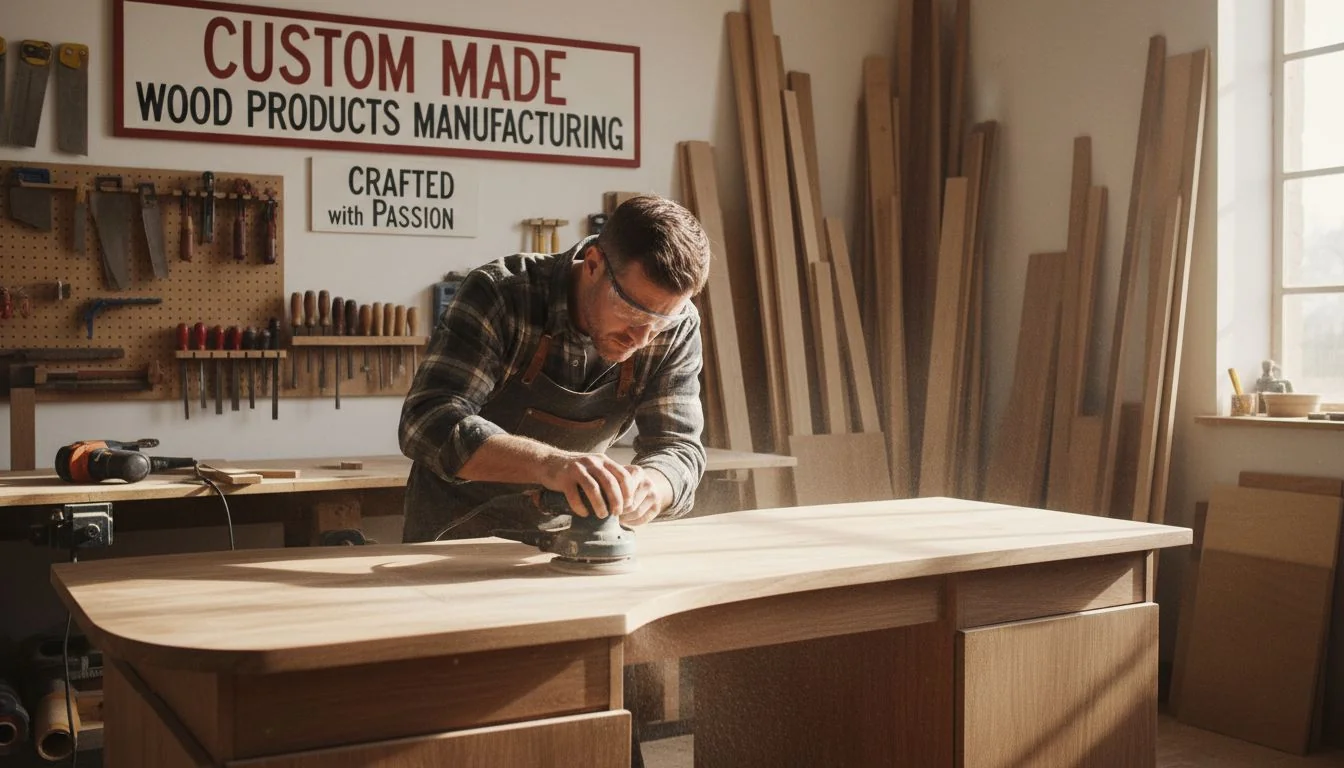
Ĉu vi luktas por realigi vian ideon pri lignoprodukto? Vi zorgas pri trovi bonan fabrikon, akiri la kvaliton ĝuste kaj ne malŝpari monon. Ĝi sentas kiel grandega risko.
La ŝlosilo al majstrado kutimo ligna produkto fabrikado[^1] estas strukturita kvin-ŝtupa procezo: trovi kontrolitan fabrikiston, disponigante detalajn teknikajn skizojn, elektante la ĝustan materialon por pogranda produktado, efektivigante striktan kvalito-garansistemon, kaj aprobi perfektan antaŭproduktan provaĵon antaŭ ol iu amasproduktado komenciĝas.
Vi eble konas min el la mondo de plasta injektomuldado. Sed multaj el la principoj estas la samaj. Mia vojaĝo komenciĝis en muldfabriko kaj kreskis al komerca kompanio, kaj laŭ la vojo, mi administris sennombrajn produktadprojektojn, inkluzive de multaj en la ligna ludilspaco. La lecionoj, kiujn mi lernis pri precizeco, kvalito-kontrolo kaj provizanta administrado, aplikas rekte al kutimaj lignaj produktoj. Mi gvidos vin tra la ĝusta procezo, kiun ni uzas ĉe Moldle por certigi sukceson, de trovi la ĝustan partneron ĝis ricevi tiun perfektan finan produkton en viaj manoj. Ni rompu ĝin.
Generu Asertojn
La Forest Stewardship Council (FSC) estis fondita en 1993.Vere
La FSC estis establita en 1993 en respondo al zorgoj pri tutmonda senarbarigo. Ĝi disponigas agnoskitan normon por respondeca arbaradministrado.
Ĉiuj specoj de ligno havas la saman kuntiriĝon dum sekiĝo.False
Malsamaj lignospecioj ŝrumpas je malsamaj rapidecoj kaj en malsamaj direktoj (tanĝante, radiale kaj laŭlonge). Ĉi tio estas kritika faktoro en altpreciza lignoprilaboro.
Kiel Vi Trovas Proprajn Lignajn Fabrikiston en Ĉinio?
Serĉi fidindan fabrikiston en Ĉinio povas sentiĝi superforta. Vi vidas milojn da listoj interrete, sed vi aŭdas terurajn rakontojn pri fraŭdoj kaj malbona kvalito, igante vin hezitante daŭrigi.
Por trovi bonegan fabrikiston, uzu miksaĵon de strategioj. Komencu sur platformoj kiel Alibaba, sed ne ĉesu tie. Ĉeesti industriajn komercajn foirojn kiel la Kantona Foiro[^2] renkonti liverantojn persone. Plej grave, faru profundan ekzamenadon pri ĉiu ebla partnero antaŭ ol fari ion ajn.

Trovi la ĝustan partneron estas la plej kritika unua paŝo. Mi vidis bonegajn dezajnojn malsukcesi pro malbona fabrikelekto. Ne nur rigardu la prezon. Serĉu veran partneron.
Kontrolado de Interretaj Provizantoj
When you're on a site like Alibaba, look past the professional photos. Check for "Verified Supplier" badges, but dig deeper. Ask for their business license and any quality certifications like ISO 9001 or, for wood, FSC. See how long they've been in business and check their transaction history if available. A good factory will be transparent and provide these documents easily. If they hesitate, it's a red flag for me.
La Potenco de Vizaĝo-al-Vizaĝo
Se vi povas, iru al komerca foiro. Nenio superas teni produkton en via mano kaj paroli kun la fabrikposedanto rekte. Vi povas tuj taksi iliajn kvalitojn kaj komunikajn kapablojn. Ĉi tie mi trovis kelkajn el miaj plej bonaj longdaŭraj partneroj.
Fontaj Agentoj kontraŭ Rekta Kontakto
Vi ankaŭ povas elekti inter iri rekte aŭ uzi provizanton. Jen simpla rompo:
| Alproksimiĝo | Avantaĝoj | Kons |
|---|---|---|
| Rekte al Fabriko | Pli alta marĝeno, pli da kontrolo | Pli da laboro, pli alta risko, lingva baro |
| Uzante Agenton | Ŝparas tempon, malpliigas riskon, sperta helpo | Pli malalta marĝeno, malpli rekta kontrolo |
Por komencantoj, agento povas esti sekura veto. Por spertaj dezajnistoj kiel Jacky, iri rekte povas esti pli enspeziga se vi pretas administri la procezon proksime.
Generu Asertojn
Alibaba is the world's largest B2B e-commerce platform.Vere
Fondita en 1999, Alibaba.com estas gvida platformo por tutmonda pogranda komerco, ligante milionojn da aĉetantoj kaj provizantoj tutmonde.
A 'Gold Supplier' sur Alibaba estis fizike inspektita de Alibaba-kunlaborantaro.False
The 'Gold Supplier' status is a paid premium membership. While it involves a verification check of the company's existence, the 'Verified Supplier' insigno indikas pli detalan, surlokan inspektadon de triaparta firmao.
Ĉu Simplaj Skizoj sufiĉas por Propraj Lignaj Produktoj?
Vi havas klaran vizion por via produkto, sed via simpla skizo perdiĝas en traduko. La unua specimeno revenas malbone, malŝparante tempon kaj monon kaj kaŭzante grandegan frustriĝon.
fragmenta alineo:
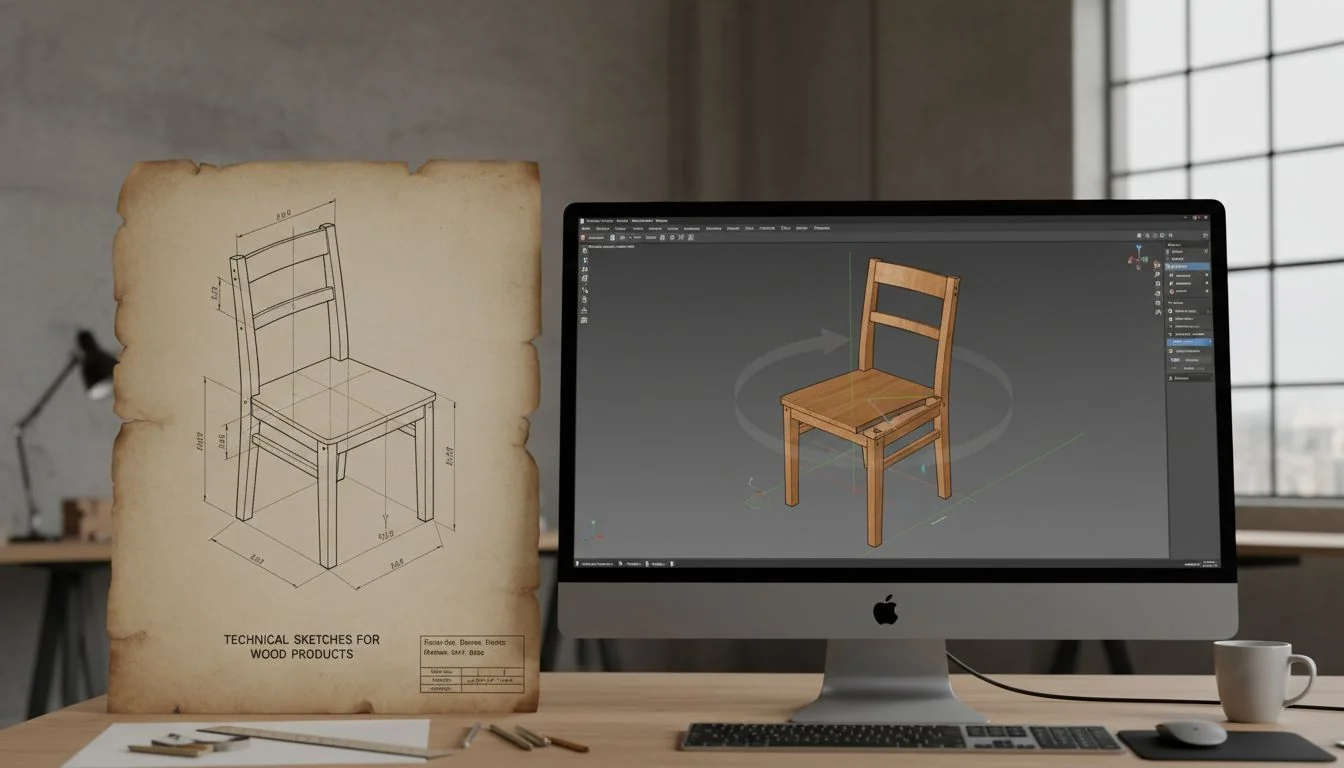
A simple sketch is a great starting point for discussion. However, for manufacturing, you must provide detailed technical drawings or CAD files. These files need to include precise dimensions, tolerances, material types, and finish specifications to prevent any misunderstanding and ensure accuracy.

In my experience, ambiguity is the enemy of manufacturing. The more detail you provide upfront, the smoother the process will be. This is just as true for wood as it is for a complex plastic mold.
From Sketch to Professional CAD
Don't worry if you can't create a perfect CAD file yourself. Many good manufacturers, including our team at Moldle, have engineers who can help. You provide the initial concept, sketches, and key requirements. Then, a sales engineer can work with you to create professional 2D and 3D drawings for your approval. This collaborative step ensures your design intent is perfectly captured before any wood is cut. It's a service that separates the great suppliers from the average ones.
Key Information for Your Drawing
Your technical drawing is a contract. It must be clear. Here are the essentials to include:
- Critical Dimensions: Length, width, height with clear units (mm or inches).
- Tolerances: How much can a dimension vary? For wood, +/- 0.5mm might be tight, while +/- 2mm could be acceptable. Be specific.
- Material: Don't just say "wood." Specify "Grade A Beech Wood, kiln-dried."
- Finish: Be precise. "Matte polyurethane lacquer, 2 coats" is much better than "clear coat."
- Grain Direction: For some aesthetic products, specifying the direction of the wood grain is important.
Generu Asertojn
CAD stands for 'Computer-Assisted Design'.Vere
CAD software is used by architects, engineers, and designers to create precision 2D and 3D drawings and models.
All CAD file formats are interchangeable between all software.False
While there are neutral formats like STEP and IGES designed for interoperability, native file formats from software like SolidWorks (.sldprt) or AutoCAD (.dwg) are not always compatible with other systems without conversion.
How Do You Select the Right Wood for Bulk Production?
You chose a beautiful but expensive wood for your product. Now, your production cost is too high, and the material is hard to source consistently, putting your entire project in jeopardy.
Selecting the right wood for bulk production[^3] is a balance of four key factors: cost, aesthetics, durability, and manufacturability. For volume orders, focus on readily available and consistent woods like Beech, Rubberwood, or Pine. Always base your decision on physical samples, not just pictures.

The material you choose defines your product. It affects the look, the feel, the price, and the durability. When I was working on a line of wooden toys, we spent weeks testing different woods to find the perfect balance of safety, durability, and cost.
Common Woods for Custom Products
The choices can be confusing. Here is a simple table to help guide your decision for common custom products.
| Wood Type | Cost | Hardness/Durability | Best For… |
|---|---|---|---|
| Pine | Low | Soft | Rustic furniture, crates, items to be painted |
| Beech | Medium | Hard | Children's toys, kitchen utensils, durable parts |
| Rubberwood | Low-Medium | Medium-Hard | Eco-friendly furniture, cutting boards |
| Oak | High | Very Hard | Premium furniture, flooring, high-end items |
| Walnut | Very High | Hard | Decorative items, luxury goods, veneers |
| MDF/Plywood | Very Low | Engineered | Painted items, cabinet backs, structural parts |
Think About Sustainability
For many markets, especially in Europe and North America, sustainability is not just a buzzword; it's a requirement. Ask your supplier if they can provide FSC (Forest Stewardship Council) certified wood. This proves the material comes from a responsibly managed forest. It can be a powerful selling point for your brand.
Generu Asertojn
Janka hardness test measures the softness of wood.False
The Janka hardness test measures the resistance of a sample of wood to denting and wear. It measures the force required to embed an 11.28mm steel ball halfway into the wood. A higher number indicates harder wood.
Rubberwood is considered an eco-friendly material.Vere
Rubberwood is harvested from rubber trees that have completed their latex-producing cycle. Using it for furniture and other products makes use of wood that might otherwise be destroyed.
How Can You Guarantee Quality in Custom Wood Manufacturing?
You're thousands of miles away from the factory, feeling powerless. You can only hope they are building your product correctly, but hope is not a manufacturing strategy.
You guarantee quality with a system, not hope. This involves creating a clear quality control checklist[^4], approving a "golden sample," and scheduling inspections during and after production. A Final Random Inspection (FRI) before shipment is non-negotiable and protects your investment.

Quality is not something you inspect at the end; it's something you build into the process from the start. My background in precision molds taught me that if you don't define the standard, you can't enforce it. This is where my team's experienced technicians really shine.
Define Your Quality Standard
Before production, you and your supplier must agree on what is acceptable. Create a detailed QC checklist.
- Cosmetic Defects: What size of scratch, dent, or knot is acceptable? Be specific (e.g., "No knots larger than 5mm on visible surfaces").
- Structural Integrity: Joints must be secure with no gaps. The product must not wobble.
- Color & Finish: Color must match an approved Pantone number or physical sample. The finish must be even, with no drips or bubbles.
- Dimensions: Key dimensions must be within the tolerances you defined in your technical drawing.
The Inspection Process
I use a three-stage process:
- Pre-Production: You approve the final pre-production sample[^5]. This is your "golden sample" that the factory must match.
- In-Process Quality Control (IPQC): Someone checks the products as they are being made. This catches problems early before thousands of bad units are produced.
- Final Random Inspection (FRI): This is your final defense. Before you pay your final balance, an inspector checks a random portion of your shipment. They use your QC checklist to pass or fail the batch.
Generu Asertojn
AQL stands for 'Acceptable Quality Limit'.Vere
AQL is a statistical method used for quality control inspections. It defines the maximum number of defective units that can be considered acceptable during a random sampling of a production lot.
AQL 2.5 means that every batch with more than 2.5% defects will be rejected.False
AQL 2.5 is a standard that means the buyer is willing to accept batches with up to 2.5% defects, on average, over the long term. A specific batch might be rejected even if it has fewer than 2.5% defects, depending on the sample size and number of defects found.
Why is the Sampling Stage So Critical for Custom Wood Products?
You're tempted to skip sampling to save a few hundred dollars and a couple of weeks. But this is a huge gamble that could lead to an entire shipment of unusable products.
Sampling is your only chance to physically hold and test your product before committing to a large order. It validates the manufacturer's ability to meet your standards for material, construction, dimensions, and finish. Approving a perfect sample is the most important milestone before mass production.

I never, ever skip the sampling stage. It is the single best investment you can make in your project. A sample is not just a product; it's a test of your supplier's understanding, their machinery, their materials, and their attention to detail. It's where you catch misunderstandings before they become five-figure mistakes. Our sales engineers work closely with clients during this stage to ensure their feedback is understood and implemented perfectly.
Types of Samples
There are a few different samples you might encounter:
- Mock-up Sample: A rough version, maybe not in the final material, just to check the size, shape, and basic function.
- Pre-Production Sample (PPS): This is the most important one. It must be made with the final materials, on the final machinery, with the final finish. This is the "golden sample" that you approve for mass production.
- Production Sample: A sample pulled from the actual mass production run to check for consistency against the PPS.
What to Check on Your Sample
When your PPS arrives, be methodical. Use a checklist.
- Measure Everything: Use digital calipers to check dimensions against your drawing.
- Check the Material: Does it look and feel like the wood you specified?
- Test the Finish: Is it smooth? Is the color correct? Is it durable?
- Test the Strength: Try to pull joints apart. Does it feel solid?
- Compare to Drawing: Put it side-by-side with your technical drawing. Does everything match?
Generu Asertojn
The color of a wood sample can change over time.Vere
Wood is a natural material, and its color can change when exposed to UV light and oxygen. Lighter woods can darken, and darker woods can lighten over time. This is an important consideration for product consistency.
A pre-production sample is usually free of charge.False
Manufacturers almost always charge for pre-production samples. The cost covers materials and the labor to set up and create a single unit. However, this cost is often credited back to you if you proceed with a bulk order.
Konkludo
Success with custom wood products comes from a clear, repeatable process. By vetting partners, providing details, and controlling quality at every step, you can confidently bring your designs to life.