
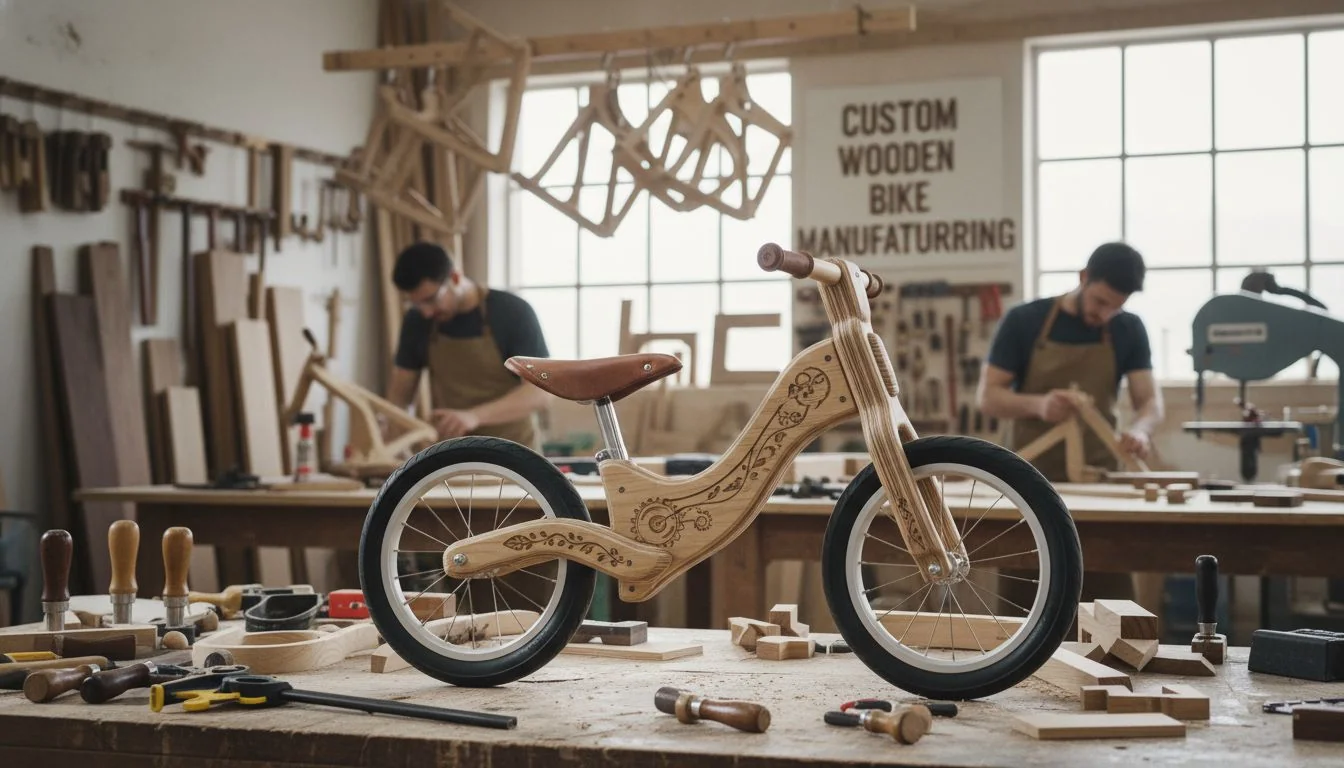
Struggling to turn your unique product design into a reality? The path to manufacturing in China[^1] can seem complex, risking your time and money on a design that might not even be buildable.
To custom-manufacture a wooden balance bike in China, you must provide a detailed design package[^2], selecciona o tipo de madeira correcto e colabora cunha fábrica experimentada. Un bo socio, como un provedor de marcas famosas, axudarache a mellorar o teu deseño para a súa fabricación, aforrandoche custo e tempo.

Turning a great idea into a physical product is a journey I know well. I've spent my career in the manufacturing world, from working on the factory floor to building my own mold and CNC trading company. I've seen brilliant designs fail because of small, avoidable mistakes in the early stages. The process for a wooden toy isn't so different from a complex plastic part; it all comes down to good design, smart material choices, and a great manufacturing partner. Let's walk through the exact steps you need to take to get your custom balance bike made right.
All Chinese wood toy factories use illegally sourced timber.Falso
Many reputable factories adhere to international standards and use certified wood, such as from the Forest Stewardship Council (FSC), to meet client and market demands for sustainability.
Providing a 3D model is essential for getting an accurate quote for a custom wooden toy.Verdade
A 3D model allows the factory to calculate material usage, machine time, and assembly complexity accurately, leading to a more precise and reliable quotation.
How can you bulk buy a balance bike based on your own design?
You have a fantastic, unique design for a balance bike. But turning that one design into hundreds or thousands of units feels like a huge, risky leap into the unknown.
To bulk buy your custom-designed product, you must first create a comprehensive tech pack with all specifications. You then vet potential factories, get a prototype made for approval, and finally negotiate the price, payment terms, and production schedule for your mass order.
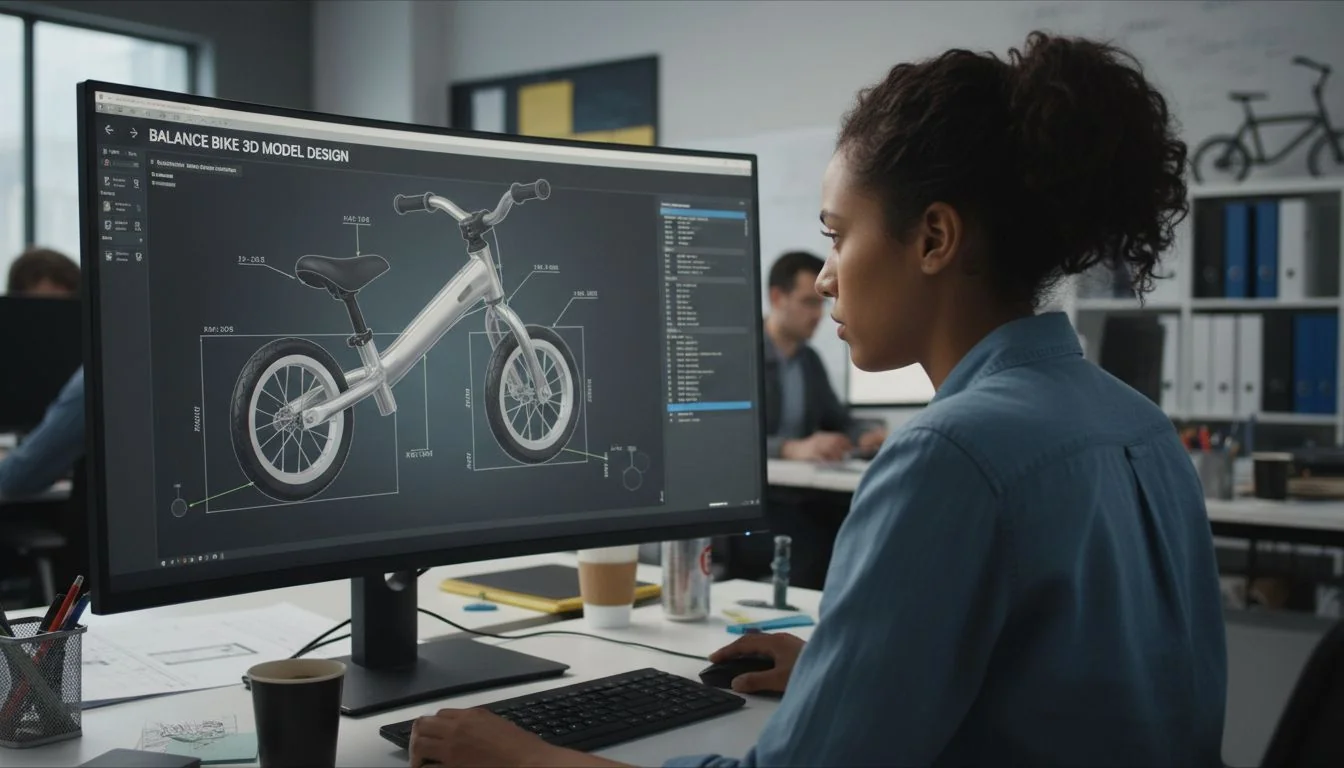
Moving from a single design to a bulk order is where your preparation really pays off. It's not just about sending a drawing and hoping for the best. You need to be systematic. I always tell my clients that the prototype is the most important step. It's your first chance to hold the physical product and test everything – the feel, the strength, the assembly. Skipping this to save a few hundred dollars can cost you thousands later. A good factory will insist on a prototype phase. This is also where you discuss the Minimum Order Quantity (MOQ). Factories have to set up their production lines for your specific product, so they need a minimum order to make it worthwhile. Be clear about your expected volume from the start.
Here’s a simple breakdown of your options:
| Approach | Descrición | Your Involvement |
|---|---|---|
| OEM (Original Equipment Manufacturer) | You provide your own unique design, and the factory produces it for you. | High (You own the design) |
| ODM (Original Design Manufacturer) | You choose an existing design from the factory's catalog and brand it as your own. | Low (Factory owns the design) |
For a truly custom balance bike, you are following the OEM path.
You can start mass production without approving a physical sample to save time.Falso
Skipping the physical sample approval is extremely risky. Digital models can't reveal issues with material feel, weight, balance, or subtle assembly problems. A sample is critical for final validation.
The Minimum Order Quantity (MOQ) is always negotiable with Chinese factories.Verdade
Aínda que as fábricas teñen MOQ estándar, moitas veces son negociables dependendo da complexidade do teu produto, do teu potencial para futuros negocios e do calendario de produción actual da fábrica.
What kind of designs and sketches do you need to provide?
Tes unha idea clara na túa cabeza para a bicicleta de equilibrio. Pero non estás seguro de que darlle á fábrica. Un simple debuxo será suficiente, ou necesitan algo máis?
Debe proporcionar fichas técnicas detalladas. Isto inclúe Debuxos 2D[^3] mostrando todas as dimensións e tolerancias e modelos CAD 3D. Estes documentos son a linguaxe universal que garante que a fábrica entende exactamente o que quere construír, evitando custosos malentendidos e erros durante a produción.

In my years of running a CNC and mold company, I learned one thing fast: ambiguity is expensive. A missing dimension or an unclear note on a drawing can bring production to a halt or, worse, lead to a batch of useless parts. This is why a complete design package is not optional. It’s your primary tool for communication and quality control. Think of it as the blueprint for your success. The more detail you provide upfront, the smoother the process will be. It protects you and the factory, creating a clear agreement on the final product.
The Role of 2D Drawings
Your 2D drawings are the official contract for dimensions. They should include every critical measurement, the acceptable range for those measurements (tolerances), the type of wood, the required finish (e.g., non-toxic paint, varnish), and any assembly notes. Every single part of your balance bike, from the frame to the handlebars, needs a detailed drawing.
The Power of 3D Models
The 3D model, usually in a universal format like .STEP or .IGES, is for visualization and programming. The factory uses it to see the final product, check how parts fit together, and program their CNC machines for cutting. It helps them quickly identify any potential manufacturing challenges with your design.
A simple hand-drawn sketch is sufficient for a factory to start production.Falso
A hand sketch is great for initial ideas, but for production, factories require precise, dimensioned 2D and 3D CAD files to ensure accuracy and manufacturability.
Including tolerances on your 2D drawings is crucial for part assembly.Verdade
Tolerances define the acceptable variation in a dimension. Without them, parts that need to fit together, like a wheel axle in a frame, might be too tight or too loose, ruining the product's function.
How do you choose the right wood for your balance bike?
You know you want a wooden bike, but which wood is best? Choosing the wrong type could make your bike too heavy, too weak, or blow your budget before you even start.
To choose the right wood, you must balance durability, weight, cost, and appearance. Common options like Birch plywood offer strength, while Beech is very hard and durable. Discuss your performance goals and budget with your factory, as they can suggest the best available materials.
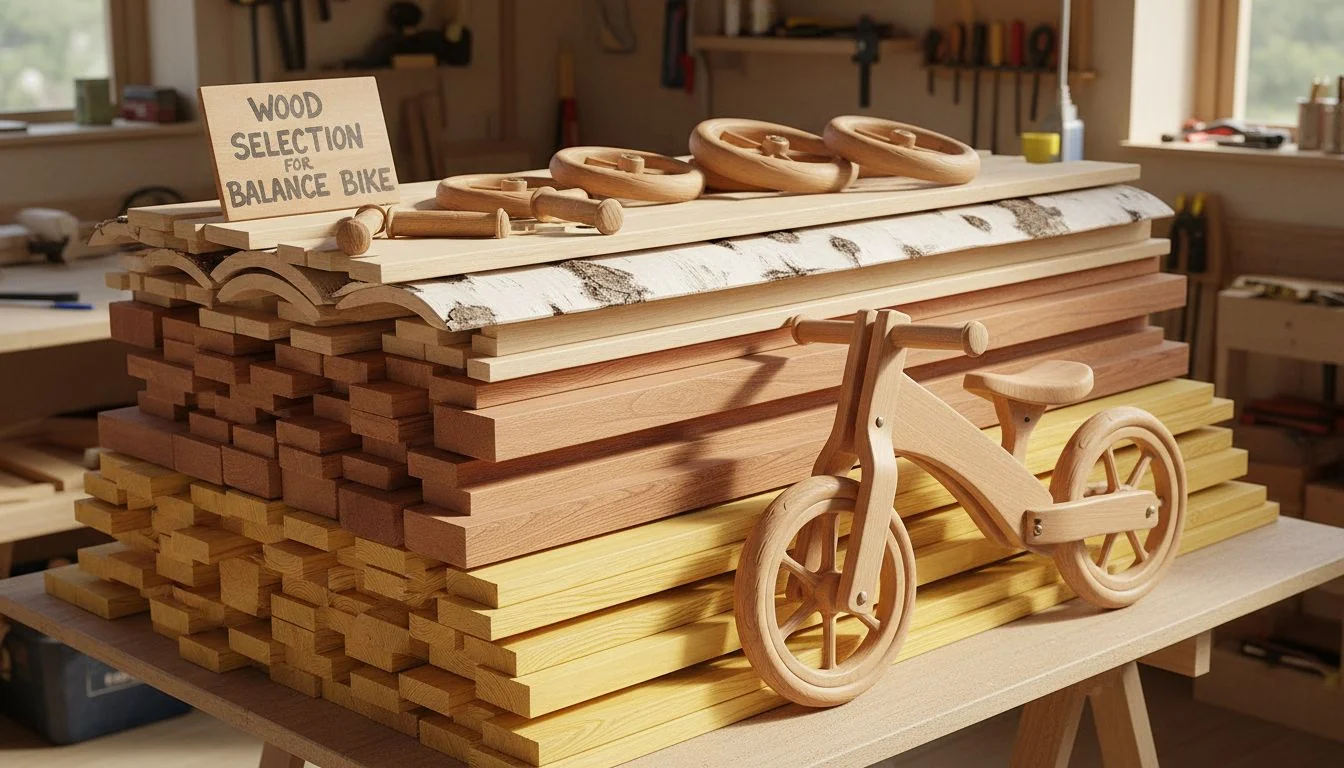
A selección do material é un paso crítico que afecta directamente a calidade e o custo do produto. Vin a clientes namorarse do aspecto dunha determinada madeira, só para descubrir que é demasiado branda e non supera as probas de seguridade ou que o seu custo fai que o produto final non se venda. Aquí é onde a experiencia dunha fábrica é inestimable. Traballan con estes materiais todos os días. Saben que madeiras mecan ben, cales son propensas a deformarse e cales dan o mellor acabado. Ademais, considera o mercado ao que estás a vender. Para moitos clientes de América do Norte e Europa, saber que a madeira procede dunha fonte sostible (como ter unha certificación FSC) é un importante punto de venda. Non teñas medo de preguntarlle á fábrica sobre a súa fonte e certificacións.
Here is a table to help you compare some common options:
| Tipo de madeira | Key Properties | Mellor caso de uso | Finishing Notes |
|---|---|---|---|
| Birch Plywood | Strong, stable, smooth surface | Frame, Forks, Wheels | Takes paint and varnish very well. |
| Faia | Hard, heavy, shock-resistant | Handlebars, Axles | Very durable, can be left natural. |
| Piñeiro | Lightweight, inexpensive, soft | Prototypes, budget models | Dents easily, requires a good sealant. |
| Madeira de caucho | Eco-friendly, medium density | Frame, Seats | A sustainable choice, good grain. |
All plywood is the same quality.Falso
Plywood quality varies dramatically based on the number of layers (plies), the type of wood used, the adhesive, and the grade of the outer veneers. For a toy, you need high-grade, void-free plywood.
A madeira de faia é unha excelente opción para pezas que precisan ser duradeiras e resistir o impacto.Verdade
A faia é unha madeira densa, dura e pesada cunha excelente resistencia aos choques, polo que é ideal para compoñentes de alto estrés nun xoguete infantil como unha bicicleta de equilibrio.
How do you know if your design is suitable for wood production?
O teu deseño parece perfecto no teu software CAD. Pero funcionará realmente no mundo real? Un deseño fácil de modelar en 3D pode ser un pesadelo fabricar a partir de madeira.
Un deseño é axeitado para a produción de madeira se respecta as propiedades do material. Isto significa usar formas sinxelas e mecanizables, deseñar xuntas fortes e considerar a dirección da veta da madeira. A mellor forma de saber con certeza é mediante a Revisión de Design for Manufacturability (DFM).[^4] coa túa fábrica.

This is the single most important conversation you will have with your manufacturer. As a mold designer, DFM is at the heart of everything I do. A plastic part that can't be ejected from a mold is useless, no matter how beautiful it looks. The same principle applies to wood. Your factory partner has the specialized knowledge to spot potential problems. They'll look at your design and say, "This internal corner is too sharp for our CNC bits, we need to add a radius," or "This joint will not be strong enough for a child's toy, we should use a mortise and tenon here." This collaborative review saves you from costly redesigns and production delays. It turns your design into a producible design.
Analyzing Geometry
Wood is not like molded plastic. You can't create just any shape. CNC machines that cut wood have limitations. For example, they can't create sharp internal corners; there will always be a radius left by the cutting tool. Your design must account for this. Thin walls or delicate features can easily break during machining or use.
Joint Design
How the parts of your balance bike connect is critical for safety and durability. Simple butt joints held with a screw might be fine for a picture frame, but not for a toy that will be ridden and dropped. Your design should incorporate stronger woodworking joints, like dowels or mortise and tenon, which the factory can advise on.
The DFM Review
The DFM review is a formal step where the factory's engineers analyze your design files. They will provide a report with suggestions for changes that will improve quality, reduce cost, and speed up production. Embrace this feedback. It's free expert advice that will make your product better.
Any design that can be 3D printed can also be easily manufactured from wood.Falso
3D printing (additive manufacturing) and CNC machining wood (subtractive manufacturing) are fundamentally different. Wood has grain, is prone to splintering, and has limitations on achievable shapes and internal geometries.
Collaborating with your factory on a Design for Manufacturability (DFM) review can significantly reduce production costs.Verdade
Unha revisión de DFM identifica características de deseño que son difíciles ou que levan moito tempo de producir. Os axustes sinxelos, como aumentar o raio dunha esquina ou cambiar o tipo de xunta, poden reducir drasticamente o tempo da máquina e os custos laborais.
Conclusión
Personalizar unha bicicleta de equilibrio de madeira de China é un obxectivo moi alcanzable. O éxito depende da preparación detallada do deseño, da selección intelixente de materiais e, o máis importante, dunha asociación forte e de colaboración co seu fabricante.
Referencias
[^1]: Obtén información sobre as complexidades e as mellores prácticas para unha fabricación exitosa en China.
[^2]: Comprender os compoñentes esenciais dun paquete de deseño para evitar erros custosos durante a produción.
[^3]: Explore por que os debuxos 2D detallados son esenciais para unha fabricación precisa e un control de calidade.
[^4]: Learn how a DFM review can enhance product quality and reduce production costs.
