

Struggling to reverse-engineer the success of top toy brands? It's tough to plan your own product when their manufacturing process is a complete mystery, leaving you guessing on costs and suppliers.
ʻo Melissa & Doug is a fantastic benchmark for quality and market appeal. However, the real lesson for designers is in their manufacturing strategy[^1]. Most of their wooden puzzles are produced in China, a model you can also leverage by partnering with the right direct manufacturer to optimize cost and quality.

When I started in the mold industry, I saw firsthand how a great design can either succeed or fail based on its manufacturing plan. You've probably spent hours perfecting a CAD model, but that's only half the battle. The other half is figuring out how to get it made efficiently and to a high standard. You look at a brand like Melissa & Doug and see a finished product on the shelf, but I see a series of production decisions—material selection, tooling, finishing, and supply chain logistics[^2]. Understanding these decisions is the key to turning your design into a profitable reality. Let's break down the process behind a simple wooden puzzle and see what lessons we can apply to your own projects.
ʻo Melissa & Doug manufactures all of its wooden toys in a facility in Connecticut.He wahahee
While the company is headquartered and designs its products in Connecticut, the vast majority of its manufacturing, especially for wooden toys, has been outsourced to factories in China since the early 2000s.
The smooth, rounded edges on quality wooden puzzle pieces are often achieved through a process called tumble sanding.ʻOiaʻiʻo
Ma hope o ka ʻoki ʻia ʻana, hoʻokomo ʻia nā ʻāpana lāʻau i loko o kahi mīkini hoʻoheheʻe nui me nā mea hoʻoheheʻe abrasive. Hoʻomaʻamaʻa maikaʻi kēia kaʻina hana i nā kihi ʻoi a me nā ʻili, e hōʻoia i ka palekana o nā ʻāpana no nā keiki liʻiliʻi.
ʻIke ʻoe i kahi i hana ʻia ai nā puzzles Melissa lāua ʻo Doug?
E ʻike ʻoe "Hoʻolālā ʻia ma USA" on the box and wonder what that really means for the supply chain. This lack of clarity makes it hard to map out your own production strategy.
The vast majority of Melissa & Doug's wooden puzzles are manufactured in China. The company handles product design, development, and quality assurance[^3] from its US headquarters, but leverages the established and cost-effective toy manufacturing infrastructure in Asia for large-scale production.

When you're designing a product, understanding where and why successful brands manufacture is critical. It's not just about finding the lowest price; it's about finding the right capabilities. My experience in setting up a CNC trading company taught me that the "Made In" label tells a complex story.
No ke aha ʻo Kina no ka hana ʻana i nā mea pāʻani?
For decades, China has been the world's workshop for toys. This isn't just about lower labor costs anymore. It's about a mature ecosystem. You find factories with decades of experience, specialized machinery for wood and plastic, a deep supply chain for materials and components, and a workforce skilled in assembly and finishing. For a company like Melissa & Doug, this means they can scale production quickly and reliably.
"Hoʻolālā ʻia i loko" vs. "Made In"
He kī kēia ʻokoʻa no ka mea hoʻolālā huahana e like me ʻoe. ʻO ia ke ʻano o ka waiwai naʻauao (IP), ʻike inoa inoa, a me nā kūlana maikaʻi e mālama ʻia e ka ʻoihana home. Hana lākou i nā kiʻi. ʻO ka hale hana ma Kina e hoʻokō iā lākou. Hāʻawi kēia ʻano hoʻohālike i kahi brand e kālele ana i kāna hana maikaʻi loa - ka hoʻolālā hoʻolālā a me ke kūʻai aku - ʻoiai ke lawelawe nei kahi hoa hana hana i kā lākou hana maikaʻi loa.
He aha kēia no kāu papahana
ʻO ka nūhou nui, ʻaʻole kū wale kēia mana hana i nā hōʻailona nunui. Ma keʻano he mea hoʻolālā kūʻokoʻa a iʻole he hui waena, hiki iāʻoe ke komo i ka hana kiʻekiʻe like. ʻO ka paʻakikī ka loaʻa ʻana a me ka nānā ʻana i ka hoa kūpono. ʻO kēia kahi aʻu i kōkua ai i nā mea kūʻai aku he nui. Ma ka hoʻohui ʻana iā lākou me nā mea hana pololei aʻu e hilinaʻi nei, ʻoki mākou i nā mea waena a kūkulu i kahi pilina maopopo, e hōʻoia i ka hoʻokō pono ʻia o kāu manaʻo hoʻolālā.
ʻO ka hana ʻana i waho i Kina e hopena mau i kahi huahana haʻahaʻa haʻahaʻa.He wahahee
Hoʻoholo ʻia ka maikaʻi o ka huahana e nā kikoʻī hoʻolālā, nā koho waiwai, a me nā kaʻina hoʻokele maikaʻi, ʻaʻole ka ʻāina kumu. ʻO nā hōʻailona honua kiʻekiʻe, me Apple, e hana i nā waiwai kiʻekiʻe ma Kina ma ka hoʻokō ʻana i nā kūlana koʻikoʻi.
China is the world's largest toy exporter, accounting for over 70% of the global toy market.ʻOiaʻiʻo
The country's massive manufacturing infrastructure, experienced labor force, and extensive supply chains have made it the dominant player in toy production for decades.
He aha nā mea i hana ʻia mai nā Puzzles Jigsaw?
Choosing the right material is a critical design decision. A wrong move can lead to a product that feels cheap, fails safety tests, or creates production headaches and drives up costs.
While puzzles can be made from paperboard, plastic, or wood, high-quality children's puzzles favor wood, specifically multi-layer plywood. This choice is driven by wood's durability, perceived value, and safety when finished correctly, making it ideal for the toddler market.
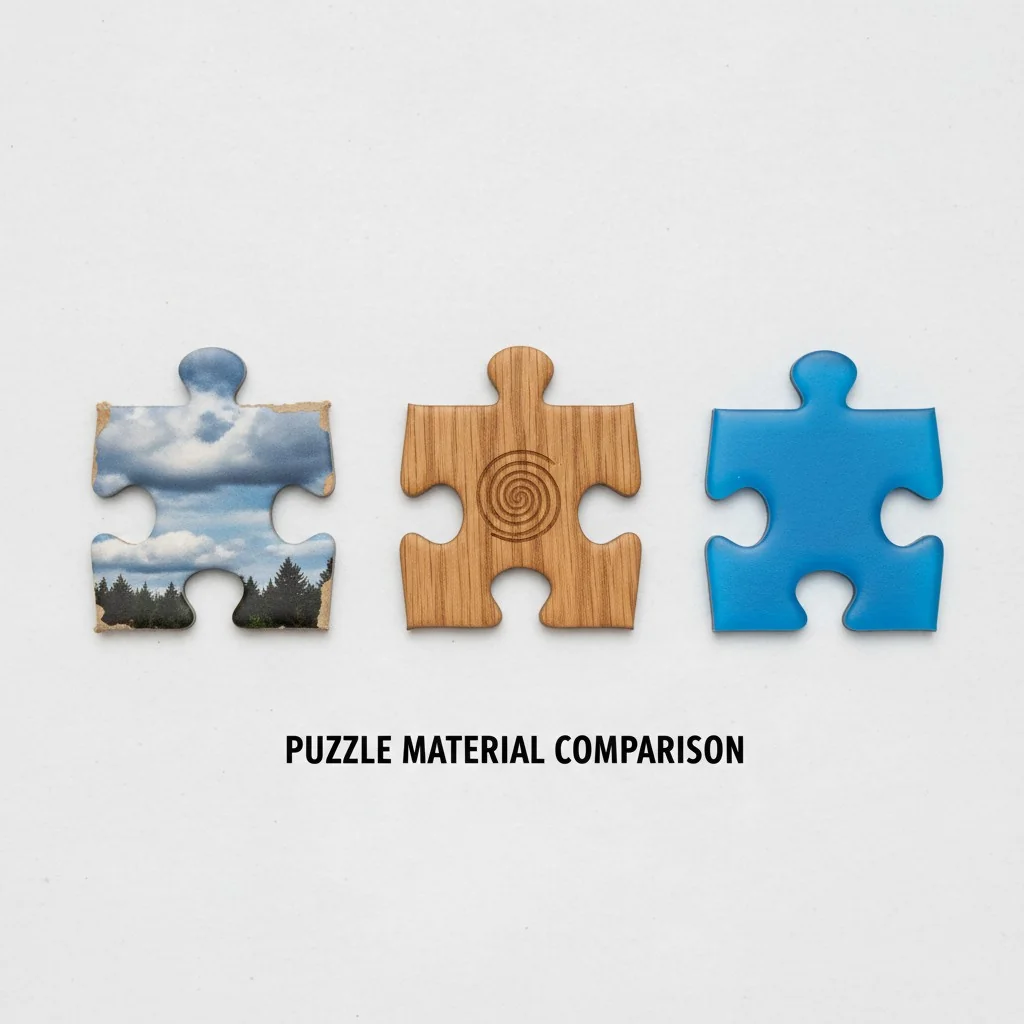
The material you choose defines the user's entire sensory experience with your product. It affects the weight, the sound the pieces make, and the feel in their hands. For a product designer, the material choice also dictates the manufacturing process. A plastic puzzle requires an injection mold, which is my area of expertise, while a wooden one involves CNC routing[^4] or laser cutting. Let's look at the options.
He Hoʻohālikelike ʻana i nā Mea Hoʻohālikelike Maʻamau
Understanding the pros and cons of each material helps you align your product with your target market and price point. A puzzle for a 2-year-old has very different requirements than one for a 10-year-old.
| Mea waiwai | Key Advantages | Key Disadvantages | Pono No |
|---|---|---|---|
| Paperboard | Very low cost, excellent for high-detail printing. | Least durable, easily bent or damaged by moisture. | Adult puzzles, promotional items. |
| Wood (Plywood) | Highly durable, premium feel, classic look, safe. | Higher material cost, heavier. | Toddler puzzles, nā mea pāʻani hoʻonaʻauao[^5], heirloom gifts. |
| Plastic (e.g., ABS) | Extremely durable, waterproof, easy to clean. | Requires expensive injection molds, can feel less "natural". | Bath toys, outdoor use, puzzles with unique interlocking shapes. |
For the toddler market that Melissa & Doug targets, wood is the clear winner. Parents perceive it as a safer, more natural, and more educational material. It withstands the rough handling of a toddler, and the weight of the pieces feels substantial and high-quality. Your design should leverage these strengths.
All wooden toys are made from 100% natural, solid wood.He wahahee
Many high-quality wooden toys are made from engineered wood like plywood or MDF. These materials are often more stable, less prone to warping, and more cost-effective than solid wood for these applications.
The paints used on children's toys sold in the U.S. must meet federal safety standards outlined in ASTM F963-17.ʻOiaʻiʻo
This standard limits the amount of lead and other heavy metals in surface coatings to ensure toys are non-toxic and safe if a child puts them in their mouth.
ʻO wai ka Plywood i ʻoi aku ka maikaʻi no ka hana ʻana i ka puzzle a nā keiki?
You've decided on wood, but "plywood" is a huge category. Choosing the wrong type can ruin the cut quality, compromise safety, and negatively affect the final look and feel of your product.
Baltic Birch plywood[^6] is widely considered the best choice for premium children's toys and puzzles. Its multi-layer, void-free core provides exceptional stability and a clean edge when cut, while its smooth surface is perfect for printing or painting.
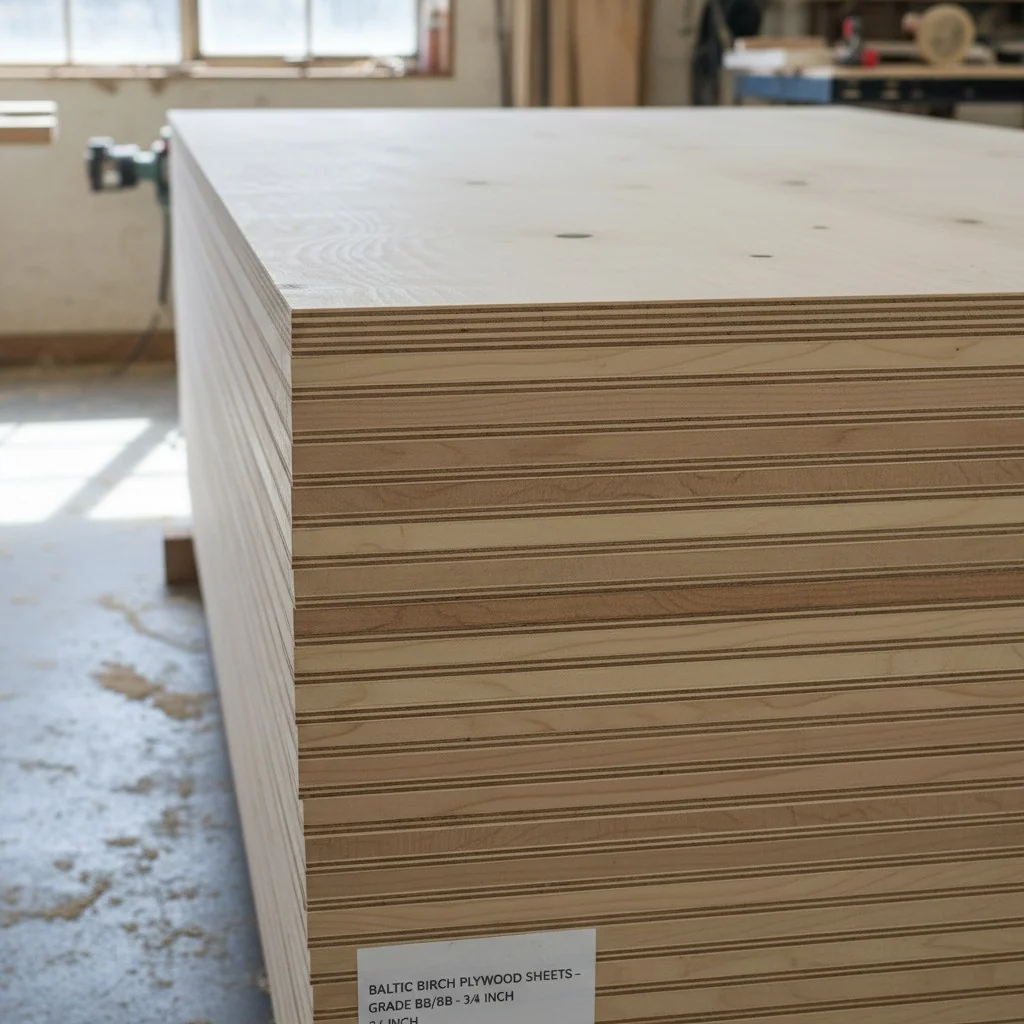
Getting into the specifics of materials is what separates a good designer from a great one. When you send a tech pack to a manufacturer, specifying the exact grade and type of material prevents ambiguity and ensures you get the quality you expect. I've seen projects get derailed because the designer just wrote "wood" on the spec sheet.
No ke aha i kū ai ka Baltic Birch Plywood
Baltic Birch isn't your standard hardware store plywood. It's an engineered panel made specifically for applications where quality matters.
- Void-Free Core: It's constructed with multiple, equally thick layers of birch veneer, and the manufacturing process ensures there are no gaps or voids inside. This is critical when you are laser cutting or routing small, intricate puzzle pieces. Voids can cause the surface to collapse or create ugly blemishes on the edge.
- Strength and Stability: The cross-banded layers make it incredibly stable. It resists warping and stays flat, which is essential for a puzzle tray and its pieces.
- Clean Edge: When cut, the edge shows clean, attractive layers, which can be left exposed as a design feature.
He mea nui ka Papa Plywood
You'll often see grades like "B/BB". This refers to the quality of the face veneers. A "B" grade face is smooth and clear, with no patches, making it ideal for the "show" side of your puzzle. The "BB" grade back allows for small, circular patches. Specifying a grade like B/BB gives you a high-quality appearance without the cost of a perfect B/B grade.
The glue used in all plywood is waterproof and non-toxic.He wahahee
Plywood is made with different glues for different purposes. Interior-grade plywood often uses urea-formaldehyde glues, which are not water-resistant. Exterior or marine-grade plywoods use waterproof glues, but material safety data sheets must be checked to ensure they are non-toxic for a toy application.
Laser cutting plywood is a popular manufacturing method for puzzles because it can cut intricate shapes with high precision and seals the wood edge, reducing splintering.ʻOiaʻiʻo
A focused laser beam vaporizes the wood, allowing for very fine details that would be difficult with a traditional saw. The heat from the laser also cauterizes the edge, leading to a smooth, dark, and splinter-free finish.
Pehea ʻoe e hoʻolālā ai i nā puʻupuʻu a me kā lākou mālama ʻana no kahi ʻike mea hoʻohana maikaʻi aʻe?
A great product experience doesn't end when the puzzle is solved. If pieces get lost easily because of poor storage, parents get frustrated, and it reflects badly on your brand's thoughtfulness.
The best puzzle storage is designed as part of the product itself. Features like a wooden tray with raised edges, a durable box, or a purpose-built rack for a set of puzzles add immense practical and perceived value.

As a designer, you're not just creating an object; you're designing an entire user experience. From the moment the customer opens the box to the moment they put it away, every step matters. Thinking about storage from the beginning is a hallmark of great design. It shows you understand your customer's real-world challenges.
Hoʻolālā-Hoʻohui Kūʻai Kūʻai
Let's move beyond just throwing pieces in a plastic bag.
- The Puzzle Tray: This is the most common solution for toddler puzzles. A simple wooden board with a routed-out recess or raised edges serves three purposes: it's a building surface, it shows a picture of the finished puzzle, and it's the storage container. When designing this, consider the depth of the tray and the finger-scoops for easy piece removal.
- Value-Add Racks and Holders: If you are launching a "Wooden Puzzles Set Of 3," don't just shrink-wrap them together. Design a simple, elegant wooden rack to hold them. This transforms your product from three individual items into a cohesive "system." This rack can be easily manufactured using CNC-cut plywood slots and simple assembly. It's a small addition that dramatically increases the product's gift-ability and perceived value.
- Durable Packaging: Think of the box not just as retail packaging but as a long-term storage component. Use thicker cardstock, consider a magnetic closure, or design an inner tray that organizes the pieces. This costs a little more, but it communicates quality and care.
Adding a storage solution like a rack or case has little impact on a toy's sales.He wahahee
Products that solve a problem for parents, such as organization and storage, have a distinct market advantage. This added convenience is a powerful selling point and can justify a higher retail price.
Good packaging design can reduce shipping costs by optimizing dimensional weight.ʻOiaʻiʻo
By designing compact, efficient packaging, you can minimize the volume of the shipping carton, which carriers use to calculate 'dimensional weight.' A smaller, lighter package directly translates to lower logistics costs.
Ka hopena
Understanding the manufacturing behind a simple wooden puzzle reveals key lessons in material choice, sourcing, and user-centered design. Apply these insights to make your next product a commercial success.
Nā kuhikuhi
[^1]: Exploring effective manufacturing strategies can help you optimize costs and quality in your toy design.
[^2]: Understanding supply chain logistics is crucial for efficient toy production and cost management.
[^3]: Quality assurance practices are essential for maintaining high standards in toy production.
[^4]: Understanding CNC routing can enhance your knowledge of precision manufacturing for toys.
[^5]: Explore the characteristics that define educational toys and their impact on child development.
[^6]: Discover the benefits of Baltic Birch plywood for creating high-quality, durable children's toys.
