

Það er erfitt að finna áreiðanlega birgja. Slæmt val getur eyðilagt verkefnið þitt og orðspor vörumerkisins. Ég mun deila innherjaþekkingu minni um hvernig á að finna bestu samstarfsaðilana í Kína.
Til að vera í samstarfi við fremstan tréþrautaframleiðanda verður þú að meta djúpt framleiðsluferli[^1], staðfestu gæðaeftirlitskerfi þeirra og skildu getu þeirra fyrir magnpantanir. Þetta tryggir samræmi, gæði og áreiðanleika fyrir vörumerkið þitt, rétt eins og heimsfrægu leikfangamerkin sem við útvegum.

Þegar ég stofnaði viðskiptafyrirtækið mitt fyrst lærði ég erfiða lexíu. Viðskiptavinur vildi fá stóra pöntun af viðarleikföngum og ég valdi birgja miðað við verð eingöngu. Niðurstaðan var hörmung af skekktum hlutum og lélegum frágangi. Sú reynsla kenndi mér að fyrir hönnuð eins og þig, Jacky, að skilja hvernig framleiðslu er alveg jafn mikilvægt og hvað af hönnun. Það hjálpar þér að hanna með tilliti til framleiðslugetu og velja félaga sem getur lífgað sýn þína til lífs án málamiðlana. Við skulum kafa ofan í það sem ég hef lært af því að útvega stærstu nöfnum leikfangaiðnaðarins.
Allar viðartegundir eru jafn hentugar til að búa til þrautir með mikilli nákvæmni.Rangt
Mismunandi viðar hafa mismunandi hörku, korn og viðbrögð við raka. Harðviður eins og beyki er endingarbetri og minna tilhneigingu til að vinda en mjúkur eins og fura, sem gerir þá betur fyrir flóknar þrautir.
Rakastýring er mikilvæg í verksmiðju sem framleiðir viðarvörur.Satt
Viður þenst út og dregst saman við breytingar á rakastigi. Án réttrar loftslagsstýringar geta fullunnin púsluspilsstykki skekkst eða sprungið, sem leiðir til lélegrar passa og gæðavandamála. Við höldum stöðugum 40-50% raka á verkstæði okkar.
Hvað felur tréþrautaframleiðsluferlið í raun í sér?
Að hanna frábæra púsl er eitt. En veistu hvernig það er búið til? Misskilningur á ferlinu getur leitt til dýrra hönnunargalla og framleiðslutafa fyrir verkefnið þitt.
Framleiðsluferlið felur í sér varkárni efnisval[^2], nákvæmni leysisskurður eða CNC vinnsla, fjölþrepa slípun og fæging, eitruð málun eða prentun, og að lokum, nákvæm samsetning og lokaumbúðir. Hvert skref krefst sérstakra véla og hæfra stjórnenda til að tryggja hágæða lokaafurð.

Ég man eftir að hafa heimsótt mögulegan birgja fyrir mörgum árum. Verkstæðið þeirra var rugl og þeir notuðu eina grófa slípun fyrir allar vörur sínar. Ég vissi strax að þeir gátu ekki framleitt sléttan, háþróaðan frágang sem viðskiptavinur minn krafðist. Frábær framleiðandi er stoltur af ferlinu sínu og sem hönnuður þarftu að vita hvað þú átt að leita að. Þetta snýst ekki bara um lokaafurðina; þetta snýst um ferðalagið sem það tekur. Vel stjórnað ferli er undirstaða gæðavöru. Við skulum brjóta niður helstu stigin sem þú ættir að spyrja um.
Stig 1: Efnisöflun og undirbúningur
Þetta byrjar allt með viðnum. Við notum fyrst og fremst hágæða bassvið eða beykikrossvið. Þetta er valið fyrir stöðugleika og slétt korn. Viðurinn er fyrst skoðaður með tilliti til galla eins og hnúta eða sprungna. Síðan er það geymt á loftslagsstýrðu svæði til að koma á jafnvægi á rakainnihaldi þess. Þetta skref er mikilvægt til að koma í veg fyrir skekkju síðar.
Stig 2: Nákvæmnisskurður
Þetta er þar sem stafræn hönnun þín verður líkamlegur hlutur. Helstu aðferðirnar tvær eru laserskurður[^3] og CNC leið.
| Eiginleiki | Laserskurður | CNC leiðsögn |
|---|---|---|
| Vélbúnaður | Kraftmikill leysir gufar upp viðinn. | Líkamlegur spunabiti ristir viðinn. |
| Nákvæmni | Mjög hátt, fullkomið fyrir pínulitla, flókna hluta. | Mjög hátt, en takmarkað af þvermál bitsins. |
| Edge Finish | Slétt, en með einkennandi dökkum, brenndum brún. | Hreinskorinn brún, gæti þurft meiri slípun. |
| Best fyrir | Flóknar 2D þrautir með fínum smáatriðum. | 3D þrautir, þykkari efni, ávalar brúnir. |
Stig 3: Frágangur og samsetning
Eftir klippingu fara stykkin í gegnum margar umferðir af slípun til að tryggja að hver brún sé slétt og klofnalaus.
Síðan eru þau máluð með vottaðri óeitruðu, barnaöryggismálningu. Að lokum eru þrautirnar settar saman, athugaðar með tilliti til passa og þeim pakkað í samræmi við forskrift viðskiptavina. Viðarþrautarslípun myndband eins og hér að neðan:
Viðarþrautir við leysiskurð skilur alltaf eftir grófa, sundurleita brún.Rangt
Vel kvarðaður leysirskera innsiglar í raun viðinn þegar hann sker, sem leiðir til furðu sléttrar, þó dökkvaðar, brúnar sem oft þarf minni slípun en vélrænt skorinn brún.
Tegund krossviðarlíms sem notað er getur haft áhrif á öryggisvottun þrautar.Satt
Fyrir leikföng og þrautir, sérstaklega fyrir börn, verður límið sem notað er í krossviðinn að vera lítið formaldehýð eða formaldehýðfrítt (eins og E0 eða CARB P2 einkunnir) til að uppfylla alþjóðlega öryggisstaðla eins og EN-71 og ASTM F963.
Hvernig getur þú tryggt gæðaeftirlit fyrir tréþrautirnar þínar?
Það er martröð að fá fullt af þrautum með göllum. Það eyðir tíma, kostar peninga og skemmir vörumerkið þitt. Þú þarft trausta QC áætlun til að koma í veg fyrir þetta.
Þú tryggir gæði með því að setja skýra staðla frá upphafi. Innleiða fjölþrepa skoðanir: hráefnisathuganir (IQC), eftirlit í vinnslu við klippingu og frágang (IPQC), og loka, alhliða skoðun (FQC) fyrir pökkun og sendingu. Þessi kerfisbundna nálgun grípur vandamál snemma.
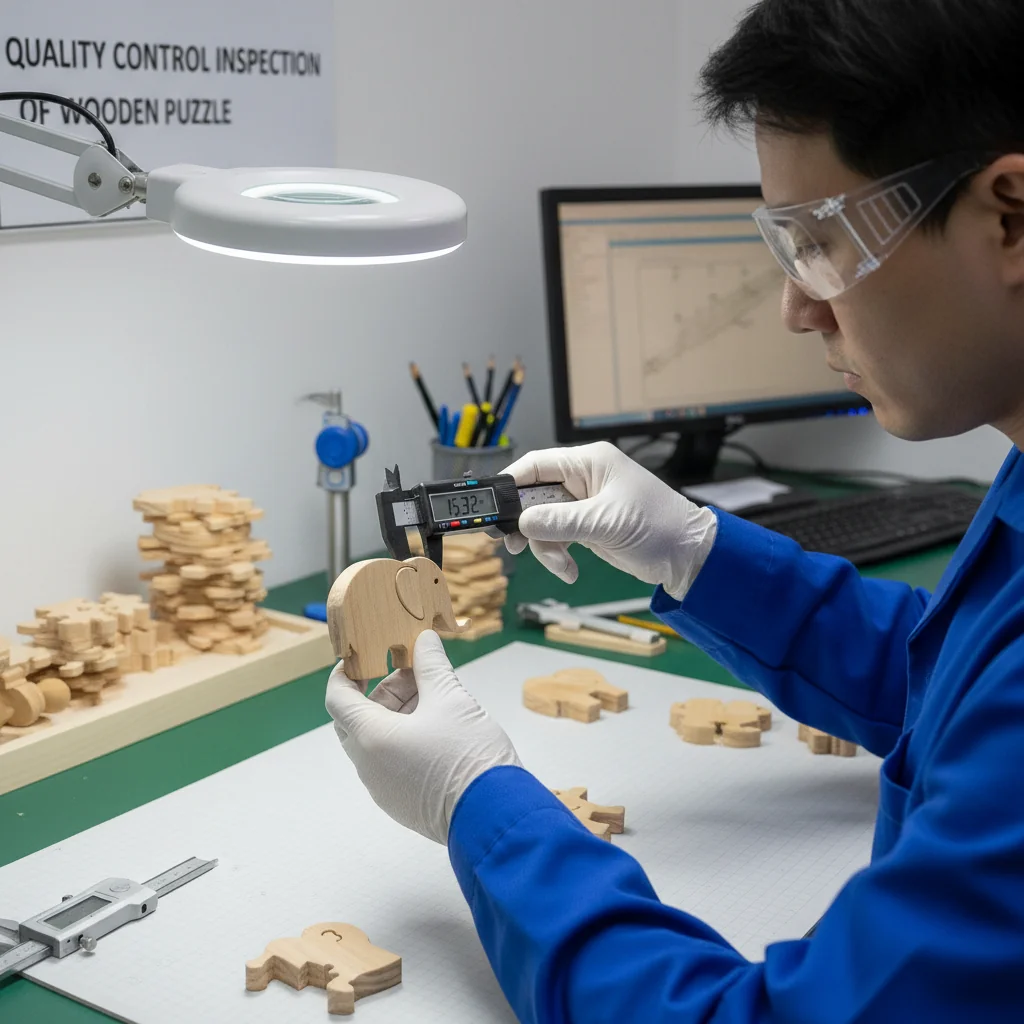
Einn stærsti viðskiptavinur okkar, heimsfrægt leikfangamerki, hefur ótrúlega stranga gæðastaðla. Þegar við byrjuðum fyrst að vinna með þeim sendu þeir sína eigin eftirlitsmenn í verksmiðjuna mína í mánuð. Ég lærði svo mikið af þeim. Þeir kenndu mér að gæði eru ekki eitthvað sem þú „skoðar í" í lokin. Það þarf að vera innbyggt í hvert einasta skref í ferlinu. Þessi hugarfarsbreyting breytti leik fyrir fyrirtæki mitt. Nú notum við sama stranga QC fyrir hverja pöntun, stór sem smá. Það er eina leiðin til að byggja upp traust og langtíma samstarf.
Stig 1: Gæðaeftirlit með innkomu (IQC)
Þetta er fyrsta varnarlínan. Áður en viður fer inn í framleiðslulínuna, athugar QC teymið okkar það. Þeir leita að sjónrænum göllum eins og hnútum, sprungum eða aflitun. Þeir nota einnig rakamæla til að tryggja að viðurinn sé rétt aðlagaður, sem kemur í veg fyrir skekkju í framtíðinni. Öllu efni sem uppfyllir ekki staðla okkar er hafnað og sent aftur til birgis.
Stig 2: Gæðaeftirlit í vinnslu (IPQC)
Lið okkar framkvæmir athuganir á mikilvægum stöðum meðan á framleiðslu stendur. Eftir leysisskurð staðfestir rekstraraðili stærð sýnishorns af stykki á móti CAD skránni þinni. Eftir slípun eru stykkin athugað með tilliti til sléttleika og hvers kyns spóna sem eftir eru. Eftir málningu athugum við hvort litasamkvæmni og þekju sé í lagi. Þetta grípur vandamál snemma áður en þau hafa áhrif á alla lotuna.
Stig 3: Endanleg gæðaeftirlit (FQC)
Þetta er síðasta hliðið fyrir sendingu. Sérstakt teymi skoðar tölfræðilega marktækt sýni úr fullunna lotunni byggt á AQL (Acceptable Quality Limit) stöðlum.
| Tegund galla | Skoðunaraðferð | Samþykkisviðmið |
|---|---|---|
| Mál nákvæmni | Stafrænar mælikvarðar | Innan +/- 0,1 mm frá forskrift |
| Sveigja/beygja | Athugun á flatt yfirborði | Ekkert sjáanlegt bil undir stykkinu |
| Mála/klára | Sjónræn skoðun | Ekkert drop, loftbólur eða ójafn litur |
| Piece Fit | Handvirkt samsetningarpróf | Hlutarnir passa vel saman, ekki of þétt eða laus |
AQL 2.5 er staðall sem gerir ráð fyrir að 2,5% af lotu sé gölluð.Rangt
AQL 2.5 (Acceptable Quality Limit) er tölfræðilegur sýnatökustaðall. Það þýðir að ef fjöldi galla sem finnast í slembiúrtaki er við eða undir fyrirfram ákveðnu samþykkisnúmeri fyrir þá úrtaksstærð, er öll lotan samþykkt. Það þýðir ekki að 2,5% vörunnar megi vera gölluð.
Litasamkvæmni í viðarþrautum getur verið fyrir áhrifum af náttúrulegum breytingum í viðnum sjálfum.Satt
Jafnvel þegar sömu málningin er notuð, geta smávægilegar breytingar á lit, korni og gropleika viðarins valdið því að endanlegur málaði liturinn lítur aðeins öðruvísi út. Góður framleiðandi stjórnar þessu með því að flokka timbur úr sömu framleiðslulotu í eina framleiðslulotu.
Hvað ættir þú að hafa í huga fyrir magnkaup í tréþraut?
Það er áhættusamt að leggja inn stóra pöntun. Hvernig tryggir þú að þú fáir besta verðið án þess að fórna gæðum eða missa af frestinum þínum? Það er jafnvægisaðgerð sem krefst vandaðrar skipulagningar.
Fyrir magnkaup, einbeittu þér að því að semja um einingarverð byggt á magni, koma á skýrum afgreiðslutímasamningum og tryggja að gæðaeftirlit framleiðandans geti skalast við framleiðslu. Staðfestu líka þeirra framleiðslugetu[^4] og flutningsgetu með góðum fyrirvara til að forðast flöskuhálsa.

Ég mun aldrei gleyma þrýstingnum frá fyrstu sex stafa pöntuninni minni. Viðskiptavinurinn þurfti 50.000 einingar á þremur mánuðum. Lykillinn að velgengni var ekki bara að fá gott verð; það var verið að skipuleggja alla aðgerðina. Ég settist niður með framleiðslustjóranum mínum og við kortlögðum allt: hráefnispantanir, vélaáætlun, mönnun fyrir samsetningu og sendingaráætlun. Fyrir hönnuð eins og þig, Jacky, er mikilvægt að skilja þessa flutninga. Það hjálpar þér að setja raunhæfar tímalínur með liðinu þínu og stjórna væntingum. Frábært verð þýðir ekkert ef varan kemur seint eða með gæðavandamál.
Þáttur 1: Samið um verð og MOQs
Augljósasti hluti af magnkaupum er verðið. Framleiðendur bjóða upp á þrepaskipt verð sem byggist á magni. Því meira sem þú pantar, því lægri einingarkostnaður. Þetta er vegna þess að fastur kostnaður (eins og vélauppsetning) dreifist á fleiri einingar. Vertu tilbúinn til að ræða lágmarkspöntunarmagn (MOQ).
| Pantunarmagn | Áætlað einingarverð | Skýringar |
|---|---|---|
| 1.000 - 2.999 einingar | $5,00 | Hefðbundin verðlagning |
| 3.000 - 4.999 einingar | $4,75 | 5% afsláttur |
| 5.000 - 9.999 einingar | $4,50 | 10% afsláttur |
| 10.000+ einingar | $4,25 | 15% afsláttur, besta verðið |
Þáttur 2: Framleiðsluáætlun og afgreiðslutímar
Biðjið um nákvæma framleiðsluáætlun. Áreiðanlegur framleiðandi getur sagt þér nákvæmlega hversu langan tíma hvert stig mun taka. Fyrir stóra pöntun gæti framleiðslan gerst í bylgjum. Þetta gerir ráð fyrir stöðugri QC og getur jafnvel leyft þér að byrja að fá hlutasendingar fyrr. Staðfestu afgreiðslutímann, sem er heildartíminn frá því að pöntun er lögð fram þar til hún er tilbúin til sendingar.
Þáttur 3: Vöruflutningar og siglingar
Hvernig munu tugir þúsunda þrauta komast frá verksmiðjunni í Kína til vöruhússins þíns í Kanada? Framleiðandinn ætti að hafa reynslu af alþjóðlegum flutningum. Ræddu kröfur um umbúðir til að koma í veg fyrir skemmdir við flutning. Staðfestu sendingarskilmálana (t.d. FOB, CIF) til að skilja hver ber ábyrgð á vörunum á hverju stigi ferðarinnar. Góður samstarfsaðili getur séð um útflutningspappírana og samræmt við flutningsaðila, sem gerir ferlið mun sléttara fyrir þig.
FOB (Free On Board) sendingarkostnaður þýðir að seljandi er ábyrgur fyrir vörunum þar til þær koma á lokaáfangastað kaupanda.Rangt
FOB þýðir að ábyrgð seljanda lýkur þegar vörum hefur verið hlaðið á skipið í tilnefndri höfn. Kaupandi ber ábyrgð á vörum, tryggingum og kostnaði frá þeim tímapunkti.
Raunveruleg framleiðslugeta framleiðanda er oft lægri en tilgreind hámarksgeta hans.Satt
Hámarksgeta gerir ráð fyrir að vélar gangi allan sólarhringinn án þess að vera í biðtíma, sem er óraunhæft. Raunveruleg afkastageta tekur til vélaviðhalds, starfsmannahléa, fría og QC athugana. Spyrðu alltaf um raunhæfa, sjálfbæra framleiðslu þeirra.
Niðurstaða
Að finna rétta framleiðandann þýðir að kanna ferli þeirra, QC og magngetu. Þetta tryggir að hönnunin þín verði hágæða vara, verndar vörumerkið þitt og fullnægir viðskiptavinum þínum.
Heimildir
[^1]: Skilningur á framleiðsluferlinu er lykilatriði til að tryggja gæði og skilvirkni í framleiðslu.
[^2]: Efnisval hefur áhrif á endingu og fagurfræði, sem gerir það nauðsynlegt fyrir hágæða þrautaframleiðslu.
[^3]: Laserskurður býður upp á nákvæmni og skilvirkni, sem eru nauðsynleg til að búa til flókna þrautahönnun.
[^4]: Mat á framleiðslugetu skiptir sköpum til að mæta tímamörkum og stjórna stórum pöntunum á áhrifaríkan hátt.
