
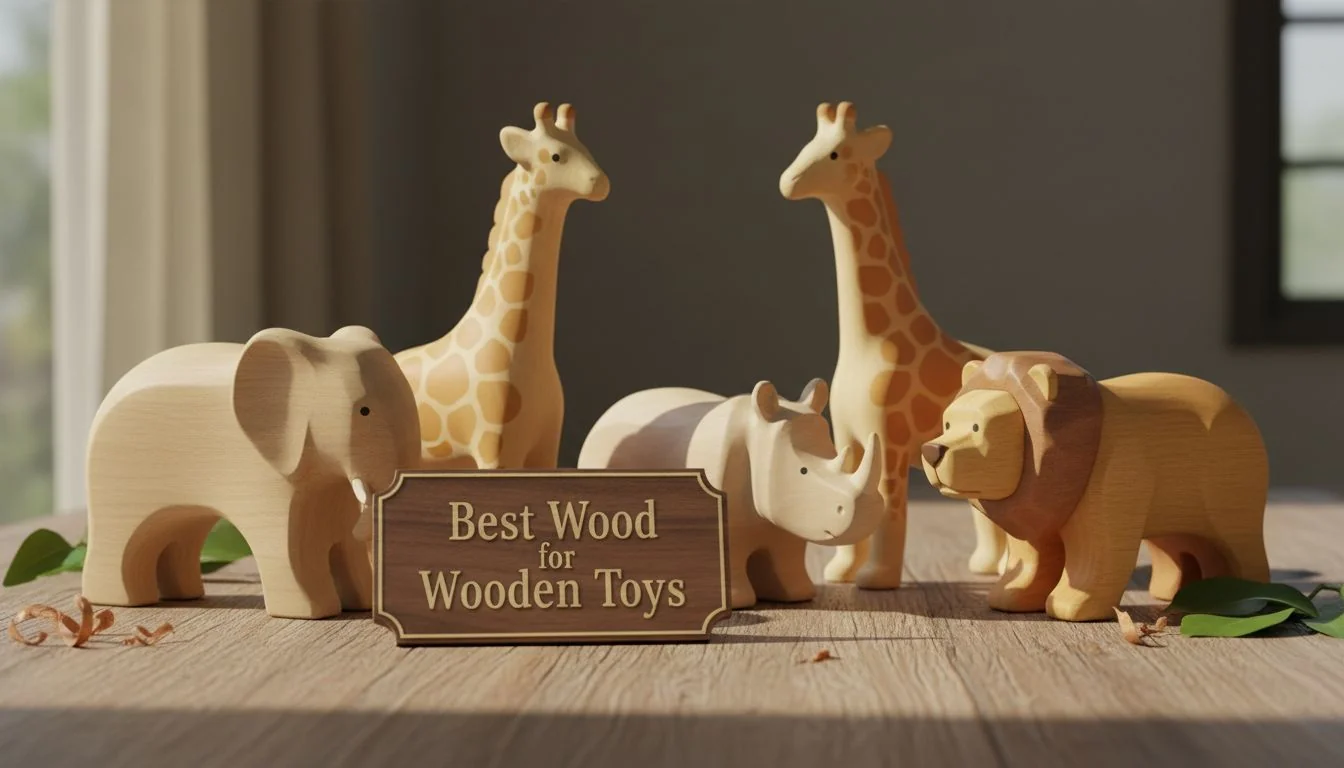
Déi falsch Holz fir e Spillsaach auswielen kann zu Splitter a Sécherheetsrisiken féieren. Dëst kann de Ruff vun Ärer Mark beschiedegen an zu deiere Réckruff resultéieren, eng super Iddi an eng Haftung maachen.
Déi bescht Bëscher fir Spillsaachen sinn haart, net splintern, an net gëfteg hardwoods[^1] wéi Ahorn, Beech, a Birch. Dës Bëscher sinn haltbar, hunn e glaten Ofschloss, a kënne rau Spill widderstoen, fir datt d'Finale Produkt souwuel schéin a sécher fir Kanner ass.
I've spent my career in manufacturing, mostly with molds and plastics. But the core principles are always the same, whether you're injecting plastic or carving wood. It all comes down to choosing the right material for the job. I've worked with partners like Woddlon on specialized projects, and I've seen firsthand how material choice makes or breaks a product, especially one for kids. You need to think about safety, durability, and how the material behaves during mass production[^2]. Let's walk through how I approach this, so you can make the right call for your next project.
All softwoods are unsafe for making children's toys.Falsch
Wärend vill Softholz wéi Pinien liicht dentéieren a splinteren, sinn e puer, wéi Poplar, mëll awer hunn eng eenheetlech Textur a ginn als sécher ugesinn wann se richteg fäerdeg sinn. De Schlëssel ass d'Häertheet an d'Splitterresistenz, net nëmmen d'Kategorie "Softwood" oder "Hardwood".
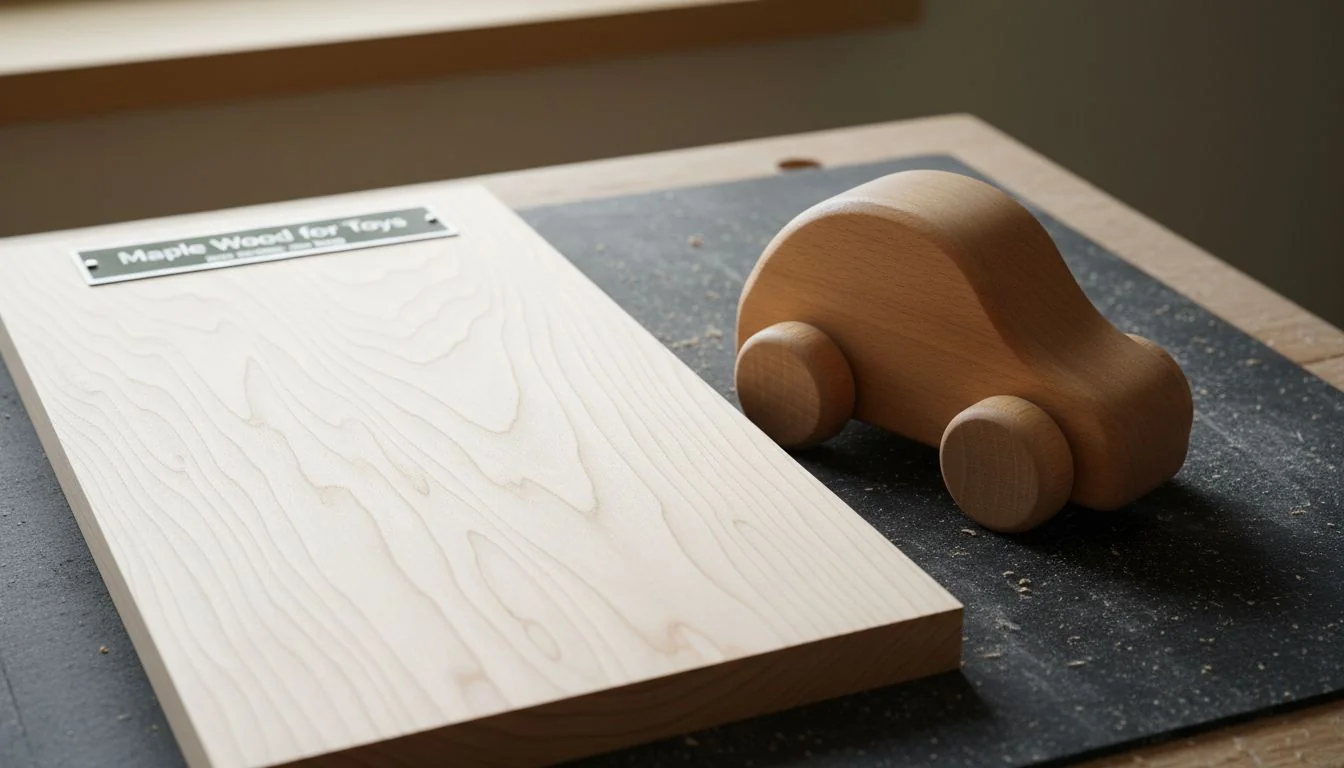
Ahornholz ass ee vun den haardsten Hausholz, sou datt et extrem haltbar ass fir Spillsaachen.Wouer
Mat enger Janka Hardness Bewäertung vu ronn 1,450 lbf, Hard Maple ass aussergewéinlech resistent géint Zänn a Verschleiung, dofir ass et eng Top Wiel fir Elementer wéi Holzblocken, Autoen an aner Spillsaachen déi schwéier benotzen.
Wéi wielt Dir dat Bescht Holz fir e personaliséierten Holzspiller?
Designing a one-of-a-kind custom toy is exciting, but your material choice is critical. A poor choice can undermine a great design, leading to a product that breaks or feels cheap.
For a custom toy, you must prioritize safety and durability above all else. The best wood is a dense hardwood that won't splinter, is naturally non-toxic, and can be sanded to a very smooth finish. Maple and Beech are my go-to recommendations for these reasons.

Wann e Client bei mech kommt mat engem eenzegaartege Spillsaachdesign, zerbriechen mir den Holzauswielprozess an dräi Schlësselberäicher. Et geet net nëmmen ëm dat wat gutt ausgesäit; et geet ëm dat wat am Beschten leeft an d'Kanner sécher hält. Ech erënnere mech un e Projet fir eng Rei vu personaliséierten Alphabetblocken. De Client huet sech op e méi bëllegen Holz geleet fir op initial Käschten ze spueren. Ech hunn hinnen e Probe vun deem Holz nieft engem Stéck hart Ahorn gewisen. Den Ënnerscheed am Gewiicht, Gefill, an Ofschloss war offensichtlech. Mir hunn diskutéiert wéi den Ahorn géint Zänn widderstoen an net riskéiere géif ze splinteren. Si hunn d'Ahorn ausgemaach, an d'Finale Produkt war e grousse Succès, deen all passéiert Sécherheet Zertifizéierung[^3] mat Liichtegkeet.
Schlëssel Facteure fir Benotzerdefinéiert Spillsaachen
Hei ass wéi mir d'Optiounen evaluéieren:
- Sécherheet: The wood must be non-toxic. Avoid woods that can cause allergic reactions or contain natural toxins. It also needs to be splinter-resistant. A child's safety is the number one priority.
- Durability: Custom toys are often cherished for years. The wood should be hard enough to resist dents, scratches, and breakage from drops and rough play. This is where the Janka hardness scale[^4] is a useful guide.
- Finish and Feel: The wood should sand to a silky-smooth finish to be safe for little hands. The grain pattern and color also contribute to the toy's final look and feel, which is a big part of a custom product's appeal.
Here is a simple table to compare some common choices:
| Holz Typ | Safety (Splinter Risk) | Durability (Janka Hardness) | Finish Quality | Beschte Fir |
|---|---|---|---|---|
| Ahorn | Ganz niddereg | High (1450 lbf) | Excellent | Blocks, cars, teething toys, puzzles |
| Beech | Ganz niddereg | High (1300 lbf) | Excellent | Building blocks, figures, rattles |
| Birch | Niddereg | Medium (1260 lbf) | Very Good | Puzzles, smaller painted toys |
| Pinien | Héich | Low (380 lbf) | Fair | Not recommended for unpainted toys |
| Eiche | Medium (Porous) | High (1360 lbf) | Good | Not ideal due to large, open pores |
Oak is a great choice for toys because it is a hardwood.Falsch
Although Oak is very hard and durable, its large, open grain (pores) can trap dirt and bacteria, making it less ideal for toys that children might put in their mouths. Woods with a closed, tight grain like Maple are more hygienic.
Beech wood is naturally anti-bacterial.Wouer
Studies have shown that wood, including Beech, has natural antimicrobial properties that can kill bacteria on its surface, making it an excellent and hygienic choice for children's toys.
Wéi wielt Dir Holz fir Bulkproduktioun?
Plënneren vun engem eenzege Prototyp op Dausende vun Unitéiten ännert alles. Op eemol ginn d'Käschte, d'Konsistenz an d'Maschbarkeet grad esou wichteg wéi d'physikalesch Eegeschafte vum Holz. Dir braucht eng Strategie.
Fir d'Massproduktioun braucht Dir en Holz dat net nëmme sécher an haltbar ass, awer och liicht verfügbar, kosteneffektiv an einfach ze bearbeen. Dëse Gläichgewiicht garantéiert datt Dir d'Produktioun opbaue kënnt ouni Qualitéit ofzeschafen oder de Budget ze briechen. Birch a Bich sinn dacks op dëser séiss Plaz.
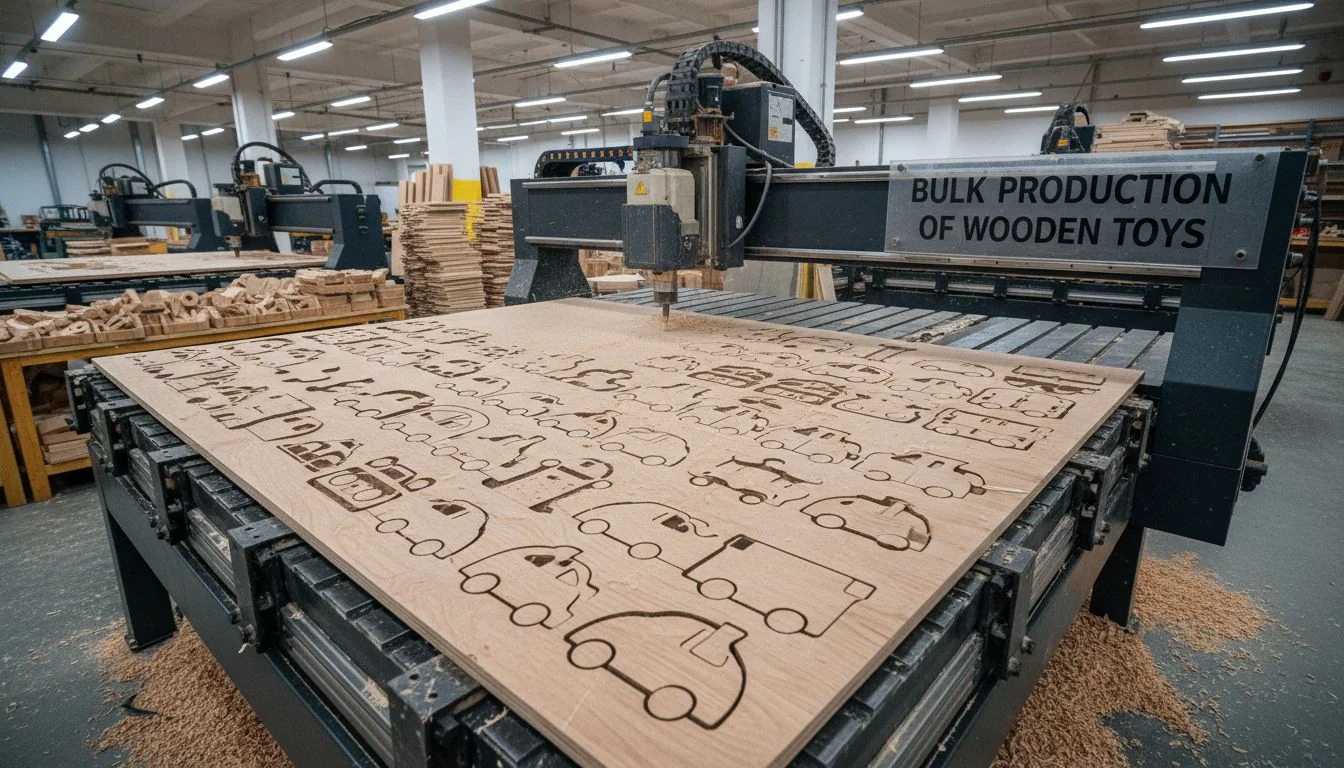
When you're making thousands of something, small details create big problems. As a product designer like Jacky knows, optimizing for large-scale production is a different game. You can't just pick the fanciest wood. You have to think like a factory manager. Is the wood available in the quantities I need, year-round? Is the quality consistent from one batch to the next? How quickly will this wood wear down my CNC bits and other tools? Answering these questions is crucial. For mass-market toys, I often see manufacturers use Birch. It's a fantastic compromise. It's hard enough, finishes well, is more affordable than Maple, and is widely available from sustainable sources.
Balancéiert Käschten, Versuergung a Veraarbechtung
Here’s how to think about wood for mass production:
- Cost and Availability: You need a wood that fits your budget and can be sourced reliably in large volumes. Look for woods with stable supply chains. FSC or PEFC certification is also a major plus for marketability.
- Consistency: The material must be uniform. You can't have significant variations in color, grain, or density from one shipment to the next, as this will affect the final product's look and the manufacturing process.
- Machinability: How does the wood behave with industrial tools? A good choice will cut cleanly, require minimal sanding, and won't cause excessive wear on blades and bits. This directly impacts production speed and cost.
This table breaks down the manufacturing considerations:
| Holz Typ | ca. Käschten | Global Availability | Machinability (CNC) | Best For Mass Production? |
|---|---|---|---|---|
| Ahorn | Héich | Good | Excellent | Yes, for premium/high-end toys. |
| Beech | Mëttel- Héich | Excellent (Europe) | Excellent | Yes, a great all-around choice. |
| Birch | Mëttelméisseg | Excellent | Very Good | Yes, excellent balance of cost/quality. |
| pops | Niddereg | Good (N. America) | Good | Good for painted toys; dents easily. |
| Gummistécker | Niddereg | Good (Asia) | Good | Yes, a very common eco-friendly option. |
Rubberwood is a poor-quality wood from old tires.Falsch
Rubberwood is a high-quality, eco-friendly hardwood. It is harvested from rubber trees that have finished their latex-producing cycle, making it a sustainable byproduct of the rubber industry. It is not related to rubber tires.
Using Birch plywood is a good cost-saving method for flat toys like puzzles.Wouer
High-quality Baltic Birch plywood is strong, stable, and less expensive than solid hardwood. It's perfect for items like puzzles and play sets, as it resists warping and can be cut precisely with lasers or CNC machines.
Conclusioun
Choosing the right wood is key to a successful toy. For custom pieces, prioritize safety and feel with Maple or Beech. For bulk production, balance cost and machinability with Birch or Rubberwood.
Referenzen
[^1]: Explore the importance of non-toxic hardwoods in ensuring children's safety and health.
[^2]: Discover the key considerations for scaling up production while maintaining quality.
[^3]: Learn about safety certifications to ensure your wooden toys meet industry standards.
[^4]: Understanding the Janka hardness scale is crucial for selecting durable woods for children's toys.
