

Sourcing high-quality, safe baby products is a huge challenge. You worry about safety standards, material quality, and high costs eating into your margins, which can feel overwhelming.
To custom-source letter wood teethers from China, you need a three-step process. First, master the import process[^1]. Second, learn to select the right baby-safe wood. Third, implement strict quality control measures. This guide breaks down each step to help you save costs without sacrificing safety.

I remember my first big import deal. It was nerve-wracking. I was sourcing CNC parts, not toys, but the principles are the same. You're putting a lot of trust and money into a partner thousands of miles away. My insight is that customizing your Letter Wood Teethers from China could save significant costs, especially when you partner with experienced manufacturers. For instance, I know that Woddlon Toy cooperates with many big toy brands, which shows the level of trust they've earned. Getting it right can transform your business. Getting it wrong can be a disaster. So, let's break down exactly how you can get it right, starting with the import process itself.
China ass de weltgréisste Spillsaachexporteur.Wouer
According to multiple market research reports and trade data, China consistently holds the top position as the largest exporter of toys globally.
All wood sourced from China is certified as baby-safe.Falsch
This is a dangerous assumption. While many suppliers offer certified safe materials, it is the buyer's responsibility to verify certifications and specify the exact safe materials required. Not all wood is inherently safe for teethers.
How Do You Actually Import from China Without Getting Lost in Paperwork?
De Gedanken u chinesesche Importreglementer, Douane a Versandlogistik ass e Kappwéi. Dir sidd en Designer, net e Logistikexpert, an d'Komplexitéit ass beängschtegend a stresseg.
Fir aus China z'importéieren, fanne fir d'éischt en zouverléissege Fournisseur an averstanen iwwer Incoterms (wéi FOB oder EXW). Dann astellen a Gidderween Expeditioun[^2] fir d'Logistik, d'Douane Clearance an d'Dokumenter ze handhaben. Si guidéieren Iech duerch Flichten, Steieren, a final Liwwerung, vereinfacht de ganze Prozess fir Iech.

Navigating the import process seems complex, but you can break it down into manageable steps. It's all about having the right partners and understanding a few key terms. For someone like you, Jacky, who needs to focus on design, outsourcing the logistics is the smartest move.
Finding Your Manufacturing Partner
Your first step is to find and vet your supplier. You can use platforms like Alibaba, but I find that referrals and industry connections are often more reliable. Look for manufacturers with a proven track record. Ask for their business license, quality certifications (like ISO 9001), and any product-specific safety reports (like EN71 or ASTM F963 for toys). A good supplier will have these ready.
Understanding Incoterms
This sounds technical, but it just defines who is responsible for the shipment at each stage. The two most common terms you'll see are:
| Incoterm | Who Pays for Shipping to Port | Who Handles Export Customs |
|---|---|---|
| FOB (Free On Board) | The Supplier | The Supplier |
| EXW (Ex Works) | You (The Buyer) | You (The Buyer) |
With FOB, the supplier's price includes getting the goods to the Chinese port. You take over from there. With EXW, you are responsible for picking up the goods from the factory door. FOB is often easier for new importers.
Hiring a Freight Forwarder
A freight forwarder is your logistics expert. They are your best friend in this process. They will take your FOB or EXW shipment and manage everything else: booking space on a ship, handling all the documents, clearing customs in your country, and arranging final delivery to your warehouse. This service is invaluable and lets you focus on your core business.
FOB (Free On Board) is one of the most common Incoterms used in international trade.Wouer
FOB is a widely used and standardized international commercial term that clearly defines the responsibilities between a buyer and a seller for shipping goods.
A freight forwarder and a customs broker are the same thing.Falsch
These are two distinct roles, although one company can offer both services. A freight forwarder arranges the transportation of goods, while a customs broker is a licensed professional who handles the customs entry and clearance process.
Which Wood Should You Choose for Baby Teethers to Guarantee Safety?
You see "natural wood" advertised everywhere, but you know not all woods are created equal. This is especially true for a product that goes directly into a baby's mouth.
Choosing the wrong wood could lead to splinters, allergic reactions, or even toxicity. The safety of a child and the reputation of your brand are on the line. I'll show you the best hardwoods.
For baby teethers, always choose hard, non-splintering, and non-toxic woods. The best options are hard maple[^3], beech, and cherry. These woods are durable, have natural antibacterial properties, and can be sanded to a very smooth finish, ensuring they are safe for infants to chew on.

The material you choose is the foundation of your product's safety. As a designer, you know materials are everything. For a baby product, this is even more critical. You can't just specify "wood"; you have to be precise.
The "Go-To" Safe Woods
Certain woods are industry standards for high-quality toys for a reason. They are safe and durable.
- Hard Maple: This is my top recommendation. It is incredibly dense and shock-resistant. Its fine, closed grain means it won't splinter easily and is less likely to harbor bacteria. It's a North American wood, but widely available through quality suppliers in China.
- Beech Wood: This is another excellent choice, very popular in European toys. Like maple, it is hard, durable, and has natural antibacterial qualities. It's a very clean-looking wood that sands to a beautiful, smooth finish.
Woods to Avoid at All Costs
Just as important as knowing what to use is knowing what to avoid. I've seen people make costly mistakes here.
| Holz Typ | Reason to Avoid |
|---|---|
| softwoods[^4] (e.g., Pine, Cedar) | Dents and splinters very easily under a baby's gums. |
| Open-Grained Woods (e.g., Oak, Ash) | The large pores can trap bacteria and are difficult to clean. |
| Toxic Woods (e.g., Yew, Walnut) | Can be toxic or cause allergic reactions. Never use them. |
Don't Forget the Finish
The wood is only half the story. An unfinished, smoothly sanded teether is the safest option. If you do want a finish, it must be baby-safe and non-toxic. Specify a natural, food-grade finish like organic beeswax or coconut oil. Always demand certification from your supplier for any finish they apply.
Beech wood possesses natural antibacterial properties.Wouer
Scientific studies and woodworking resources confirm that certain woods, including beech, contain natural antimicrobial compounds that can inhibit the growth of bacteria on their surface.
All 'hardwoods' are safe for baby teethers.Falsch
Dëst ass falsch. Wärend vill sécher Bëscher Hardwoods sinn, hunn e puer Hardwoods wéi Red Oak grouss Poren déi Keim kënne fangen, an anerer wéi Walnuss kënnen gëfteg sinn oder allergesch Reaktiounen verursaachen.
Wéi kënnt Dir Top Qualitéit garantéieren wann Är Fabrik eng hallef Welt ewech ass?
Dir hutt e perfekte Prototyp guttgeheescht, awer Dir hutt eng knaschteg Angscht. Wäert déi lescht Mass-produzéiert Bestellung mat der Qualitéit entspriechen, op déi Dir Iech ënnerschriwwen hutt? Dëst ass eng gemeinsam Suerg.
Eng ganz Partie vu schlecht fäerdeg, gesplécktem oder falsch geformte Zänn kéint an Ärem Lager ukommen. Elo sidd Dir fest mat onverkafbaren Inventar an engem massive finanzielle Verloscht.
Fir Qualitéit vun engem chinesesche Hiersteller ze garantéieren, etabléiert kloer Standarden an engem detailléierte Dokument. Ëmsetzen e Multi-Stage Inspektiounsprozess: Pre-Produktioun, Am Prozess, an eng final Pre-Sendung Inspektioun. Benotzt a Drëtt Partei Inspektioun[^5] Service a China ass e ganz effektive Wee fir dës Standarden ëmzesetzen.
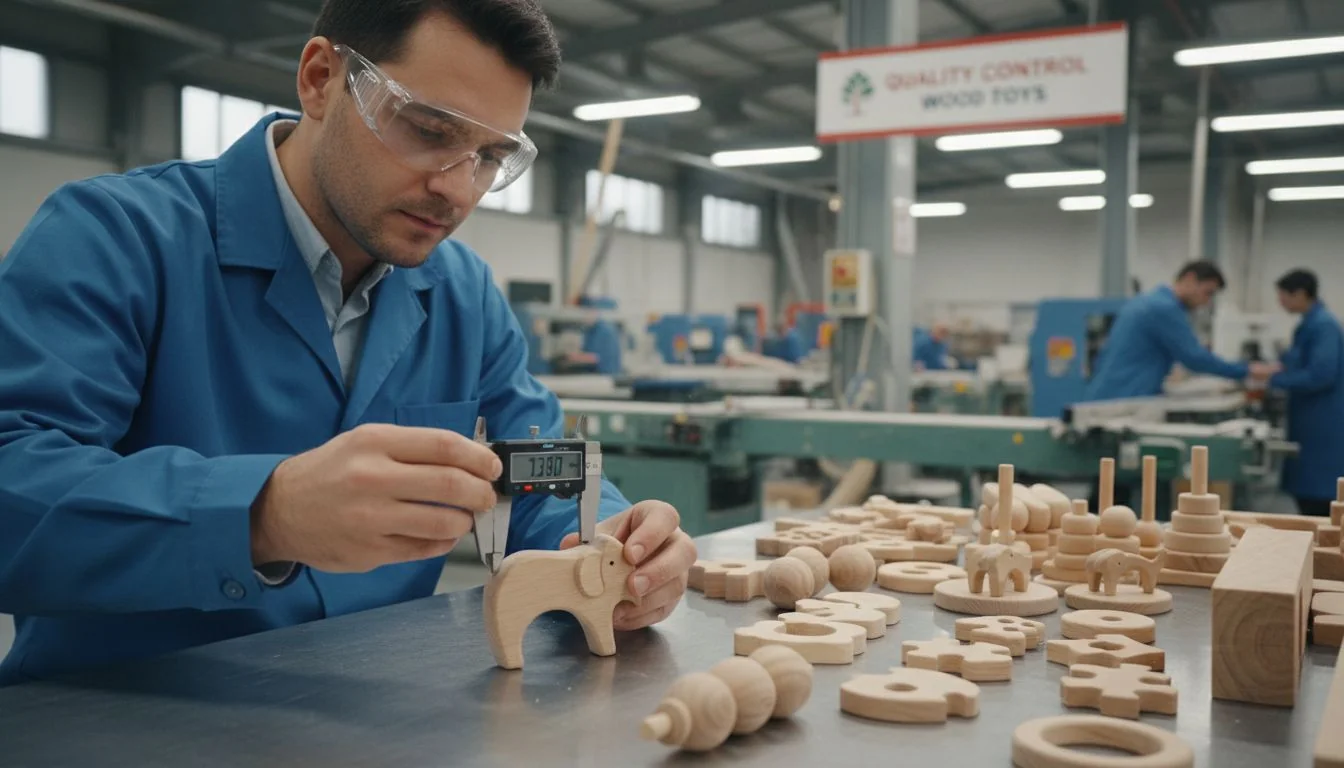
Vertrauen ass gutt, awer Kontroll ass besser. Dëst war eng haart Lektioun déi ech a mengem fréien Deeg am Schimmelgeschäft geléiert hunn. Dir kënnt d'Qualitéit net dem Zoufall iwwerloossen. Dir musst e System hunn.
D'Qualitéit Spezifizéierung Blat
Dëst Dokument ass d"Bibel" fir Äre Projet. Et léisst kee Raum fir Interpretatioun. Als Designer wäert Dir super sinn. Et muss enthalen:
- Material Spezifikatioune: Sidd genee. "Grad A Hard Ahorn, ofgedréchent, keng Kniet oder Mängel."
- Dimensiounen an Toleranzen: Gitt Är detailléiert CAD Zeechnungen un. Gitt akzeptabel Moossvariatiounen un.
- Finish Ufuerderunge: Be precise. "Sanded to 320 grit. All edges must be rounded with a 2mm radius. No splinters, cracks, or rough spots. No chemical finish applied."
- packaging requirements[^6]: How each unit is packed, and how the master cartons are labeled.
D'Drei-Etapp Inspektioun
You need to check quality at different points in the production process.
| Inspection Stage | Wat ze kontrolléieren |
|---|---|
| Pre-Production | Inspect the raw materials. Is the wood correct? Are the tools ready? |
| In-Process (DUPRO) | Check the first items off the production line. This catches systemic problems early. |
| Pre-Shipment (PSI) | A random sample of the finished, packed order. This is your last chance to catch issues before they ship. |
Mat engem Drëtte-Partei Inspekter
This is my most important tip for you. For a few hundred dollars, you can hire a professional inspection company in China to be your eyes and ears. They will go to the factory and perform the Pre-Shipment Inspection for you, following your spec sheet. They provide a detailed report with photos and videos. I never ship a large order from a new supplier without a third-party PSI. It once saved me from a $50,000 bad batch of parts. It is the best insurance you can buy.
A Pre-Shipment Inspection (PSI) is a standard quality control step where a product is checked before it leaves the factory.Wouer
PSI is a globally recognized and standard practice in the supply chain and quality assurance industries to verify product quality before payment and shipment.
You can trust the factory's internal QC report without any verification.Falsch
While many factories have good internal QC, their standards may differ from yours. An independent, third-party inspection provides an objective, unbiased assessment that protects your interests as the buyer.
Conclusioun
Sourcing custom teethers from China is a smart move for cost savings. By mastering importing, selecting the right wood, and enforcing strict quality control, you can grow your business confidently.
Referenzen
[^1]: Understanding the import process is crucial for successful sourcing and can help you avoid costly mistakes.
[^2]: A freight forwarder simplifies logistics and customs, allowing you to focus on your core business while ensuring smooth shipping.
[^3]: Hard Ahorn ass bekannt fir seng Haltbarkeet a Sécherheet, sou datt et eng Top Wiel ass fir Babyprodukter déi héich Standarden erfuerderen.
[^4]: Softwoods kënne liicht splinteren, wat Sécherheetsrisiken fir Puppelcher stellen, wat et entscheedend mécht déi richteg Materialien ze wielen.
[^5]: Drëtt-Partei Inspektiounen liwweren onparteiesch Qualitéitsbewäertungen, a garantéiert datt d'Produkter Är Spezifikatioune entspriechen virum Versand.
[^6]: Richteg Verpakung ass essentiell fir Produkter beim Versand ze schützen an ze garantéieren datt se Sécherheetsnormen entspriechen.
