
Sourcing custom toys[^1] feels like a puzzle with missing pieces. One wrong move can cost you time and money. I'll give you the complete picture to get it right.
The key is a step-by-step process. You must find a reliable factory[^2], provide precise designs, understand safety certificates, approve samples, and control quality. This guide breaks down each step for you.
I've spent my life in manufacturing. I started on the factory floor, learning about molds and precision. That journey taught me that whether you're making a complex plastic part or a simple wooden toy, the rules of quality and communication are the same. Many of my clients grew their businesses by mastering these rules, and I want to share them with you. This guide isn't just theory; it's based on years of experience helping people like you turn ideas into successful products. Let's walk through the process together, so you can avoid common pitfalls and master your next project.
The ASTM F963 safety standard is only a suggestion for toys sold in the USA.False
ASTM F963 is a mandatory safety standard for all toys sold in the United States, enforced by the Consumer Product Safety Commission (CPSC).
Beech wood is often preferred for high-quality toys due to its durability and smooth finish.True
Beech is a hard, strong wood with a fine, straight grain, making it resistant to splintering and ideal for creating durable, safe toys.
How Do You Find a Reliable Custom Wood Toy Wholesale Manufacturer in China?
Finding a factory online feels overwhelming. Choosing the wrong partner can lead to delays, poor quality, and lost investment. I'll show you how to find the right one.
Start with online B2B platforms[^3] like Alibaba, but don't stop there. You must verify their business license, ask for previous work examples, and check their export history and certifications.
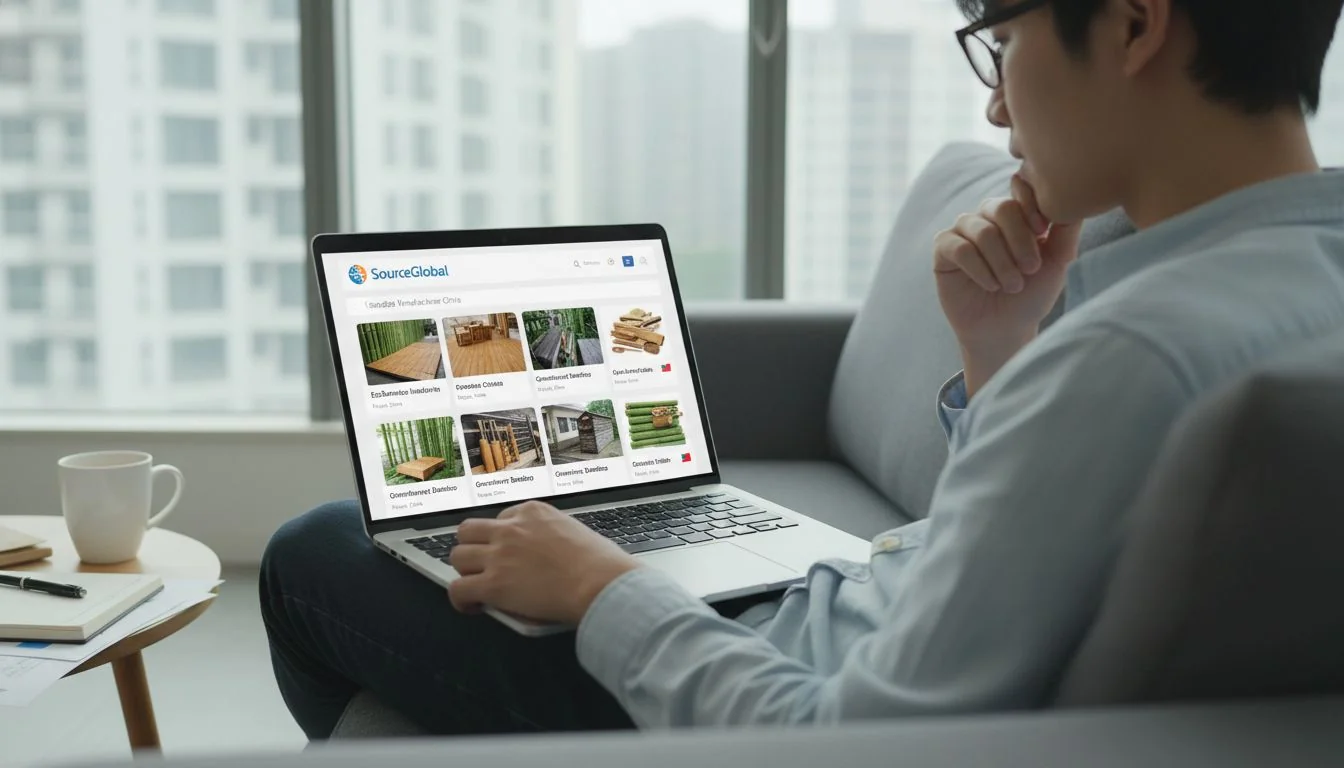
Finding the right partner is the most critical first step. In my early days of sourcing, I learned that a slick website doesn't always mean a great factory. You have to dig deeper. Think of it like hiring a key employee. You need to check their references and qualifications. I always tell my clients to create a shortlist of potential factories and then start a vetting process. This is where your experience as a designer is valuable, as you can ask technical questions that reveal their true capabilities. Don't be shy about asking for proof. A good factory will be proud to show you their credentials and examples of their best work.
Vetting Your Potential Partner
| Vetting Step | What to Do | Why It's Important |
|---|---|---|
| Initial Search | Use platforms like Alibaba, Made-in-China, and Global Sources. | Provides a wide pool of potential suppliers to start with. |
| Request Documents | Ask for their Business License, ISO 9001 certificate, and any toy-specific audit reports (like BSCI or Sedex). | Verifies they are a legitimate company committed to quality and ethical standards. |
| Review Portfolio | Ask for examples of similar toys they have made. | Shows their experience with your product type and their level of craftsmanship. |
| Communication Test | Pay attention to their response time and clarity. | Good communication is essential for a smooth project, especially across different time zones. |
A factory's 'Gold Supplier' status on Alibaba guarantees their product quality.False
Gold Supplier status is a paid membership on Alibaba that verifies the company's legal existence. It does not guarantee product quality or business practices.
A BSCI (Business Social Compliance Initiative) report indicates a factory's commitment to ethical social standards.True
BSCI audits assess workplace conditions, fair wages, and worker rights, which is important for brand reputation and ethical sourcing.
What Kind of Sketches Do You Need to Provide for Custom Wood Toys?
A great idea in your head is not enough. If your designs are vague, the factory will make wrong assumptions, leading to incorrect and useless samples.
You must provide a detailed technical package[^4]. This includes 2D drawings with all dimensions, 3D CAD files (like .STEP or .IGES), and specifications for materials, paint colors (using Pantone codes), and finishes.
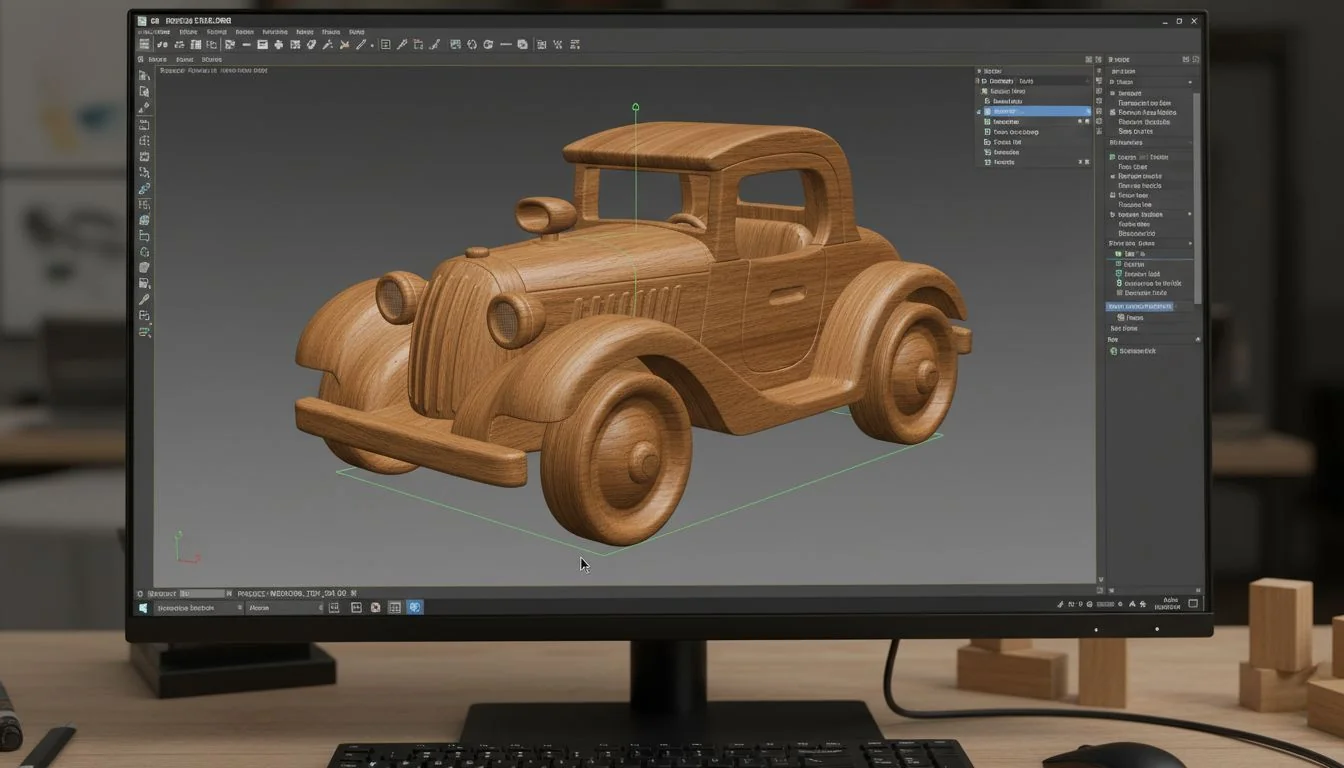
As a designer, you know that precision starts with the blueprint. It's the same principle I live by with "Master Molding Right." In mold making, a hundredth of a millimeter can make or break a project. While wood is more forgiving, the principle holds: clear instructions lead to a quality product. I once had a client who sent a simple hand drawing for a wooden puzzle. The factory had to guess the thickness, the type of wood, and the exact shades of color. The sample was a disaster. We fixed it by creating a proper tech pack. It detailed everything, from the specific beech wood to the non-toxic paint's Pantone code. The second sample was perfect. Your detailed drawings are your primary communication tool with the factory.
Building Your Tech Pack
| Component | Description | Example |
|---|---|---|
| 2D Drawings | Orthographic views (top, front, side) with precise measurements. | A PDF file showing the toy's height, width, and depth. |
| 3D CAD Model | A 3D file that the factory can use for CNC programming and visualization. | A .STEP or .IGES file. |
| Material Specification | The exact type of wood to be used. | "A-grade European Beech Wood, kiln-dried." |
| Finishes & Colors | Details on paint, varnish, and specific color codes. | "Non-toxic, water-based paint, Pantone 185 C Red." |
| Assembly Guide | If the toy has multiple parts, show how they fit together. | An exploded-view diagram. |
You can start production with just a simple hand-drawn sketch.False
Professional factories require detailed technical drawings and CAD files to ensure accuracy in dimensions, materials, and assembly for mass production.
Pantone codes are used to ensure color consistency across different production batches.True
The Pantone Matching System (PMS) is a standardized color reproduction system that allows manufacturers to match colors precisely, regardless of who or where it is produced.
What Should You Pay Attention to During Bulk Production and What Certificates are Needed?
Getting a perfect sample is great, but the real challenge is making thousands of them. A single mistake in bulk production can ruin your entire inventory and budget.
You need to monitor the production timeline and, most importantly, secure the correct safety certificates[^5] for your target markets. These include ASTM F963 for the USA, EN71 for Europe, AS/NZS ISO 8124 for Australia, and ST 2016 for Japan.
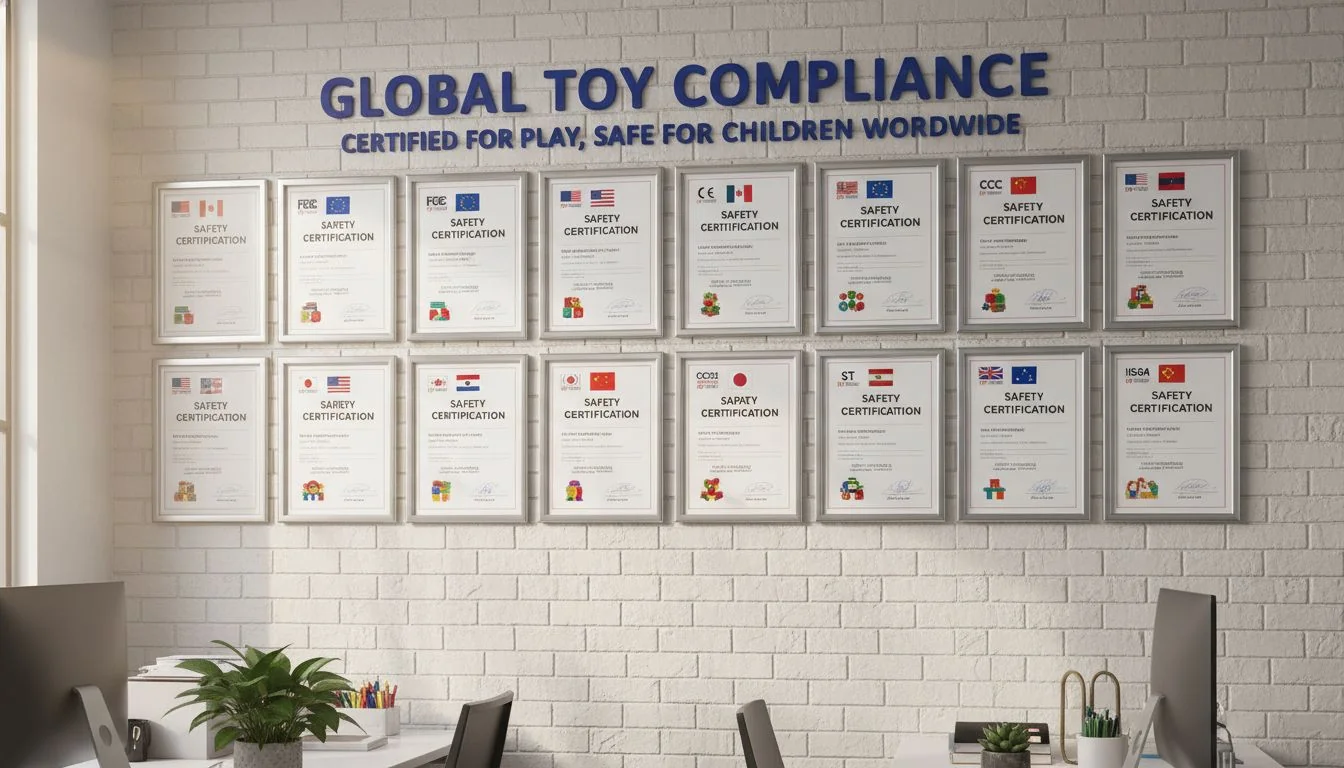
Safety is not negotiable, especially with toys. I've seen businesses face legal trouble and recalls because they overlooked certifications. These aren't just bureaucratic hurdles; they are legal requirements that protect children from harm. Before you even start production, you must tell your factory which countries you plan to sell in. A good factory, like our partners at Woddlon Toy, will already be familiar with these standards and have experience passing the tests. They can guide you on material choices and design features to ensure compliance. For example, small parts can be a choking hazard, and different regions have different rules for this. Getting this right from the start saves you from a potential disaster later.
Navigating Global Toy Safety Standards
| Region | Key Certificate | What It Covers |
|---|---|---|
| USA | ASTM F963 | Mechanical hazards, flammability, lead and heavy metal content. |
| Europe | EN71 | Similar to ASTM, but with specific parts for different hazards (e.g., EN71-1 for mechanical, EN71-3 for chemical). Required for the CE mark. |
| Australia/New Zealand | AS/NZS ISO 8124 | Largely harmonized with international ISO standards, covering similar safety aspects. |
| Japan | ST 2016 | Japan's specific toy safety standard, focusing on physical, mechanical, and chemical properties. |
The CE mark on a toy means it was manufactured in Europe.False
The CE mark signifies that the product conforms with the health, safety, and environmental protection standards for products sold within the European Economic Area (EEA). The toy can be made anywhere in the world.
EN71 is the mandatory safety standard for toys sold in the European Union.True
Compliance with the EN71 series of standards is a legal requirement to affix the CE mark and sell toys in the EU.
How Can You Guarantee the Quality of Your Custom Wood Toys?
Your brand's reputation depends on quality. Receiving a shipment of toys with splinters, sloppy paint, or incorrect dimensions is a nightmare that can destroy customer trust.
Implement a multi-stage inspection process. This includes checking raw materials, inspecting during production (DUPRO), and conducting a Final Random Inspection (FRI) before shipment. Using a third-party inspector is highly recommended.
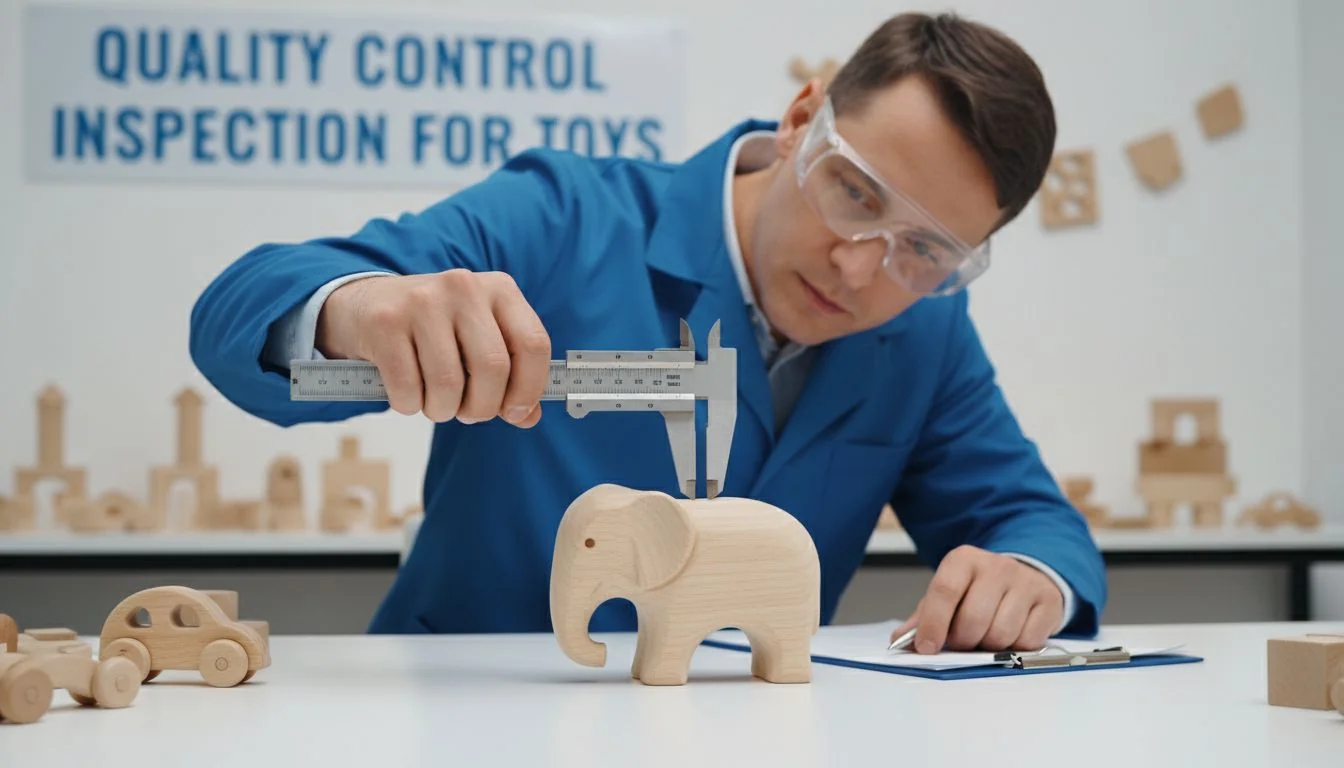
At Moldle, my slogan is "Master Molding Right." This philosophy of precision and zero defects is something I apply to all manufacturing. You can't just hope for good quality; you have to plan for it. A quality control^6 checklist is your rulebook for the factory. It should be incredibly detailed. What is the acceptable moisture content of the wood? How many millimeters of deviation are allowed? We perform drop tests and paint adhesion tests. This isn't about mistrusting the factory. It's about creating a clear, shared understanding of what "good" looks like. A professional factory will welcome this clarity. They want to produce a good product and avoid disputes just as much as you do.
A Simple QC Checklist Framework
| Inspection Point | What to Check | Tolerance Example |
|---|---|---|
| Raw Materials | Wood type, grade, moisture content, absence of knots/cracks. | Moisture content between 8-12%. |
| Dimensions | Use calipers to check critical dimensions against the 2D drawing. | +/- 0.5mm tolerance. |
| Paint & Finish | Color match to Pantone, paint adhesion (cross-hatch test), smoothness. | No chipping or peeling during adhesion test. |
| Physical Tests | Drop test, small parts check (choke hazard), sharp edge/point check. | Toy must not break or create a hazard after being dropped 3 times from 1 meter. |
| Pakuotė | Correct barcode, safety warnings, and shipping carton strength. | Barcode must be scannable with 99.9% accuracy. |
A Final Random Inspection (FRI) is enough to guarantee quality.False
While FRI is crucial, issues found at this stage are expensive to fix. Inspections during production (DUPRO) can catch problems earlier and save money.
A good factory will have its own Internal Quality Control (IQC) team.True
Reputable manufacturers have their own QC processes to ensure quality throughout production, which complements any third-party inspections you may conduct.
Why is the Sampling Stage Crucial for Custom Wood Toys?
You might be tempted to skip samples to save time and money. This is a huge mistake. Approving production based only on pictures can lead to very expensive surprises later.
Sampling is your only chance to physically hold and test your product before mass production. It validates your design, materials, and colors, allowing you to make critical adjustments before it's too late.
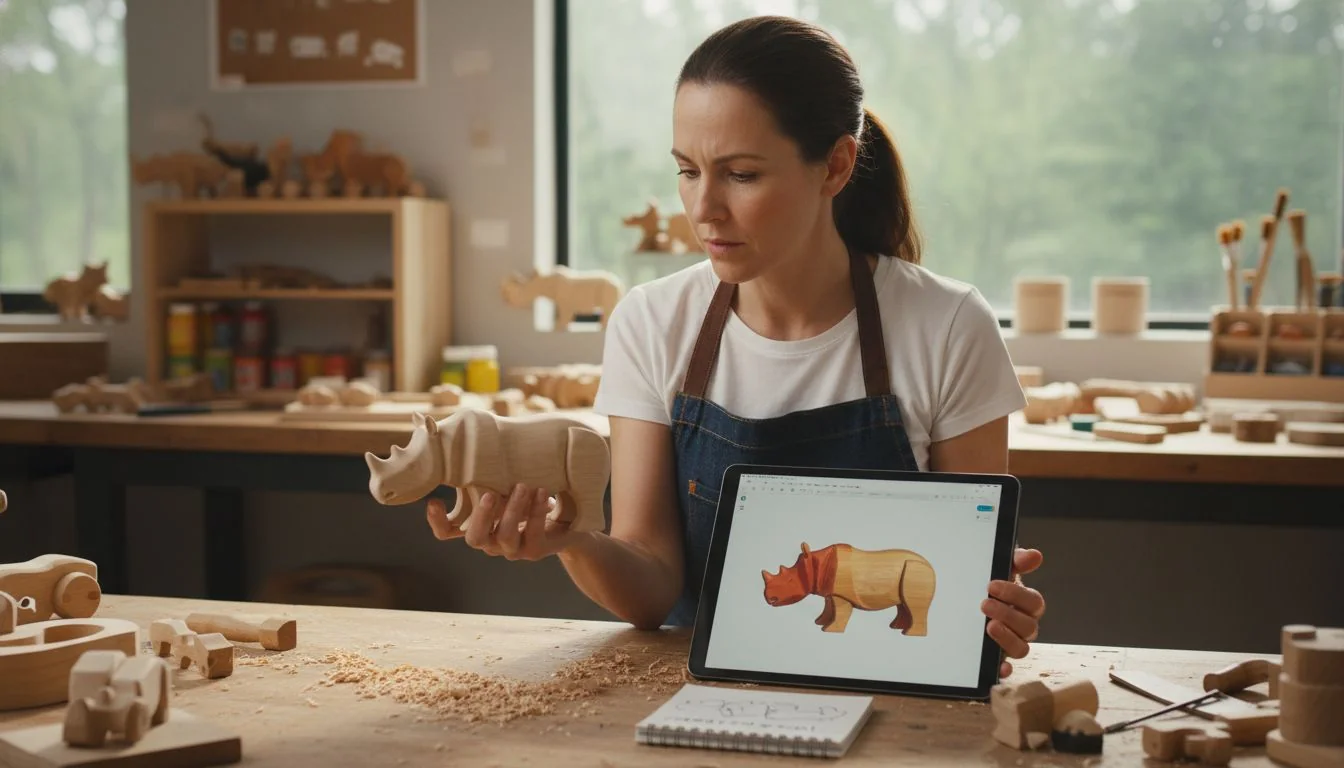
I always tell my clients: the sample is your contract. It is the physical representation of your agreement with the factory. Once you approve the pre-production sample (PPS), you are telling the factory, "Make thousands of them exactly like this." I remember a client who approved a sample of a wooden animal set based on photos. The photos looked great. But when the bulk order arrived, the toys felt too light and cheap. The factory had used a lower-density wood that wasn't specified. If the client had requested the physical sample, he would have caught this immediately. Spending a little extra time and money on shipping samples will save you thousands of dollars and a lot of stress. It is the best insurance policy you can buy in manufacturing.
The Stages of Sampling
| Sample Type | Purpose | What to Check |
|---|---|---|
| Prototype/Mock-up | To check the basic form, size, and function. Often made from different materials. | Does the shape look right? Do the parts fit? |
| Pre-Production Sample (PPS) | The "golden sample." Made with the final materials, colors, and methods. | Everything. This is your final check. Dimensions, color, finish, feel, function. |
| Production Sample | A random sample pulled from the first mass production run. | Confirms that the bulk production matches the approved PPS. |
It's safe to approve a sample based on high-resolution photos and videos.False
Photos cannot convey weight, texture, balance, or subtle defects. You must have the physical sample in your hands to properly evaluate it.
A Pre-Production Sample (PPS) is the final sample you approve before authorizing mass production.True
The PPS, or 'golden sample,' serves as the benchmark for quality that the entire production run must match.
How Important is Packaging for Your Custom Wood Toys?
Many people treat packaging as an afterthought. They focus 100% on the toy, then put it in a generic brown box. This hurts your brand and can lead to damaged products.
Packaging is extremely important. It protects your product during shipping, communicates your brand's story, provides legally required safety information, and is the first physical interaction a customer has with your product.
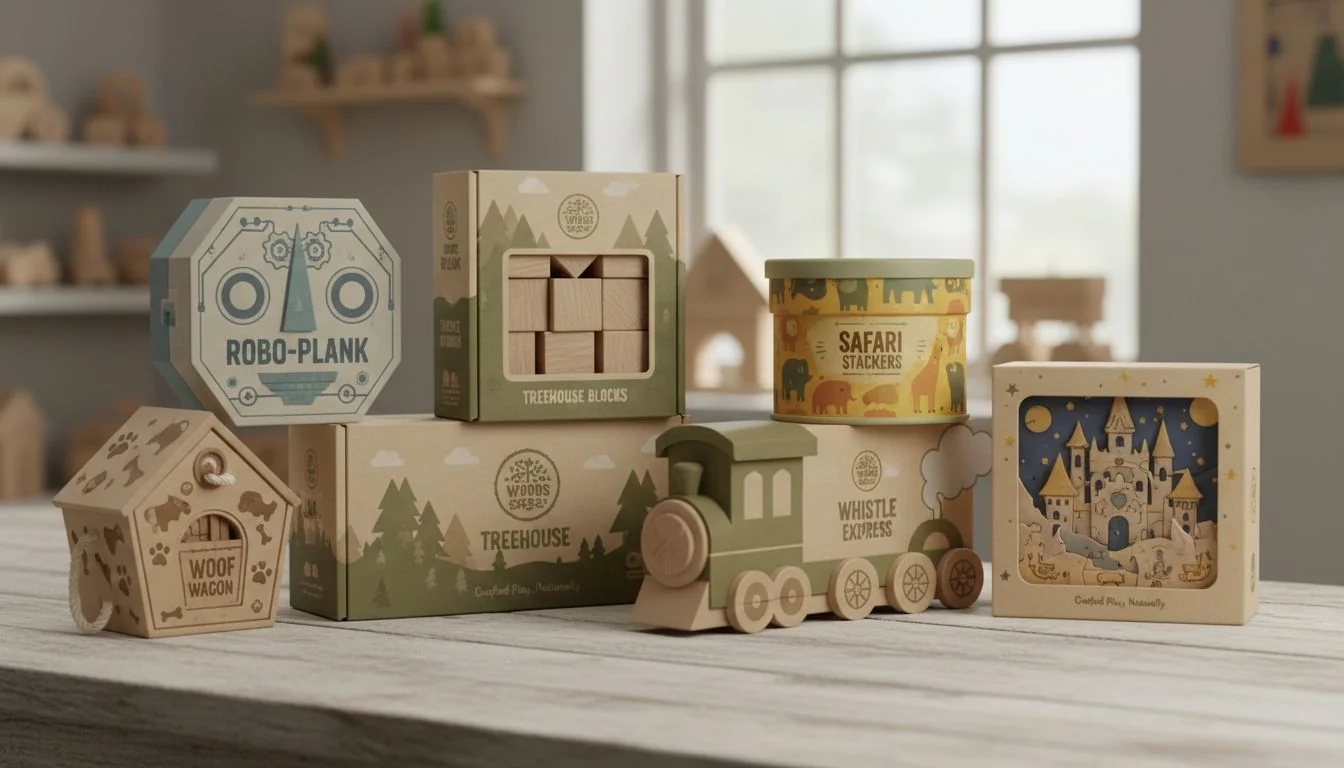
Think about the best products you've ever bought. The experience often starts with the box. Your packaging does three jobs. First, it's a suit of armor. Your toy will travel thousands of miles and be handled by many people. The box must be strong enough to protect it. We often perform drop tests on the packaged product, not just the toy itself. Second, it's your salesperson on the shelf. It needs to grab attention and tell customers why your toy is special. Third, it's your legal department. The packaging must display mandatory information like the CE mark, age warnings, and your company details. Investing in good packaging design[^7] is not an expense; it's an investment in product protection, branding, and compliance.
Key Elements of Toy Packaging
| Element | Function | Considerations |
|---|---|---|
| Structural Design | Protection | Corrugated cardboard thickness, internal inserts, air gaps. Should pass a shipping drop test. |
| Graphic Design | Branding & Marketing | Your logo, product photos, brand story. Should appeal to the target customer (the parent and the child). |
| Compliance Information | Legal & Saugumas | CE/UKCA mark, age grading (e.g., 3+), choking hazard warnings, manufacturer's address. |
| User Experience | Unboxing | Easy to open, frustration-free. The "unboxing" is part of the product experience. |
All cardboard is the same for shipping boxes.False
Cardboard comes in different strengths, defined by factors like flute size and wall construction (single, double, triple wall). The right strength depends on the product's weight and fragility.
Displaying the manufacturer's address on the packaging is optional.False
For many regions, including the EU and UK, the name and address of the manufacturer or importer must be displayed on the toy or its packaging.
Conclusion
From a clear sketch to final packaging, following these steps ensures your custom wood toy project is a success. Master your manufacturing, and you'll master your business.