

तपाईं सुन्दर युरोपेली काठका खेलौनाहरूको प्रशंसा गर्नुहुन्छ तर तिनीहरू कसरी उचित मूल्यमा बेचिन्छन् भनेर पत्ता लगाउन सक्नुहुन्न। स्थानीय, हस्तनिर्मित उत्पादनको विचार ठूलो बजार ब्रान्डहरूको लागि असम्भव देखिन्छ। जवाफ मैले प्रत्यक्ष देखेको विश्वव्यापी निर्माण रणनीतिमा छ।
धेरै प्रसिद्ध युरोपेली काठको खेलौना ब्रान्डहरू पछाडिको रहस्य ठूलो उत्पादनको लागि स्थानीय शिल्प कौशल होइन। यो एक स्मार्ट छ विश्वव्यापी आपूर्ति श्रृंखला[^1]। आकार र परिष्करण सहितको अधिकांश थोक उत्पादन लागत व्यवस्थापन गर्न र प्रभावकारी रूपमा मापन गर्न चीनका विशेष कारखानाहरूमा हुन्छ।

यसले तपाईंलाई आश्चर्यचकित गर्न सक्छ, तर यो एक वास्तविकता हो जुन मैले वर्षौंदेखि निर्माण संसारमा नेभिगेट गरेको छु। मैले अनगिन्ती ग्राहकहरूलाई यस मोडेलमा उनीहरूको व्यवसायहरू निर्माण गर्न मद्दत गरेको छु। यो ब्रान्ड धारणा बनाम उत्पादन वास्तविकता को एक क्लासिक मामला हो, जहाँ "मेड इन" कथा एकल लेबल भन्दा बढी जटिल छ। यो बुझ्नु कुनै पनि डिजाइनरको लागि कुञ्जी हो जसले उत्पादन सिर्जना गर्न चाहन्छ जुन सुन्दर मात्र होइन तर व्यावसायिक रूपमा पनि व्यवहार्य छ। ब्रान्डहरू र स्टोरहरू आफैंबाट सुरु गरेर, यो सबैले कसरी काम गर्छ भनी भङ्ग गरौं।
युरोपेली पसलहरूमा बेच्ने सबै काठका खेलौनाहरू युरोपमा हस्तनिर्मित हुन्।मिथ्या
युरोपमा केही आला र बुटीक खेलौनाहरू हातले बनेका छन्, तर ठूलो बजार ब्रान्डहरूले लागत-प्रतिस्पर्धी रहन चीन जस्ता देशहरूमा उत्पादन आउटसोर्स गर्छन्।
धेरै प्रमुख युरोपेली खेलौना ब्रान्डहरूले आफ्नो ठूलो उत्पादन चीन जस्ता देशहरूमा आउटसोर्स गर्छन्।सत्य
Hape, Brio, र अरू जस्ता ब्रान्डहरूले चीनमा यसको स्केल, दक्षता, र लागत फाइदाहरूका लागि युरोपमा डिजाइन र मार्केटिङ राख्दै उत्पादनको लाभ उठाउँछन्।
युरोपमा शीर्ष काठको खेलौना स्टोरलाई के परिभाषित गर्दछ?
तपाईंले अनगिन्ती खेलौना पसलहरू देख्नुहुन्छ, तर कुनचाहिँ खुद्रा विक्रेताहरू हुन् भन्न गाह्रो छ। तपाईं ब्रान्ड पछाडिको व्यापार मोडेल बुझ्न चाहनुहुन्छ। यसले उनीहरूको उत्पादन रणनीति विश्लेषण गर्न गाह्रो बनाउँछ। सबै भन्दा राम्रो व्यक्तिहरूले एक विशिष्ट पहिचानलाई क्युरेट गर्दछ, जसले तिनीहरूको सम्पूर्ण निर्माण दृष्टिकोणलाई निर्देशित गर्दछ।
शीर्ष युरोपेली काठको खेलौना पसल भनेको ब्रान्डको अनुहार हो, पसल मात्र होइन। यो एक बलियो द्वारा परिभाषित गरिएको छ डिजाइन दर्शन[^2], उच्च सुरक्षा मापदण्डहरू जस्तै EN 71, र उत्पादनहरू विश्वव्यापी रूपमा बनाइए पनि, कथा बताउने क्युरेट गरिएको संग्रह।
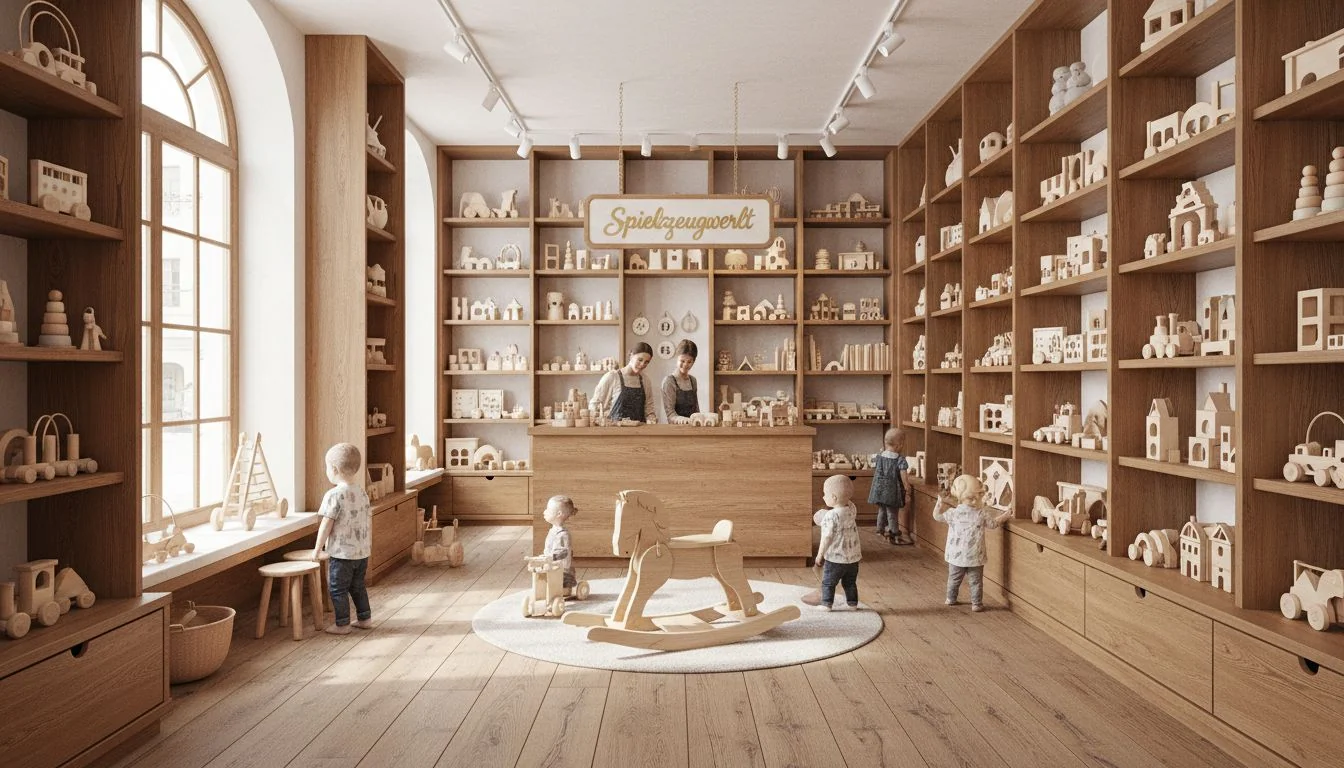
जब तपाईं जर्मनी वा फ्रान्सको उच्च-अन्तको खेलौना पसलमा जानुहुन्छ, तपाईंले धेरै लामो र जटिल यात्राको अन्तिम चरणको अनुभव गरिरहनुभएको छ। तपाईं जस्तो उत्पादन डिजाइनर, ज्याकीको लागि, वास्तविक काम खेलौनाले त्यो शेल्फमा पुग्नु अघि नै हुन्छ। स्टोर फ्रन्ट-एन्ड हो, तर ब्याक-एन्ड सबै निर्माण र रसदको बारेमा हो।
द बुटिक बनाम मास-मार्केट ब्रान्ड
तपाईंले दुई मुख्य प्रकारका खेलाडीहरू फेला पार्नुहुनेछ। पहिलो, साना, स्थानीय कारीगरले साँच्चै हस्तनिर्मित खेलौनाहरू बनाउँदै। तिनीहरूको व्यवसाय सानो स्तरको छ र तिनीहरूको लागत उच्च छ। दोस्रो, तपाईंसँग प्रमुख ब्रान्डहरू छन्। यी कम्पनीहरूले पूर्ण रूपमा फरक स्तरमा काम गर्छन्। तिनीहरूको स्टोरफ्रन्टहरू र अनलाइन पसलहरूले युरोपेली डिजाइन र गुणस्तरको कथा प्रस्तुत गर्छन्, तर तिनीहरूको सफलता विश्वव्यापी उत्पादन प्रणालीमा निर्मित छ। तिनीहरूले कडा युरोपेली सुरक्षा मापदण्डहरू पूरा गर्नुपर्छ, जस्तै EN 71, कारखाना जहाँ भए पनि। यो डिजाइन र निर्माण विशिष्टता को एक गैर-वार्तालाप भाग हो।
क्युरेसन र ब्रान्ड स्टोरीको महत्त्व
सबैभन्दा सफल ब्रान्डहरू क्युरेसनका मास्टरहरू हुन्। तिनीहरू काठको ब्लक मात्र बेच्दैनन्; तिनीहरू रचनात्मक खेलको दर्शन बेच्छन्, स्थिरता[^3], वा शिक्षा। यो ब्रान्डको कथा युरोपमा बनाइएको हो। यसले डिजाइन, प्याकेजिङ्ग र मार्केटिङलाई असर गर्छ। तर त्यो उत्पादन बजारले स्वीकार गर्ने मूल्यमा डेलिभर गर्न, तिनीहरूले उत्पादन अनुकूलन गर्नुपर्छ। यो प्रत्येक सफल ब्रान्डले हल गरेको पजल हो।
खेलौना पसलको स्थानले खेलौनाहरू त्यस देशमा बनाइन्छ भन्ने ग्यारेन्टी दिन्छ।मिथ्या
पसलको स्थानले यसको लक्षित बजारलाई प्रतिबिम्बित गर्दछ, यसको उत्पादन उत्पत्ति होइन। ग्लोबल ब्रान्डहरू विश्वव्यापी रूपमा स्टोरहरू छन् तर उत्पादनलाई अन्यत्र केन्द्रित गर्दछ।
युरोपेली खेलौना सुरक्षा मानक EN 71 EU मा बेचिने खेलौनाहरूको लागि अनिवार्य आवश्यकता हो, तिनीहरू जहाँ पनि उत्पादन गरिएका छन्।सत्य
This is a legal requirement. Any toy imported into the EU must be tested and certified to meet EN 71 standards, ensuring it is safe for children.
कुन प्रसिद्ध ब्रान्डहरूले युरोपेली काठको खेलौना बजारमा प्रभुत्व जमाउँछन्?
You know the names, but you don't know the business stories behind them. Without knowing their operational models, you're missing key lessons in scaling a product line. Let's look at some famous brands and uncover the manufacturing strategies that made them household names.
Brands like Hape[^4], Brio, and HABA are giants in the European wooden toy market. While they have strong European roots and design teams, their success in scaling production often relies on large-scale manufacturing facilities, primarily located in China.

These brands are excellent case studies in global manufacturing. They prove that you can maintain a strong European brand identity while leveraging the power of international production. I've worked with clients who wanted to emulate this success, and the first step is always to understand how the leaders do it. Their "brand" is about design, गुणस्तर नियन्त्रण[^5], and marketing, which happens in Europe. The physical "making" is a different story.
केस स्टडी: हेपको ग्लोबल-लोकल मोडेल
Hape is a perfect example. It was founded in Germany in 1986. Many people assume its toys are made there. However, Hape’s founder recognized the potential of global manufacturing early on. Today, Hape owns and operates a massive, state-of-the-art factory in Ningbo, China. They control the entire process, from raw materials to final product, ensuring high quality while managing costs. Their design and brand management remain deeply rooted in Germany.
केस स्टडी: ब्रियो र HABA
Brio[^6], a classic Swedish brand founded in 1884, is famous for its wooden trains. For decades, production was in Sweden. As the company grew and the market became more competitive, it shifted most of its wood and plastic manufacturing to China. The design, innovation, and strict quality standards are still managed from Sweden. HABA, another beloved German brand, also uses a mix of in-house German production for certain items and trusted overseas partners for others to meet global demand.
| Brand | Country of Origin | Primary Manufacturing Location | Key Strategy |
|---|---|---|---|
| Hape | Germany | China (Owns factory) | Full control of the supply chain, German design. |
| Brio | Sweden | China (Outsourced) | Swedish design and quality control, global production. |
| HABA[^7] | Germany | Germany & Asia (Mixed) | "Made in Germany" for some lines, global partners for others. |
Hape toys are exclusively manufactured in Germany.मिथ्या
Hape is a German-founded and managed brand, but its primary manufacturing facility is a large, company-owned factory in Ningbo, China.
Hape, a German-founded brand, owns and operates one of the world's largest wooden toy factories, located in Ningbo, China.सत्य
This vertical integration allows Hape to maintain strict control over quality and production processes while benefiting from China's manufacturing ecosystem.
यी ब्रान्डहरूले वास्तवमा तिनीहरूको व्यवसाय कसरी चलाउँछन्?
तपाईंले अन्तिम उत्पादन देख्नुहुन्छ, तर डिजाइन, निर्माण, र रसदको प्रक्रिया कालो बक्स हो। यो ज्ञान अन्तरले तपाईंको आफ्नै परियोजनाहरूमा तिनीहरूको रणनीतिहरू लागू गर्न गाह्रो बनाउँछ। तिनीहरूको व्यापार मोडेल उत्पादनबाट डिजाइन अलग गर्ने मास्टरक्लास हो, एउटा रणनीति जुन मैले धेरै ग्राहकहरूलाई कार्यान्वयन गर्न मद्दत गरेको छु।
यी ब्रान्डहरूले विभाजित मोडेल सञ्चालन गर्छन्। डिजाइन, मार्केटिङ, र रणनीति ब्रान्ड पहिचान कायम राख्न युरोपमा आधारित छन्। यद्यपि, उच्च मात्राको उत्पादनलाई कडा गुणस्तर नियन्त्रण अन्तर्गत चीन जस्ता कम उत्पादन लागत भएका देशहरूमा आउटसोर्स गरिन्छ वा स्वामित्व गरिन्छ।

म यसलाई "मस्तिष्क र हात" भन्छु" दृष्टिकोण। "मस्तिष्क" of the operation—the creative design, the brand strategy, the marketing—stay in the home country. The "hands"—the large-scale, labor-intensive manufacturing—are located where it is most efficient. For a product designer, your work must be perfectly translatable to a manufacturing partner thousands of miles away. Clear specifications are everything.
विभाजन जिम्मेवारी मोडेल
Here is how it typically works:
- Design & Prototyping (Europe): The product's soul is created here.
- Manufacturer Sourcing (Global): The brand finds a factory that can meet its quality, cost, and volume needs. This is a critical step.
- Tooling & Mass Production (China): This is where the magic of scale happens. For wooden toys, this involves precise CNC cutting, sanding, and painting lines. If there are plastic parts, this involves creating injection molds.
- Quality Control (On-site): The brand has its own team or a third party at the factory to inspect everything.
- Logistics & Distribution (Global): Products are shipped to warehouses in Europe for distribution to stores.
लागत-लाभ विश्लेषण
Let's look at a simple example. The cost difference is staggering.
| लागत घटक | Manufacture in Europe | Manufacture in China |
|---|---|---|
| Labor (per unit) | €10 | €2 |
| Materials (per unit) | €5 | €4 |
| Factory Overhead | उच्च | कम |
| Total Unit Cost | ~€20+ | ~€7 |
These are simplified estimates, but they illustrate the core economic reason for this model.
Outsourcing manufacturing means a complete loss of control over quality.मिथ्या
Successful brands prevent this by implementing rigorous quality control systems, including on-site inspectors, third-party audits, and extremely detailed product specifications.
Successful brands maintain quality control in outsourced factories through dedicated on-site teams, regular audits, and strict adherence to design specifications.सत्य
This is a fundamental part of the business model. Brands invest heavily in quality assurance to protect their reputation and ensure product safety.
You know the big players, but market share[^8] might seem like a metric for CEOs, not designers. But without this context, you're designing in a vacuum, unaware of the scale required to succeed. Market share reveals the dominance of this global production model.
The European wooden toy market is valued at several billion euros. Major brands using global manufacturing hold a significant share. This shows that the best path to capturing a large market involves leveraging cost-effective, high-volume production, typically outside of Europe.

बजार सेयर संख्या मात्र होइन; यो एक सफल व्यापार मोडेल को प्रमाण हो। सबैभन्दा ठूलो सेयर भएका ब्रान्डहरू ती हुन् जसले डिजाइन-इन-युरोप, म्यानुफ्याक्चर-इन-एसिया रणनीतिलाई पूर्णता दिएका छन्। तपाई जस्तो डिजाइनरको लागि, जैकी, यो एक महत्वपूर्ण अन्तरदृष्टि हो। यदि तपाइँ एक नयाँ खेलौना डिजाइन गर्नुहुन्छ भने, व्यापार योजना लगभग निश्चित रूपमा प्रतिस्पर्धी हुन विदेशी निर्माण समावेश हुनेछ। तपाइँको डिजाइन पहिलो दिन देखि त्यो वास्तविकता को लागी अनुकूलित हुनुपर्छ।
नम्बरहरू बुझ्दै
विश्वव्यापी खेलौना बजार $ 100 बिलियन भन्दा बढीको छ, र युरोप त्यो पाईको ठूलो टुक्रा हो। यस बजार भित्र, काठका खेलौनाहरू बढ्दो ठाउँ हो, तिनीहरूको कथित स्थिरता र गुणस्तरको लागि मूल्यवान छ। यद्यपि, यस स्थानमा हावी हुने ब्रान्डहरू साना स्थानीय कारीगरहरू होइनन्। तिनीहरू ठूलो उत्पादन क्षमताहरू भएका ठूला निगमहरू हुन्। तिनीहरूको बजार साझेदारीले प्रमाणित गर्छ कि उपभोक्ताहरूले युरोपेली डिजाइन र पहुँचयोग्य मूल्य निर्धारणको संयोजनलाई यो मोडेलले प्रदान गर्दछ।
I've seen clients with brilliant designs fail because they couldn't get the manufacturing cost right. They tried to produce locally at a small scale and were priced out of the market. I've also seen clients with a solid, but not revolutionary, design succeed because they embraced the global model from the start. They understood that to compete with Hape or Brio, they had to play the same game. Their market share grew because their products were well-designed, safe, and affordable—a trio made possible only by smart, global manufacturing.
The European toy market is one of the largest in the world, with Germany, the UK, and France being the top three markets.सत्य
These three countries consistently represent the largest share of toy sales in Europe, making them key targets for any major toy brand.
Niche, locally-made wooden toy brands hold the largest share of the European market.मिथ्या
While locally-made brands are valued, their production capacity and price points are not competitive for the mass market. Large, globally-produced brands hold the dominant market share.
निष्कर्ष
The success of European wooden toy brands is not just about charming design. It's about smart, global manufacturing. For designers, understanding this production reality is crucial for creating viable, successful products.
संदेश
[^1]: Explore how a global supply chain impacts the pricing and availability of wooden toys.
[^2]: सफल खेलौना ब्रान्डहरूलाई आकार दिन डिजाइन दर्शनको महत्त्व अन्वेषण गर्नुहोस्।
[^3]: काठको खेलौनाको उत्पादनमा कसरी स्थिरता एकीकृत हुन्छ पत्ता लगाउनुहोस्।
[^4]: गुणस्तर र किफायतीता कायम राख्न Hape ले डिजाइन र उत्पादनलाई कसरी सन्तुलनमा राख्छ पत्ता लगाउनुहोस्।
[^5]: आउटसोर्स उत्पादनमा गुणस्तर कायम राख्नका लागि उत्तम अभ्यासहरू बारे जान्नुहोस्।
[^6]: उत्पादनमा Brio को दृष्टिकोण र यसले तिनीहरूको उत्पादनको गुणस्तरलाई कसरी असर गर्छ बुझ्नुहोस्।
[^7]: HABA ले माग पूरा गर्न स्थानीय र विश्वव्यापी उत्पादनलाई कसरी संयोजन गर्छ भनेर पत्ता लगाउनुहोस्।
[^8]: युरोपेली बजारमा काठका खेलौनाहरूको बजार गतिशीलता र साझेदारीको अनुसन्धान गर्नुहोस्।
