

Sourcing high-quality, safe baby products is a huge challenge. You worry about safety standards, material quality, and high costs eating into your margins, which can feel overwhelming.
To custom-source letter wood teethers from China, you need a three-step process. First, master the import process[^1]. Second, learn to select the right baby-safe wood. Third, implement strict quality control measures. This guide breaks down each step to help you save costs without sacrificing safety.

Ndikukumbukira malonda anga oyamba ogula kuchokera kunja. Zinali zosokoneza minyewa. Ndinkafufuza mbali za CNC, osati zoseweretsa, koma mfundo ndizofanana. Mukuyika chidaliro ndi ndalama zambiri kwa mnzanu wamtunda wamakilomita masauzande ambiri. Chidziwitso changa ndichakuti kusintha makonda anu Letter Wood Teethers ochokera ku China kumatha kupulumutsa ndalama zambiri, makamaka mukamayanjana ndi opanga odziwa zambiri. Mwachitsanzo, ndikudziwa kuti Woddlon Toy imagwirizana ndi zoseweretsa zazikulu zambiri, zomwe zikuwonetsa kudalirika komwe adapeza. Kuchita bwino kungasinthe bizinesi yanu. Kulakwitsa kungakhale koopsa. Chifukwa chake, tiyeni tifotokoze ndendende momwe mungakonzere, kuyambira ndi kulowetsa komweko.
China is the world's largest toy exporter.Zoona
According to multiple market research reports and trade data, China consistently holds the top position as the largest exporter of toys globally.
All wood sourced from China is certified as baby-safe.Wabodza
This is a dangerous assumption. While many suppliers offer certified safe materials, it is the buyer's responsibility to verify certifications and specify the exact safe materials required. Not all wood is inherently safe for teethers.
How Do You Actually Import from China Without Getting Lost in Paperwork?
The thought of Chinese import regulations, customs, and shipping logistics is a headache. You're a designer, not a logistics expert, and the complexity is daunting and stressful.
To import from China, first find a reliable supplier and agree on Incoterms (like FOB or EXW). Then, hire a freight forwarder[^2] to handle logistics, customs clearance, and paperwork. They will guide you through duties, taxes, and final delivery, simplifying the entire process for you.

Kuyendetsa njira yolowera kumawoneka ngati yovuta, koma mutha kuyigawa kuti ikhale yotheka. Zonse zimatengera kukhala ndi zibwenzi zoyenera ndikumvetsetsa mawu ochepa ofunikira. Kwa wina ngati inu, Jacky, yemwe akuyenera kuyang'ana kwambiri kapangidwe kake, kutulutsa zida ndi njira yanzeru kwambiri.
Finding Your Manufacturing Partner
Gawo lanu loyamba ndikupeza ndikuwunika wopereka wanu. Mutha kugwiritsa ntchito nsanja ngati Alibaba, koma ndikuwona kuti zotumizira ndi kulumikizana kwamakampani nthawi zambiri zimakhala zodalirika. Yang'anani opanga omwe ali ndi mbiri yotsimikizika. Funsani laisensi yawo yamabizinesi, ziphaso zabwino (monga ISO 9001), ndi malipoti aliwonse okhudzana ndi chitetezo chamtundu uliwonse (monga EN71 kapena ASTM F963 ya zoseweretsa). Wopereka wabwino amakhala atakonzekera izi.
Understanding Incoterms
This sounds technical, but it just defines who is responsible for the shipment at each stage. The two most common terms you'll see are:
| Incoterm | Who Pays for Shipping to Port | Who Handles Export Customs |
|---|---|---|
| FOB (Free On Board) | The Supplier | The Supplier |
| EXW (Ex Works) | You (The Buyer) | You (The Buyer) |
With FOB, the supplier's price includes getting the goods to the Chinese port. You take over from there. With EXW, you are responsible for picking up the goods from the factory door. FOB is often easier for new importers.
Hiring a Freight Forwarder
Wotumiza katundu ndi katswiri wanu wamayendedwe. Iwo ndi bwenzi lanu lapamtima pakuchita izi. Adzatenga kutumiza kwanu kwa FOB kapena EXW ndikuwongolera china chilichonse: kusungitsa malo m'sitima, kusamalira zikalata zonse, kuchotsa miyambo m'dziko lanu, ndikukonzekera kubweretsa komaliza ku nyumba yanu yosungiramo zinthu. Utumikiwu ndi wamtengo wapatali ndipo umakulolani kuti muyang'ane kwambiri bizinesi yanu yaikulu.
FOB (Free On Board) ndi amodzi mwa ma Incoterms omwe amagwiritsidwa ntchito kwambiri pamalonda apadziko lonse lapansi.Zoona
FOB ndi mawu ogwiritsidwa ntchito kwambiri komanso ovomerezeka padziko lonse lapansi omwe amatanthauzira momveka bwino udindo pakati pa wogula ndi wogulitsa potumiza katundu.
Wotumiza katundu ndi wobwereketsa kasitomu ndi chinthu chomwecho.Wabodza
These are two distinct roles, although one company can offer both services. A freight forwarder arranges the transportation of goods, while a customs broker is a licensed professional who handles the customs entry and clearance process.
Which Wood Should You Choose for Baby Teethers to Guarantee Safety?
You see "natural wood" advertised everywhere, but you know not all woods are created equal. This is especially true for a product that goes directly into a baby's mouth.
Choosing the wrong wood could lead to splinters, allergic reactions, or even toxicity. The safety of a child and the reputation of your brand are on the line. I'll show you the best hardwoods.
For baby teethers, always choose hard, non-splintering, and non-toxic woods. The best options are hard maple[^3], beech, ndi chitumbuwa. Mitengoyi ndi yolimba, imakhala ndi antibacterial properties, ndipo imatha kupangidwa ndi mchenga kuti ikhale yosalala kwambiri, kuonetsetsa kuti ndi yotetezeka kuti makanda azitha kutafuna.

Zomwe mumasankha ndizo maziko a chitetezo cha mankhwala anu. Monga wopanga, mukudziwa kuti zida ndi chilichonse. Kwa mankhwala a mwana, izi ndizofunikira kwambiri. Simungangotchula "nkhuni"; muyenera kukhala olondola.
The "Go-To" Safe Woods
Mitengo ina ndi miyezo yamakampani pazidole zapamwamba pazifukwa. Ndi otetezeka komanso olimba.
- Mapulo Olimba: This is my top recommendation. It is incredibly dense and shock-resistant. Its fine, closed grain means it won't splinter easily and is less likely to harbor bacteria. It's a North American wood, but widely available through quality suppliers in China.
- Beech Wood: This is another excellent choice, very popular in European toys. Like maple, it is hard, durable, and has natural antibacterial qualities. It's a very clean-looking wood that sands to a beautiful, smooth finish.
Woods to Avoid at All Costs
Just as important as knowing what to use is knowing what to avoid. I've seen people make costly mistakes here.
| Mtundu wa Wood | Reason to Avoid |
|---|---|
| softwoods[^4] (e.g., Pine, Cedar) | Dents and splinters very easily under a baby's gums. |
| Open-Grained Woods (e.g., Oak, Ash) | The large pores can trap bacteria and are difficult to clean. |
| Toxic Woods (e.g., Yew, Walnut) | Can be toxic or cause allergic reactions. Never use them. |
Don't Forget the Finish
The wood is only half the story. An unfinished, smoothly sanded teether is the safest option. If you do want a finish, it must be baby-safe and non-toxic. Specify a natural, food-grade finish like organic beeswax or coconut oil. Always demand certification from your supplier for any finish they apply.
Beech wood possesses natural antibacterial properties.Zoona
Scientific studies and woodworking resources confirm that certain woods, including beech, contain natural antimicrobial compounds that can inhibit the growth of bacteria on their surface.
All 'hardwoods' are safe for baby teethers.Wabodza
This is incorrect. While many safe woods are hardwoods, some hardwoods like Red Oak have large pores that can trap germs, and others like Walnut can be toxic or cause allergic reactions.
How Can You Ensure Top Quality When Your Factory is Half a World Away?
You've approved a perfect prototype, but you have a nagging fear. Will the final mass-produced order match the quality you signed off on? This is a common worry.
A whole batch of poorly finished, splintered, or incorrectly shaped teethers could arrive at your warehouse. Now you're stuck with unsellable inventory and a massive financial loss.
To ensure quality from a Chinese manufacturer, establish clear standards in a detailed document. Implement a multi-stage inspection process: pre-production, in-process, and a final pre-shipment inspection. Using a third-party inspection[^5] ntchito ku China ndi njira yabwino kwambiri yotsatirira izi.
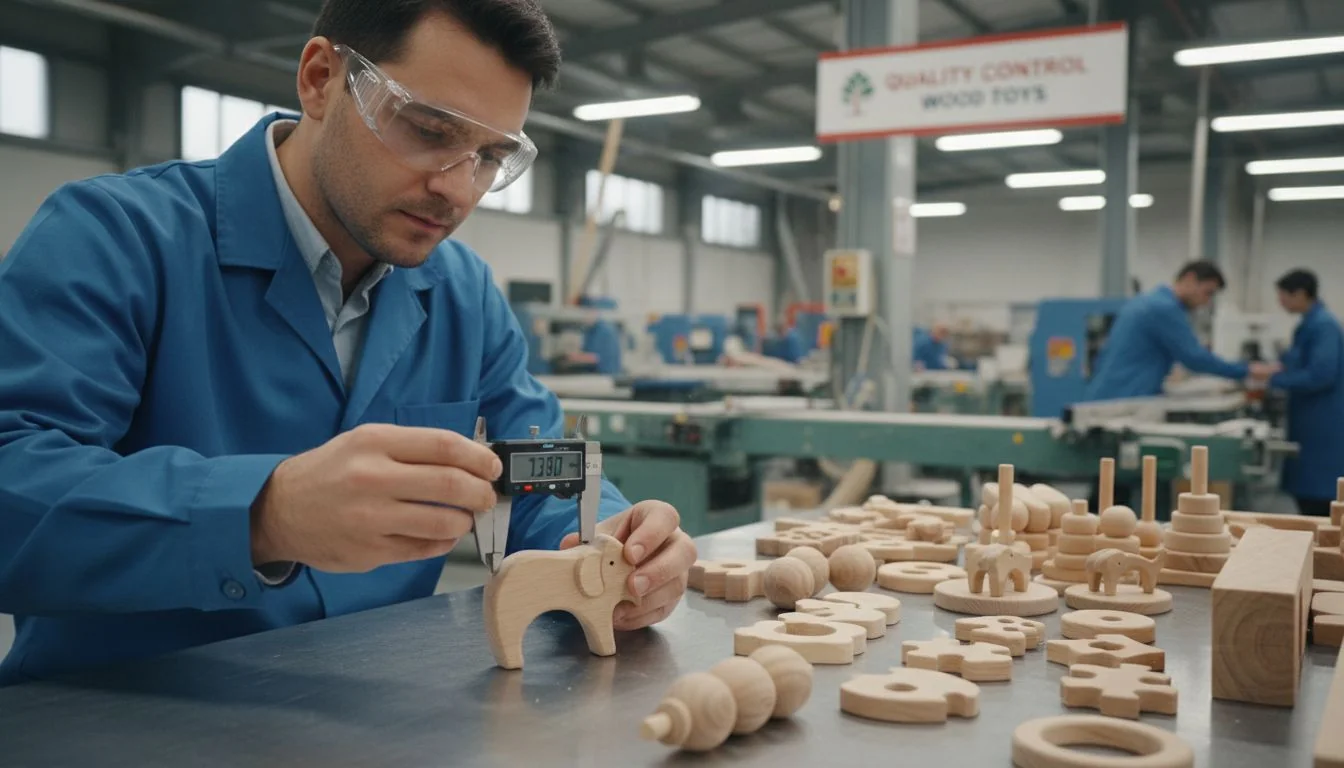
Kukhulupirira ndikwabwino, koma kuwongolera ndikwabwino. Ili linali phunziro lovuta lomwe ndinaphunzira m’masiku anga oyambirira mu bizinesi ya nkhungu. Simungathe kusiya khalidwe mwamwayi. Muyenera kukhala ndi dongosolo.
The Quality Specification Sheet
Chikalata ichi ndi "bible" za polojekiti yanu. Sichimasiya malo otanthauzira. Monga wopanga, mudzakhala wamkulu pa izi. Iyenera kuphatikizapo:
- Zofunika: Khalani ndendende. "Mapulo A A Hard Maple, owumitsidwa pamoto, opanda mfundo kapena zolakwika."
- Makulidwe ndi Kulekerera: Phatikizaninso zojambula zanu zatsatanetsatane za CAD. Tchulani miyeso yovomerezeka.
- Malizitsani Zofunika: Nenani molondola. "Wothira mchenga ku grit 320. M'mbali zonse ziyenera kuzunguliridwa ndi utali wa 2mm. Osapanga ming'alu, ming'alu, kapena mawanga."
- zonyamula katundu[^ 6]: Momwe unit iliyonse imapakidwira, komanso momwe makatoni amalembedwera.
The Three-Stage Inspection
Muyenera kuyang'ana khalidwe pazigawo zosiyanasiyana pakupanga.
| Siteji Yoyendera | Zomwe Muyenera Kuwona |
|---|---|
| Pre-Kupanga | Yang'anani zopangira. Kodi mtengowo ndi wolondola? Kodi zida zakonzeka? |
| Ikugwira Ntchito (DUPRO) | Onani zinthu zoyamba kuchokera pamzere wopanga. Izi zimabweretsa zovuta za systemic. |
| Kutumiza Kwambiri (PSI) | Chitsanzo chachisawawa cha dongosolo lomalizidwa, lodzaza. Uwu ndi mwayi wanu womaliza wopeza zovuta musanatumize. |
Using a Third-Party Inspector
This is my most important tip for you. For a few hundred dollars, you can hire a professional inspection company in China to be your eyes and ears. They will go to the factory and perform the Pre-Shipment Inspection for you, following your spec sheet. They provide a detailed report with photos and videos. I never ship a large order from a new supplier without a third-party PSI. It once saved me from a $50,000 bad batch of parts. It is the best insurance you can buy.
A Pre-Shipment Inspection (PSI) is a standard quality control step where a product is checked before it leaves the factory.Zoona
PSI is a globally recognized and standard practice in the supply chain and quality assurance industries to verify product quality before payment and shipment.
You can trust the factory's internal QC report without any verification.Wabodza
While many factories have good internal QC, their standards may differ from yours. An independent, third-party inspection provides an objective, unbiased assessment that protects your interests as the buyer.
Mapeto
Sourcing custom teethers from China is a smart move for cost savings. By mastering importing, selecting the right wood, and enforcing strict quality control, you can grow your business confidently.
Maumboni
[^1]: Understanding the import process is crucial for successful sourcing and can help you avoid costly mistakes.
[^2]: A freight forwarder simplifies logistics and customs, allowing you to focus on your core business while ensuring smooth shipping.
[^3]: Hard maple is known for its durability and safety, making it a top choice for baby products that require high standards.
[^4]: Softwoods can splinter easily, posing safety risks for infants, making it crucial to choose the right materials.
[^5]: Third-party inspections provide unbiased quality assessments, ensuring that products meet your specifications before shipment.
[^6]: Proper packaging is essential for protecting products during shipping and ensuring they meet safety standards.
