
Udhëzues për zhvillimin e lodrës prej druri
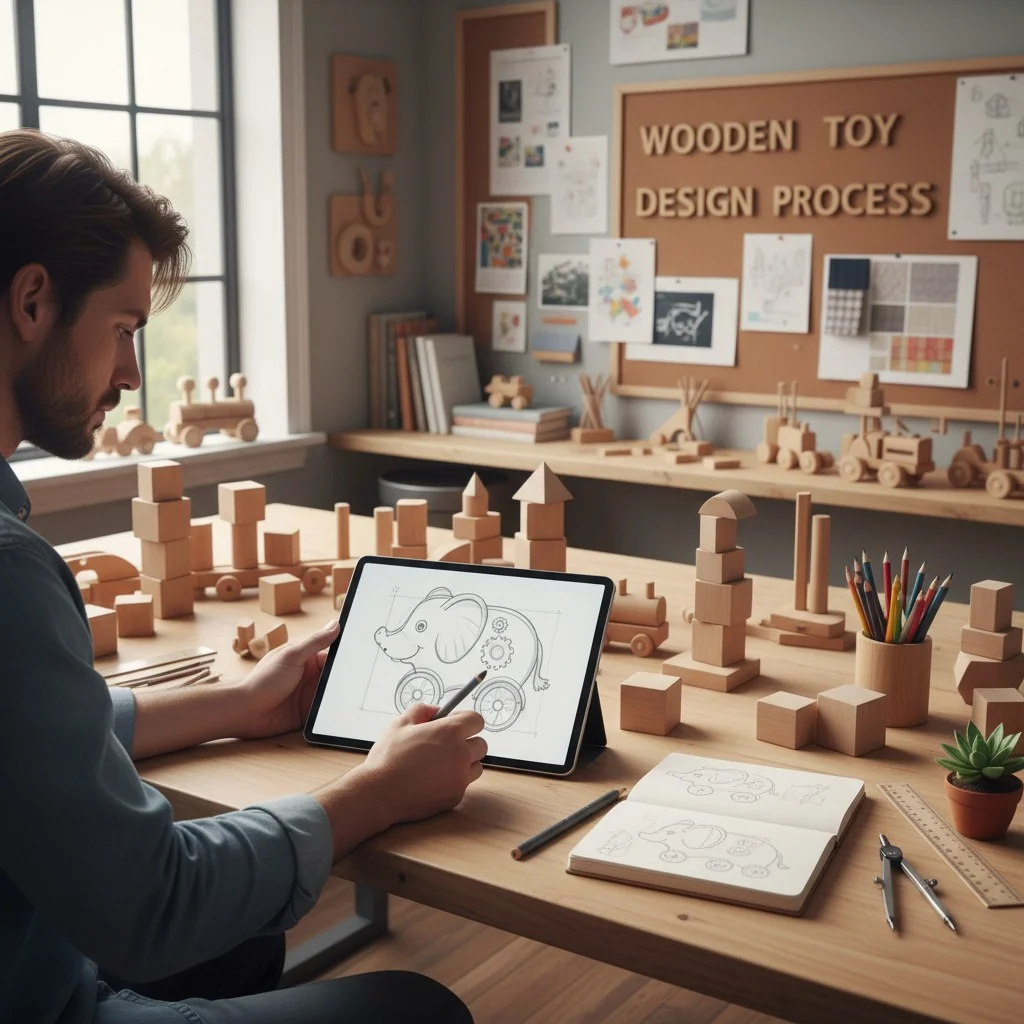
Sjellja në jetë e idesë tuaj të lodrës prej druri ndihet dërrmuese. Prodhimi jashtë shtetit shton rreziqet e cilësisë së dobët dhe vonesave. Unë do t'ju tregoj se si ta lundroni me sukses këtë proces.
Mënyra më e mirë për të zhvilluar një lodër prej druri është duke u bashkuar me një prodhues me përvojë[^1]. Ata duhet t'ju udhëzojnë nga dizajni dhe prototipizim te përzgjedhja e materialit, testimi i sigurisë dhe dorëzimi përfundimtar. Kjo siguron që lodra juaj të jetë me cilësi të lartë, të sigurt dhe me kosto efektive.
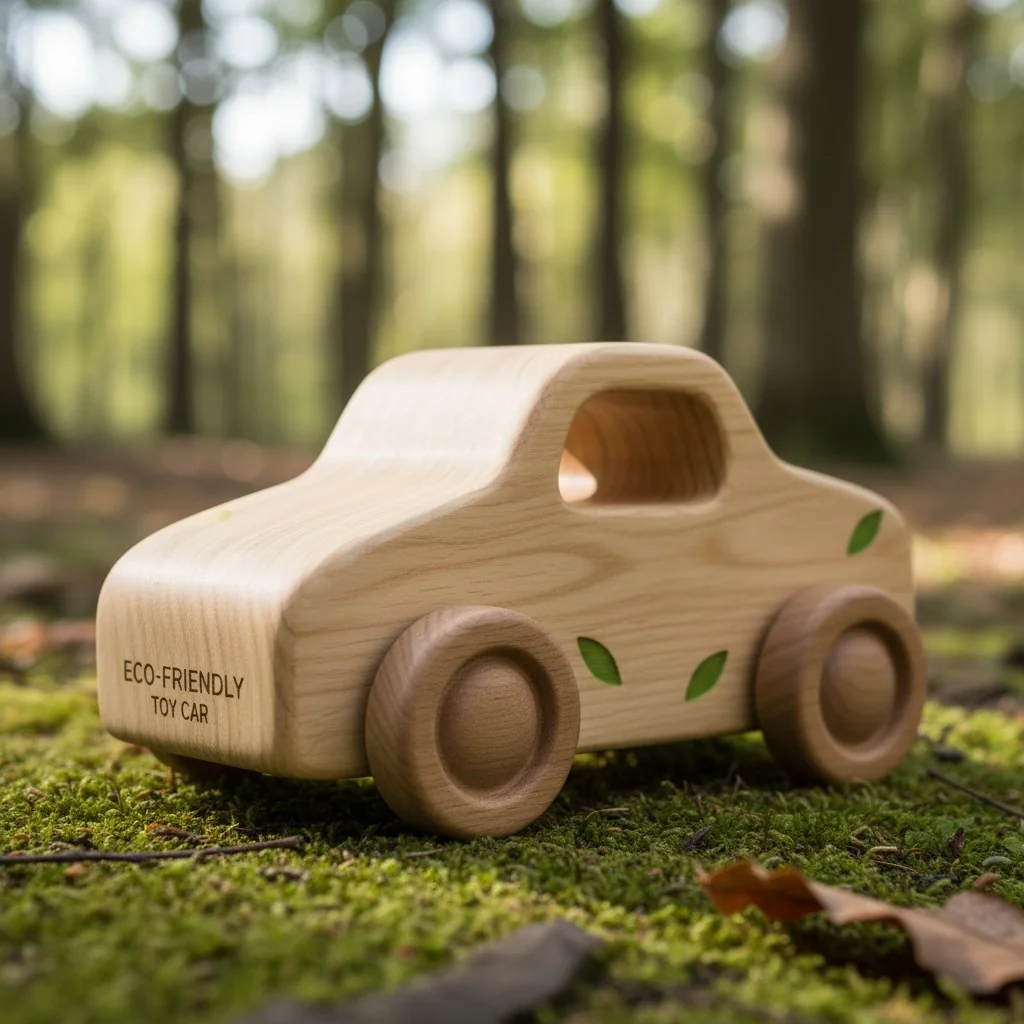
Kur fillova për herë të parë në industrinë e mykut dhe prodhimit, pashë që shumë ide të shkëlqyera të dështonin. Ata dështuan jo sepse ideja ishte e keqe, por sepse ekzekutimi ishte me të meta. Udhëtimi nga një skicë e thjeshtë në duart e një fëmije është i mbushur me sfida, veçanërisht me një material natyral si druri. Ju duhet një udhërrëfyes i qartë. Përgjatë 15 viteve të mia në këtë biznes, unë kam mësuar të gjitha gjërat për t'i kthyer konceptet në realitet dhe dua ta ndaj këtë njohuri me ju. Le të zbërthejmë se si mund ta zhvilloni lodrën tuaj prej druri, hap pas hapi.
Të gjitha lodrat prej druri janë natyrshëm eko-miqësore.E rreme
Jo i gjithë druri është me burim të qëndrueshëm. Kërkoni certifikata si FSC (Forest Stewardship Council) për të siguruar që materiali është nga pyjet e menaxhuara me përgjegjësi. Bojrat dhe përfundimet e përdorura duhet gjithashtu të jenë jo toksike.
Kina është prodhuesi kryesor global i lodrave prej druri.E vërtetë
Kina ka një infrastrukturë prodhimi masive dhe të mirë-krijuar për lodrat, duke përfshirë një zinxhir të thellë furnizimi për lloje të ndryshme druri, harduerësh dhe paketimi, duke ofruar avantazhe të konsiderueshme në kosto dhe prodhim.
Si funksionon kërkimi dhe zhvillimi i lodrave prej druri?
Ju keni një ide të shkëlqyer për një lodër, por ta ktheni atë në një produkt fizik është një sfidë e madhe. Kërkimi dhe zhvillimi (R&D) procesi duket kompleks dhe i kushtueshëm.
lodër prej druri R&D[^2] është një proces i strukturuar. Fillon me konceptin tuaj dhe kalon përmes skicimit, modelimit 3D, përzgjedhjes së materialit dhe prototipit. Qëllimi është të krijoni një lodër që është argëtuese, e sigurt dhe e lehtë për t'u prodhuar.
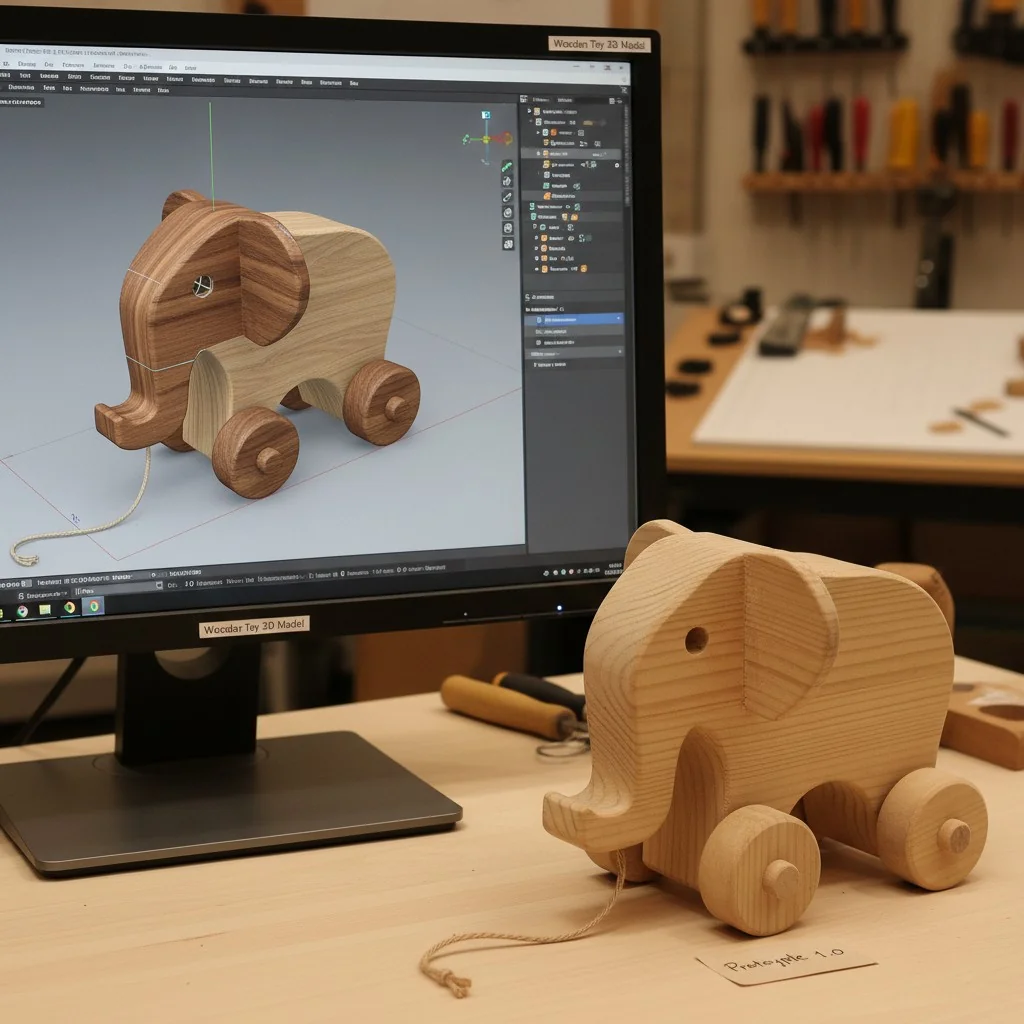
R&Faza D është ajo ku ideja juaj merr formë. Është faza më kritike për t'i bërë gjërat siç duhet. Një partner i mirë shpesh mund të ofrojë mbështetje falas të dizajnit për të ndihmuar në rafinimin e konceptit tuaj. Ekipi im dhe unë kemi ndihmuar klientë të panumërt përmes kësaj. Ne fokusohemi në disa hapa kyç për të siguruar një proces të qetë.
1. Koncepti dhe skicimi
Gjithçka fillon me vizionin tuaj. Fillojmë duke krijuar skica të detajuara. Kjo na ndihmon të eksplorojmë dizajne të ndryshme dhe veçori të lojës. Ne mendojmë për grupmoshën e synuar dhe se si një fëmijë do të ndërveprojë me lodrën. Kjo është mënyra më e lirë dhe më e shpejtë për të bërë ndryshime përpara se të angazhoheni në një model fizik.
2. Modelimi 3D dhe Prototipi
Pasi të miratohet skica, ne krijojmë një model dixhital 3D. Kjo ju lejon të shihni lodrën nga çdo kënd. Ne mund të kontrollojmë për çdo defekt të mundshëm të dizajnit. Pasi të finalizohet modeli 3D, ne krijojmë një prototip fizik. Mbajtja e prototipit në duart tuaja është një ndryshim i lojës. Ju mund të provoni ndjesinë, ekuilibrin dhe funksionin e tij.
3. Analiza e materialit dhe e sigurisë
Ne analizojmë materialet më të mira për lodrën tuaj. Për lodrat prej druri, kjo është thelbësore. Ne marrim parasysh qëndrueshmërinë, pamjen dhe koston. Ne gjithashtu sigurojmë që të gjitha materialet, veçanërisht bojërat dhe përfundimet, të jenë jo toksike dhe të sigurta për fëmijët.
| Lloji i drurit | Karakteristikat kryesore | Më e mira për |
|---|---|---|
| Ahu | Kokrra e fortë, e qëndrueshme, e lëmuar | Blloqe, automjete, lodra me ndikim të lartë |
| Mështeknë | E fortë, me kokërr të imët, me kosto efektive | Puzzles, lodra më të vogla, sende të pikturuara |
| Pisha | Kokërr i butë, i lehtë, i dukshëm | Artikuj më të mëdhenj, më të thjeshtë, pamje fshatare |
Printimi 3D është i padobishëm për prototipin e lodrave prej druri.E rreme
Ndonëse nuk janë bërë prej druri, prototipet e printuara në 3D janë tepër të dobishme dhe me kosto efektive për të kontrolluar madhësinë, formën dhe montimin e një dizajni përpara se të angazhoheni në përpunimin më të shtrenjtë të drurit CNC ose gdhendjen me dorë.
The choice of paint is as important as the choice of wood for toy safety.E vërtetë
Toys for children must use non-toxic, water-based paints that comply with international safety standards like ASTM F963 and EN-71, which test for lead and other harmful heavy metals.
What's the ultimate guide to buying wooden toys in China?
You know manufacturing in China can save you money. But finding a trustworthy partner who delivers on time and meets your quality standards feels like finding a needle in a haystack.
The key is to partner with a manufacturer offering full-service OEM (Original Equipment Manufacturer) and ODM (Original Design Manufacturer) capabilities. Look for a proven track record, transparent communication, and robust quality control[^3] systems to guide you from start to finish.
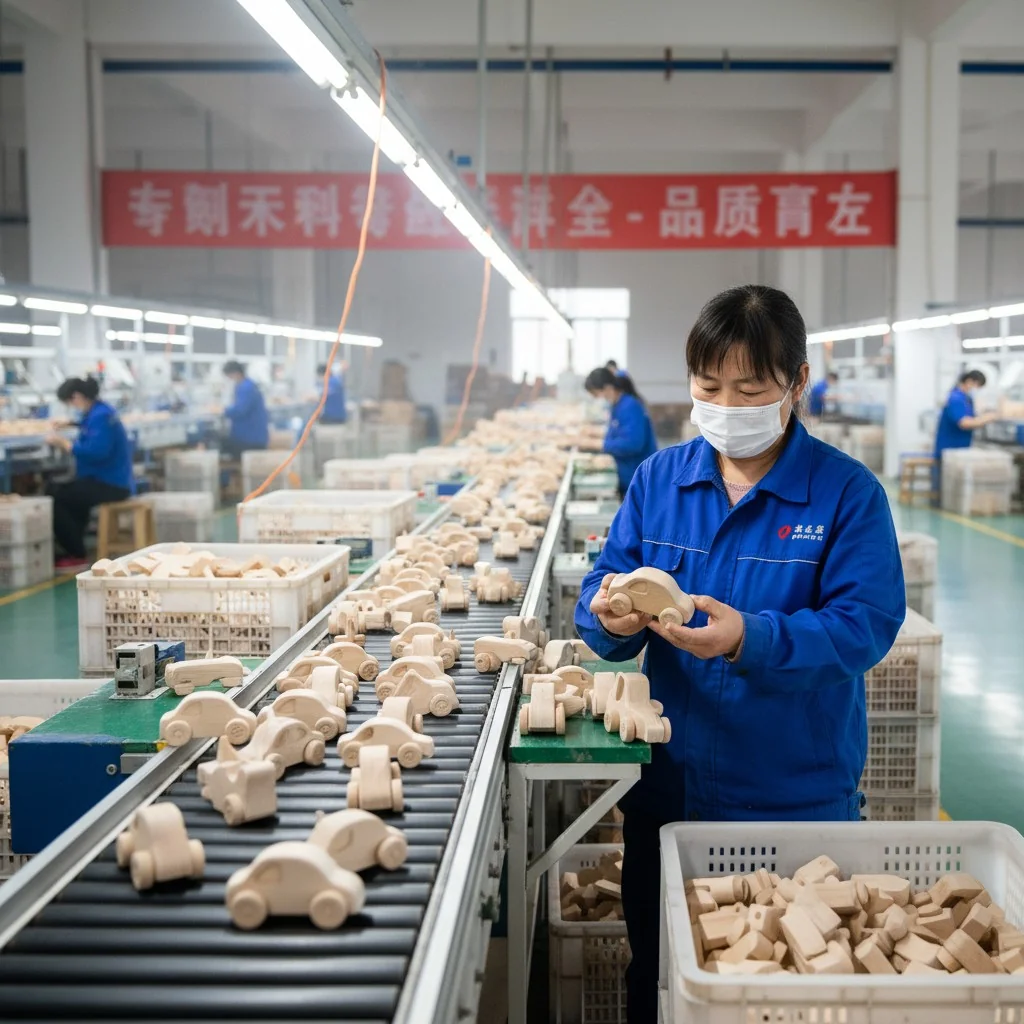
I built my company by connecting clients with the right factories in China. The secret isn't just finding the cheapest option. It's about finding a reliable partner who understands your vision and protects your interests. With over 15 years of OEM and ODM[^4] experience, I've learned what separates the great suppliers from the rest. A good partner acts as an extension of your team. They provide personalized services to make the process seamless.
1. Vet Your Partner: OEM vs. ODM
- OEM: You provide the complete design, and the factory manufactures it for you. This gives you full creative control.
- ODM: You choose a pre-existing design from the factory's catalog and customize it with your branding. This is faster and requires less R&D investment.
A great partner offers both. They can manufacture your unique design or help you adapt one of their existing ones. Ask for their portfolio and client references.
2. Communication is Everything
Language barriers and time differences can cause major problems. Your partner should have a dedicated, English-speaking project manager. They should provide regular updates and be responsive to your questions. Clear, consistent communication is the foundation for on-time delivery.
3. Insist on Quality Control
Quality isn't something you check at the end. It must be built into every step of the process.
| Production Stage | Quality Control Checkpoint |
|---|---|
| Raw Materials | Inspect wood for moisture, cracks, and knots. Verify paint safety certificates. |
| During Production | Check dimensions, smoothness, and assembly of semi-finished parts. |
| Final Assembly | Conduct a 100% inspection for defects, function, and packaging accuracy. |
| Pre-Shipment | Perform a final random inspection (AQL) to verify the entire batch meets standards. |
You should always choose the factory with the lowest price.E rreme
The lowest price often comes with hidden costs, such as poor quality, production delays, or unsafe materials. A slightly higher price from a reputable manufacturer is an investment in reliability and safety.
A factory with a long history of ODM projects is a good sign.E vërtetë
Extensive ODM experience means the factory understands product design, market trends, and safety compliance. They have proven designs that can be quickly adapted for your brand, reducing your R&D risk and time to market.
How can you cut down wooden toy costs without sacrificing quality?
Your budget is tight. High manufacturing costs can stop your project before it even starts. You're worried that cutting costs means you'll end up with a cheap, low-quality product.
You can lower costs by optimizing your design for manufacturing (DFM), choosing cost-effective materials[^5], and leveraging economies of scale. A good manufacturing partner will help you find these savings without compromising the toy's safety or appeal.
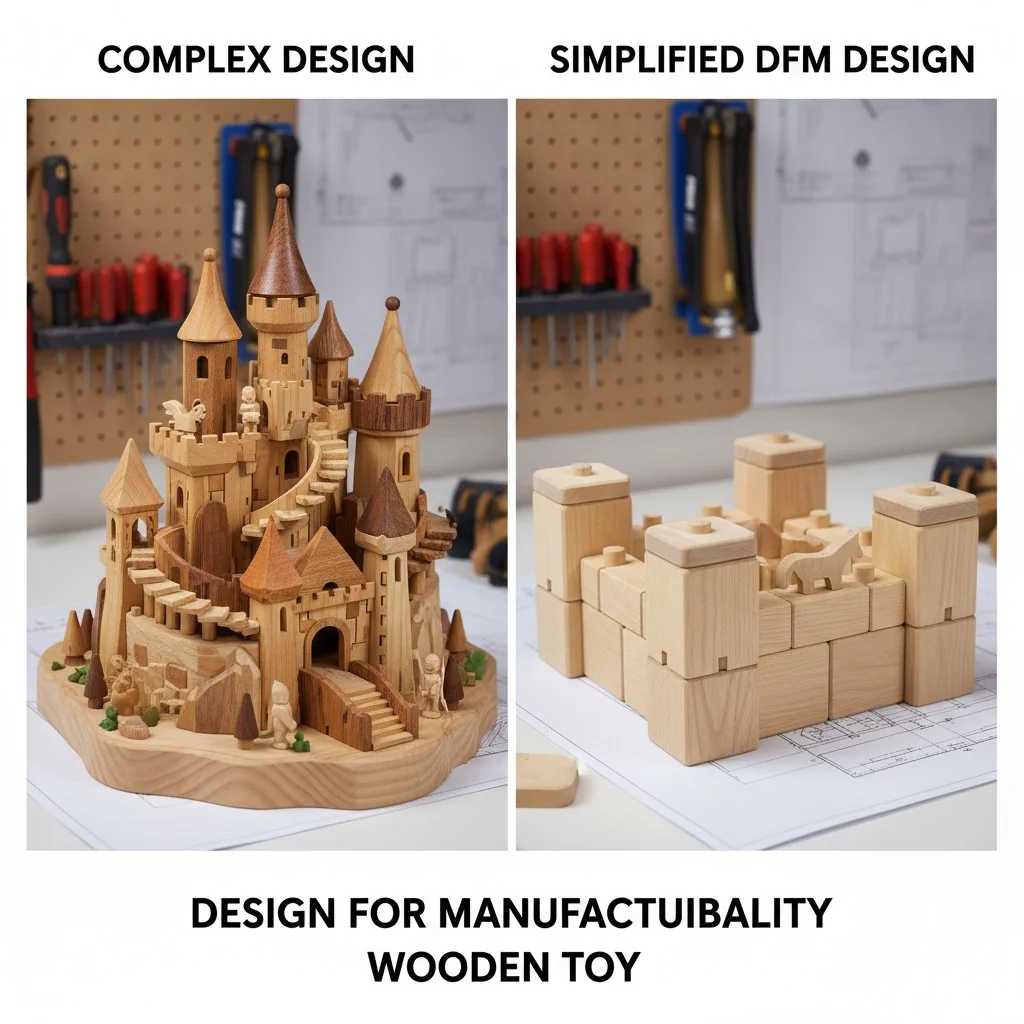
Every designer, including experienced ones like Jacky, faces pressure to reduce costs. In my trading business, helping clients manage their budget was a huge part of my job. It's a balancing act. You want a great product, but it has to be profitable. The good news is there are smart ways to cut costs. It's not about being cheap; it's about being efficient.
1. Design for Manufacturability (DFM)
This is the most effective way to reduce costs. Small changes in your design can have a big impact on production time and material waste.
- Simplify Shapes: Complex curves and intricate cuts require more time on CNC machines. Simplifying shapes can drastically lower machining costs.
- Reduce Parts: Can two parts be combined into one? Fewer parts mean less assembly time and lower labor costs.
- Standardize Components: Using standard-sized dowels or wheels is cheaper than creating custom ones.
2. Smart Material and Packaging Choices
While premium wood like Beech is excellent, sometimes Birch or even high-quality plywood is a better choice for certain parts to manage costs. Your packaging is another area to save. A well-designed but simple cardboard box is often more cost-effective and eco-friendly than complex plastic packaging. We offer a wide selection of toys and packaging options to fit your budget.
3. Leverage Economies of Scale
The per-unit cost of a toy goes down as your order quantity goes up. This is because the factory's setup costs are spread across more units.
| Order Quantity | Price Per Unit (Example) |
|---|---|
| 500 units | $10.00 |
| 1,000 units | $8.50 |
| 3,000 units | $7.00 |
| 5,000 units | $6.25 |
Planning for a larger production run, if possible, is one of the most direct ways to lower your cost per toy.
Using cheaper, softer wood is always a good way to save money.E rreme
While softer woods like pine are less expensive, they are also less durable and can dent or splinter easily. This can lead to safety issues and a poor customer experience, making it a bad choice for high-impact toys.
Reducing the amount of paint on a toy can lower its cost.E vërtetë
Paint and the labor to apply it are significant costs. Designing a toy that showcases the natural wood grain with minimal painted areas can reduce expenses while also creating a desirable, eco-friendly aesthetic.
What tests and factory audits are necessary for wooden toys?
You're worried about safety. A recall or, worse, a child getting hurt by your product would be devastating for your business and reputation. Navigating international standardet e sigurisë[^6] seems impossible.
Your toys must pass safety tests for standards like ASTM F963 (USA) and EN71 (Europe). Your factory should have social compliance audits like BSCI and quality management certifications like ISO 9001. This ensures your product is both safe and ethically made.
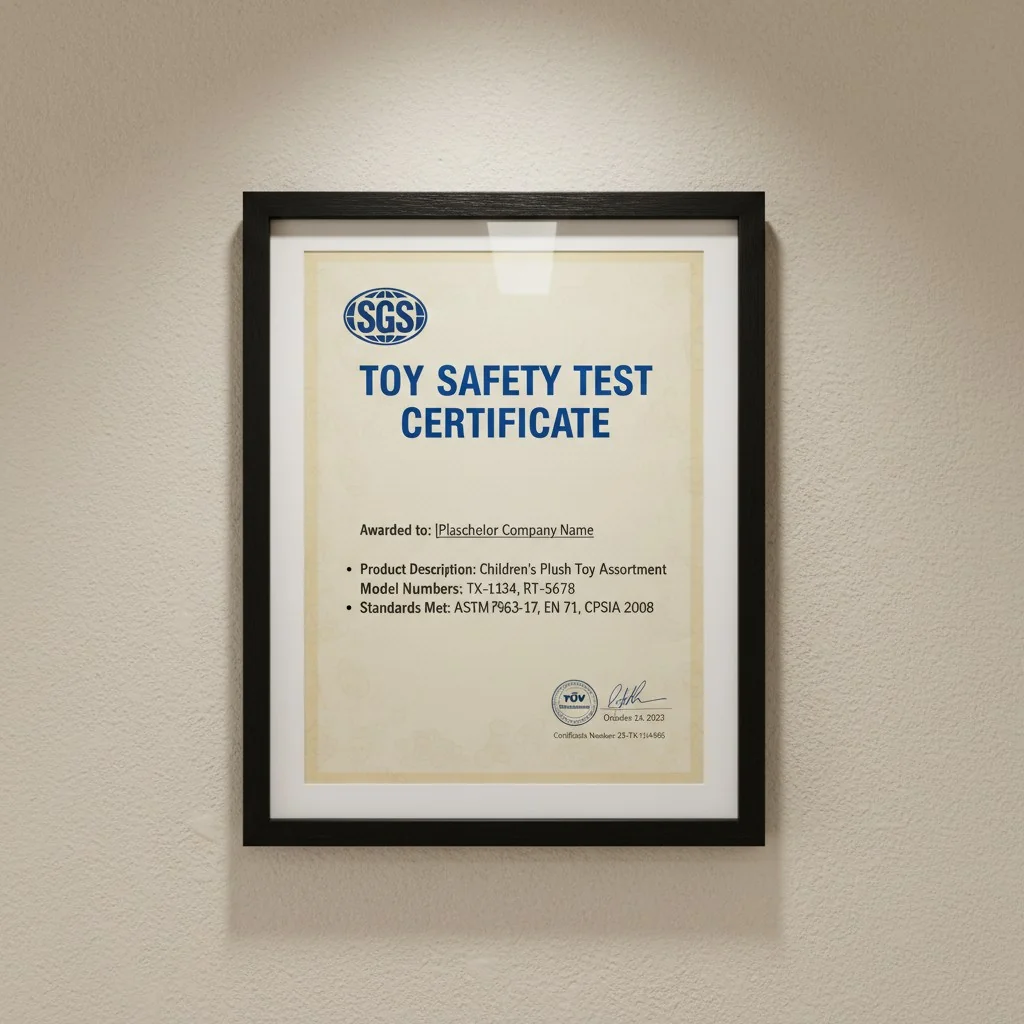
This is non-negotiable. In my career, I've seen companies ruined by cutting corners on safety. That's why we have built close partnerships with top testing labs like SGS, TUV, and Intertek. These partnerships are not just a logo on our website; they are a core part of our process. We manage the entire testing process for our clients to guarantee every product we ship is safe.
1. Key Toy Safety Standards
These standards are legal requirements in their respective markets. They cover a wide range of potential hazards.
- ASTM F963 (USA): Covers physical and mechanical properties (like small parts and sharp edges), flammability, and chemical content (especially lead and heavy metals).
- EN71 (Europe): Similar to ASTM but with some different requirements. It's a series of standards covering everything from mechanical properties to chemical safety and flammability.
2. Important Factory Audits
Audits tell you about the factory's operations and ethics.
- BSCI (Business Social Compliance Initiative): This audit focuses on ethical and social issues, like fair wages, working hours, and workplace safety. It shows the factory treats its workers fairly.
- ISO 9001: This is a certification for quality management systems. It proves the factory has reliable processes for consistently producing high-quality products.
3. Common Tests Performed by Labs
Third-party labs provide unbiased proof that your toy is safe.
| Test Category | What It Checks For |
|---|---|
| Physical & Mechanical | Small parts (choking hazard), sharp points, sharp edges, drop tests. |
| Chemical | Levels of lead, phthalates, and other heavy metals in paints and materials. |
| Ndezshmëria | How quickly the material catches fire and burns. |
A factory audit certificate is valid forever.E rreme
Factory audits like BSCI and ISO 9001 are only valid for a specific period, typically one to three years. You must always check the expiration date on the certificate to ensure it is current.
Passing safety tests in one country means the toy is safe to sell worldwide.E rreme
Different regions have their own specific safety standards. A toy that passes ASTM F963 for the US market must still be tested against EN71 to be sold legally in Europe.
konkluzioni
Developing a wooden toy is a detailed journey. With the right knowledge and a reliable manufacturing partner, you can confidently turn your vision into a safe, high-quality, and successful product.