
Montessori Toys Guide
Montessori wooden toys are designed to support independent learning, sensory exploration, fine motor development, and early childhood education. Explore Montessori toy ideas, age-based recommendations, educational methods, and sustainable wooden toy solutions for modern learning environments.
Toys za Montessori
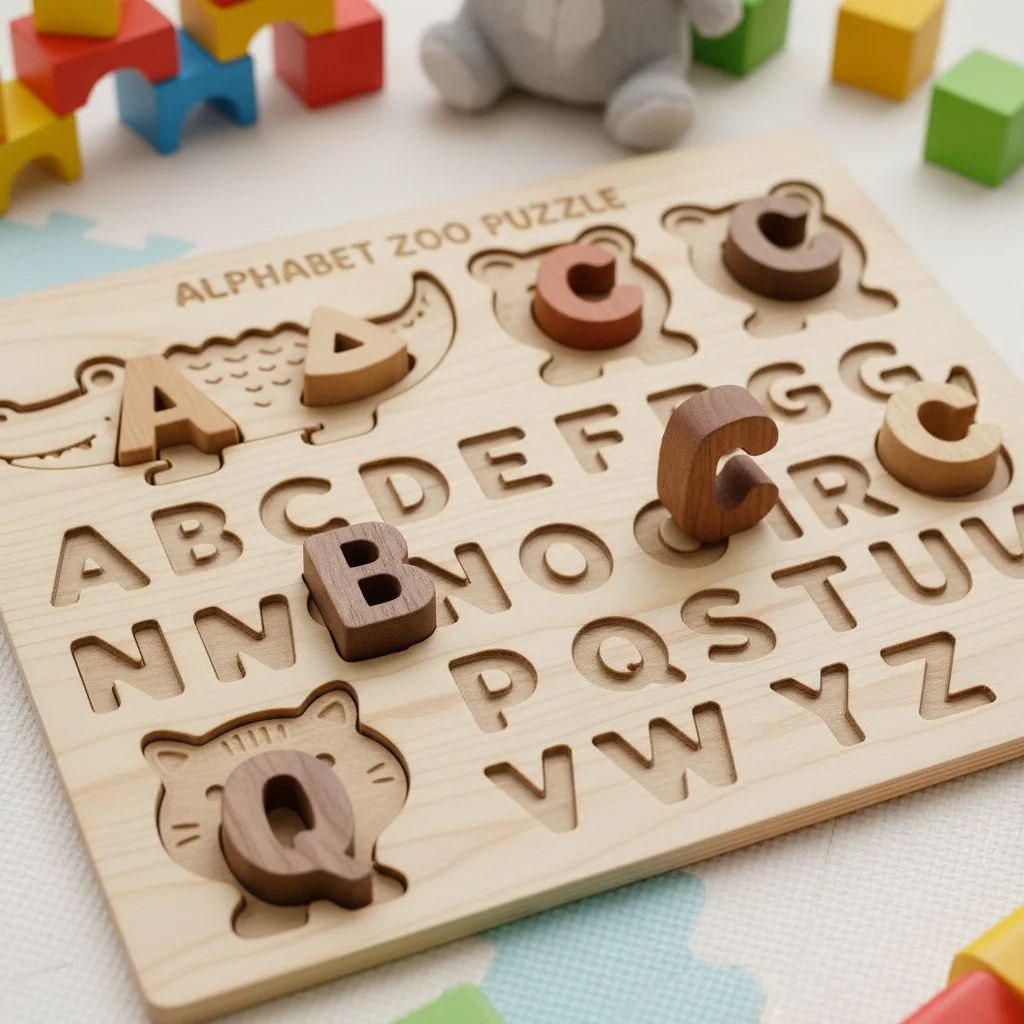
What Are Montessori Toys?
Montessori toys are educational toys designed to support the Montessori learning method, a child-centered approach developed by Maria Montessori. These toys encourage children to learn through hands-on exploration, independent play, and real-life experiences rather than passive entertainment.
Unlike flashy electronic toys with lights and sounds, Montessori toys are usually simple, purposeful, and made from natural materials such as wood. Their design focuses on helping children develop concentration, creativity, problem-solving skills, and fine motor coordination.
Key Characteristics of Montessori Toys
Simple and Purposeful Design
Montessori toys are created with a clear learning objective. Each toy typically teaches one specific skill at a time, helping children stay focused without overstimulation.
Examples include:
- Wooden stacking toys
- Vichungi vya sura
- Counting beads
- Puzzle boards
- Lacing toys
Made from Natural Materials
Most Montessori toys are made from:
- Solid wood
- Cotton
- Natural fabrics
- Non-toxic paints and finishes
Wooden materials provide a better sensory experience and are considered safer and more environmentally friendly than many plastic alternatives.
Encourage Independent Learning
Montessori toys are designed so children can use them without constant adult assistance. This helps build:
- Kujiamini
- Decision-making ability
- Problem-solving skills
- Self-discipline
Support Real-Life Skills
Many Montessori toys are inspired by real-world activities. Practical life toys may include:
- Wooden kitchen sets
- Cleaning tools
- Dressing frames
- Gardening toys
These activities help children develop independence and everyday life skills.
Benefits of Montessori Wooden Toys
Montessori toys can support:
- Fine motor development
- Hand-eye coordination
- Logical thinking
- Early math and language skills
- Sensory development
- Creativity and imagination
- Focus and patience
Because the toys are open-ended, children often find multiple ways to play and learn with them over time.
Montessori Toys by Age
0–12 Months
- Sensory rattles
- Wooden teethers
- High-contrast visual toys
1–3 Years
- Stacking toys
- Vichungi vya sura
- Pull-along toys
- Simple puzzles
3–5 Years
- Alphabet boards
- Counting toys
- Practical life sets
- Building blocks
5+ Years
- Advanced puzzles
- STEM-inspired wooden toys
- Creative construction sets
Why Wooden Toys Are Ideal for Montessori Learning
Wooden toys are widely considered one of the best choices for Montessori education because they align closely with the core principles developed by Maria Montessori — simplicity, independence, hands-on learning, and respect for natural development.
Unlike many modern plastic or electronic toys, wooden toys encourage children to engage actively with their environment through touch, movement, problem-solving, and imagination. Their natural textures, durable construction, and purposeful design make them ideal tools for Montessori-style learning.
Natural Materials Support Sensory Development
Montessori education emphasizes learning through the senses. Wooden toys provide:
- Natural texture
- Real weight and balance
- Warm tactile feeling
- Organic visual appearance
These sensory experiences help children better understand the physical world compared to lightweight plastic toys that often feel artificial or overstimulating.
Wood also introduces children to natural materials early in life, helping them build a stronger connection with the environment.
Simple Design Encourages Focus
Most wooden Montessori toys are designed with:
- Minimal distractions
- Neutral colors
- Clear educational purpose
- One skill at a time
This simplicity helps children concentrate more effectively and develop longer attention spans. Instead of relying on flashing lights, sounds, or batteries, Montessori wooden toys encourage children to create their own engagement through active exploration.
Examples include:
- Wooden stacking toys
- Vichungi vya sura
- Balance games
- Number puzzles
- Alphabet boards
Encourages Independent Learning
Montessori learning focuses heavily on independence. Wooden toys are often:
- Easy to handle
- Self-correcting
- Open-ended in use
Children can explore these toys independently, learn from mistakes, and repeat activities at their own pace. This builds:
- Kujiamini
- Problem-solving ability
- Subira
- Self-discipline
For example, a wooden shape sorter naturally teaches spatial awareness because only the correct shape fits into the matching slot.
Durable and Long-Lasting
Wooden toys are known for their strength and durability. High-quality wooden Montessori toys can:
- Last for years
- Handle daily use
- Be passed down between children
- Maintain their educational value over time
This durability also supports sustainable parenting and reduces waste compared to low-quality plastic toys that break easily.
Promotes Creativity and Open-Ended Play
Many wooden Montessori toys do not have fixed outcomes or electronic instructions. This allows children to:
- Use imagination freely
- Create different ways to play
- Develop critical thinking skills
- Explore independently
Simple wooden blocks, for example, can become houses, bridges, towers, or imaginary worlds depending on the child’s creativity.
Safer and More Eco-Friendly
High-quality wooden toys are often made with:
- Mbao iliyothibitishwa na FSC
- Non-toxic water-based paints
- Eco-friendly finishes
This makes them a safer option for children while also supporting environmentally responsible manufacturing.
In Montessori environments, natural and sustainable materials are preferred because they reflect respect for both the child and the environment.
Better Connection to Real-Life Learning
Montessori education encourages children to interact with real, meaningful objects whenever possible. Wooden toys often imitate real-world tools and activities such as:
- Cooking sets
- Tool benches
- Cleaning kits
- Gardening toys
These toys help children practice practical life skills and feel more connected to everyday experiences.
Montessori Products
Montessori products are designed to encourage independent learning, hands-on exploration, and natural child development. Inspired by the educational philosophy of Maria Montessori, these products focus on simplicity, functionality, and purposeful play.
Montessori toys are usually made from natural materials such as wood and are carefully designed to help children build concentration, coordination, creativity, and problem-solving skills through self-directed activities.
Typical Montessori products include:
- Puzzles za mbao
- Vichungi vya sura
- Building blocks
- Learning boards
- Sensory toys
- Practical life tools
- Counting and alphabet sets
These products support different developmental stages while promoting calm, focused, and meaningful learning experiences.
Wooden Puzzle Toys
Wooden puzzle toys are one of the most popular Montessori learning tools because they help children develop:
- Fine motor skills
- Hand-eye coordination
- Logical thinking
- Shape recognition
- Problem-solving ability
Simple peg puzzles are ideal for toddlers, while more advanced puzzles introduce numbers, letters, animals, maps, and sequencing activities.
Wooden puzzles also encourage patience and concentration because children learn through trial and error independently.
Common Types of Wooden Puzzle Toys
- Alphabet puzzles
- Number puzzles
- Animal puzzles
- Layer puzzles
- Knob puzzles
- Jigsaw puzzles
- Geometry puzzles
Vipangaji vya sura
Shape sorters are classic Montessori toys that help children understand:
- Spatial awareness
- Shape recognition
- Matching skills
- Early problem-solving
Children learn by identifying the correct shape and placing it into the matching opening. This simple activity strengthens both cognitive and motor development.
Wooden shape sorters are especially effective because the natural material provides better sensory feedback and durability compared to plastic alternatives.
Benefits of Shape Sorters
- Improves hand coordination
- Builds concentration
- Encourages independent learning
- Develops early math concepts
- Strengthens finger control
Vitalu vya Kujenga
Building blocks are essential Montessori materials that encourage open-ended play and creativity. Unlike fixed-function toys, blocks allow children to create freely using imagination and experimentation.
Wooden building blocks help develop:
- Ubunifu
- Engineering thinking
- Balance and coordination
- Spatial intelligence
- Problem-solving skills
Children can build towers, bridges, houses, and countless imaginative structures while learning basic physics and structural balance naturally through play.
Popular Montessori Building Blocks
- Natural wooden blocks
- Rainbow stacking blocks
- Magnetic wooden blocks
- Architectural blocks
- Balancing stones
- Construction sets
Learning Boards
Learning boards, often called busy boards or activity boards, are interactive Montessori tools designed to teach practical and cognitive skills through hands-on activities.
These boards may include:
- Zippers
- Buttons
- Locks
- Gia
- Numbers
- Letters
- Shape matching
- Clock learning systems
Learning boards encourage children to explore real-world functions while improving:
- Fine motor control
- Sensory development
- Kuzingatia
- Independent problem-solving
- Daily life skills
Wooden learning boards are particularly popular because they are durable, eco-friendly, and visually calming for children.
RELATED ARTICLES
- Montessori vs Waldorf Toys
- Best Montessori Toys for Toddlers
- Open Ended Play Guide
Montessori toys FAQ
What are Montessori toys?
Montessori toys are educational toys designed to support independent learning, hands-on exploration, and child development. Inspired by the teaching philosophy of Maria Montessori, these toys focus on simplicity, natural materials, and purposeful play rather than electronic entertainment.
What makes a toy Montessori?
A Montessori toy is usually:
- Simple and focused on one skill
- Made from natural materials like wood
- Designed for hands-on learning
- Open-ended and creativity-friendly
- Free from excessive lights, sounds, or distractions
The goal is to encourage children to explore, think, and learn independently.
Why are wooden toys commonly used in Montessori learning?
Wooden toys provide:
- Better sensory experience
- Natural texture and weight
- Long-lasting durability
- Eco-friendly materials
- Less overstimulation compared to plastic toys
Wooden Montessori toys also help children connect more naturally with their environment.
Are Montessori toys safe for children?
Yes, high-quality Montessori toys are designed with safety in mind. Most are made using:
- Non-toxic water-based paints
- Smooth sanded surfaces
- Child-safe finishes
- Mbao iliyothibitishwa na FSC
Good Montessori toys should also comply with safety standards such as EN71, ASTM F963, and CPSIA.
At what age can children start using Montessori toys?
Montessori toys are available for nearly every developmental stage:
0–12 Months
- Wooden rattles
- Teething toys
- Sensory mobiles
1–3 Years
- Vichungi vya sura
- Stacking toys
- Simple puzzles
3–5 Years
- Alphabet boards
- Counting toys
- Practical life tools
5+ Years
- STEM toys
- Advanced puzzles
- Creative construction sets
Do Montessori toys help child development?
Yes. Montessori toys can support:
- Fine motor skills
- Hand-eye coordination
- Problem-solving
- Ubunifu
- Kuzingatia
- Sensory development
- Independent thinking
Because children actively engage with the toys, learning becomes more natural and effective.
Are Montessori toys better than electronic toys?
Montessori toys and electronic toys serve different purposes, but Montessori toys are generally preferred for:
- Focused learning
- Reduced overstimulation
- Imaginative play
- Independent exploration
- Longer attention spans
Many parents choose Montessori toys to reduce screen dependency and encourage more meaningful play.
What materials are best for Montessori toys?
Natural materials are preferred, including:
- Solid wood
- Cotton
- Wool
- Natural rubber
- Water-based paints
Wood is especially popular because it is durable, safe, and environmentally friendly.
Are Montessori toys eco-friendly?
Many Montessori toys are designed with sustainability in mind. High-quality manufacturers often use:
- Mbao iliyothibitishwa na FSC
- Recyclable packaging
- Non-toxic coatings
- Sustainable production methods
Wooden Montessori toys are typically more durable and environmentally responsible than disposable plastic alternatives.
What are the most popular Montessori toys?
Popular Montessori toys include:
- Puzzles za mbao
- Vichungi vya sura
- Building blocks
- Busy boards
- Counting toys
- Kuweka pete
- Learning towers
- Alphabet boards
- Sensory toys
These toys are widely used in homes, preschools, and Montessori classrooms.
Can Montessori toys be customized for brands?
Yes. Many manufacturers offer OEM and ODM customization services for Montessori toys, including:
- Custom logo branding
- Packaging design
- Color customization
- Material selection
- Product development
This is common for retailers, wholesalers, and private label toy brands.
How do I choose the right Montessori toy?
Choose toys based on:
- Child’s age
- Development stage
- Safety requirements
- Learning goals
- Material quality
Simple toys that encourage active participation are usually the best choice.
Why are Montessori toys becoming more popular?
Montessori toys are growing in popularity because parents increasingly value:
- Educational play
- Eco-friendly products
- Screen-free activities
- Sustainable materials
- Early childhood development
They combine learning, creativity, and safety in a natural and engaging way.
Looking for Custom Wooden Montessori Toys?
Woddlon provides OEM and ODM wooden toy manufacturing solutions for global brands, wholesalers, and educational toy companies.