
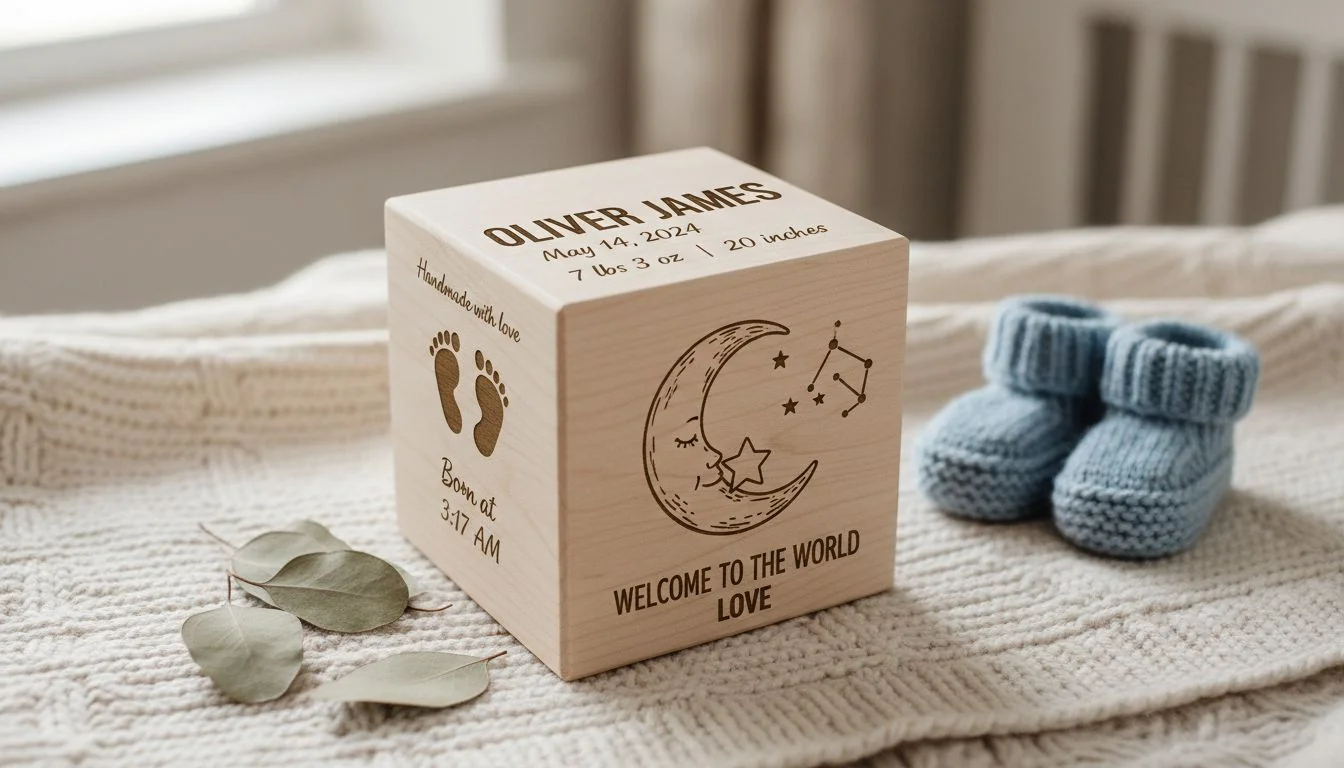
Utafutaji custom products[^1] from overseas feels complex and risky. You worry about quality and losing money. But what if you had a clear process to manage it like the big brands do?
To custom-source a baby keepsake block, you need a three-part strategy. First, find and vet a reliable Chinese manufacturer[^2]. Second, clearly specify your materials, like choosing a safe, durable hardwood. Finally, implement a strict quality control process with multiple inspection points before shipment.
It might sound simple, but the details are what make or break a project. I've seen many talented designers struggle when they move from design to production, especially when sourcing from overseas. The principles are the same whether you're making a complex mold or a simple wooden block. The key is having a system.
Let's break down the exact process I use. This system has helped my clients grow their businesses and saved them from costly mistakes. Follow these steps, and you'll avoid the common pitfalls that trip up even experienced professionals.
All suppliers on Alibaba with a 'Gold Supplier' badge have been physically audited by Alibaba staff.Uongo
The 'Gold Supplier' status is a paid membership. While it involves a basic business verification, it does not guarantee a physical factory audit or product quality.
Using a detailed Product Specification Sheet (PSS) can significantly reduce misunderstandings with overseas manufacturers.Kweli
A PSS provides clear, written instructions on materials, dimensions, colors, and quality standards, serving as a contract and reference point for both parties.
How Do You Successfully Import from China?
Finding a trustworthy factory in China can feel overwhelming. You hear stories about scams and language barriers, and you're afraid of making a costly mistake. Your project's success is on the line.
To import successfully, start on platforms like Alibaba but always verify the supplier. Request samples, check their business license, and ask for factory audit reports. Clear communication through detailed specification sheets is essential to getting the product you want.

Dive Deeper
Importing isn't just about finding the cheapest price. It's about finding a reliable partner. I've built my entire career on this principle. A good partner will save you money in the long run by delivering consistent quality and meeting deadlines. A bad one will cost you more than you ever hoped to save. Here’s how to find the right one.
Vetting Your Supplier
Your first step is to create a shortlist of potential suppliers. Platforms like Alibaba are a good starting point. Look for "Gold Suppliers" with several years of experience and positive reviews. But don't stop there. I remember a client who almost partnered with a supplier who had a great website but was just a middleman. We avoided a disaster by asking for their factory audit report[^3], which they couldn't provide. Always dig deeper. Ask for their business license, any certifications (like ISO 9001), and photos or videos of their factory. A legitimate manufacturer will be happy to share these.
Communication and Contracts
Once you have a few potential partners, communication becomes everything. You must be incredibly clear about your requirements. I create a detailed Product Specification Sheet[^4] (PSS) for every project. This document leaves no room for interpretation. For our keepsake block, the PSS would look something like this:
| Kipengele | Vipimo | Vidokezo |
|---|---|---|
| Product Name | Custom Baby Birth Keepsake Block | |
| Nyenzo | Grade A European Beech Wood | Must be kiln-dried to 8-10% unyevu[^5] |
| Dimensions | 50mm x 50mm x 50mm | Tolerance: +/- 0.5mm |
| Maliza | Sanded smooth (320 grit), rounded edges | Radius: 3mm |
| Coating | Child-safe, non-toxic, clear matte oil | Must provide safety certification (e.g., EN71) |
| Engraving | Laser engraved, 1mm depth | As per provided design files |
| Ufungaji | Individual cotton bag, then corrugated box |
Also, be firm on payment terms. A standard arrangement is 30% upfront to start production and 70% after a successful pre-shipment inspection. Never pay 100% upfront.
The 'Made in China 2025' initiative is focused solely on producing low-cost consumer goods.Uongo
'Made in China 2025' is a strategic plan to upgrade the country's manufacturing industry, focusing on high-tech fields like robotics, aerospace, and new energy vehicles, not just low-cost goods.
China has been the world's largest exporter of goods since 2009.Kweli
According to data from the World Trade Organization (WTO) and the World Bank, China surpassed Germany in 2009 to become the leading global exporter.
How Do You Select the Right Wood for Your Product?
Choosing the wrong wood can ruin your product. It might crack, warp, or not have the premium feel you want. Imagine your beautiful keepsake blocks arriving with splinters or an inconsistent finish.
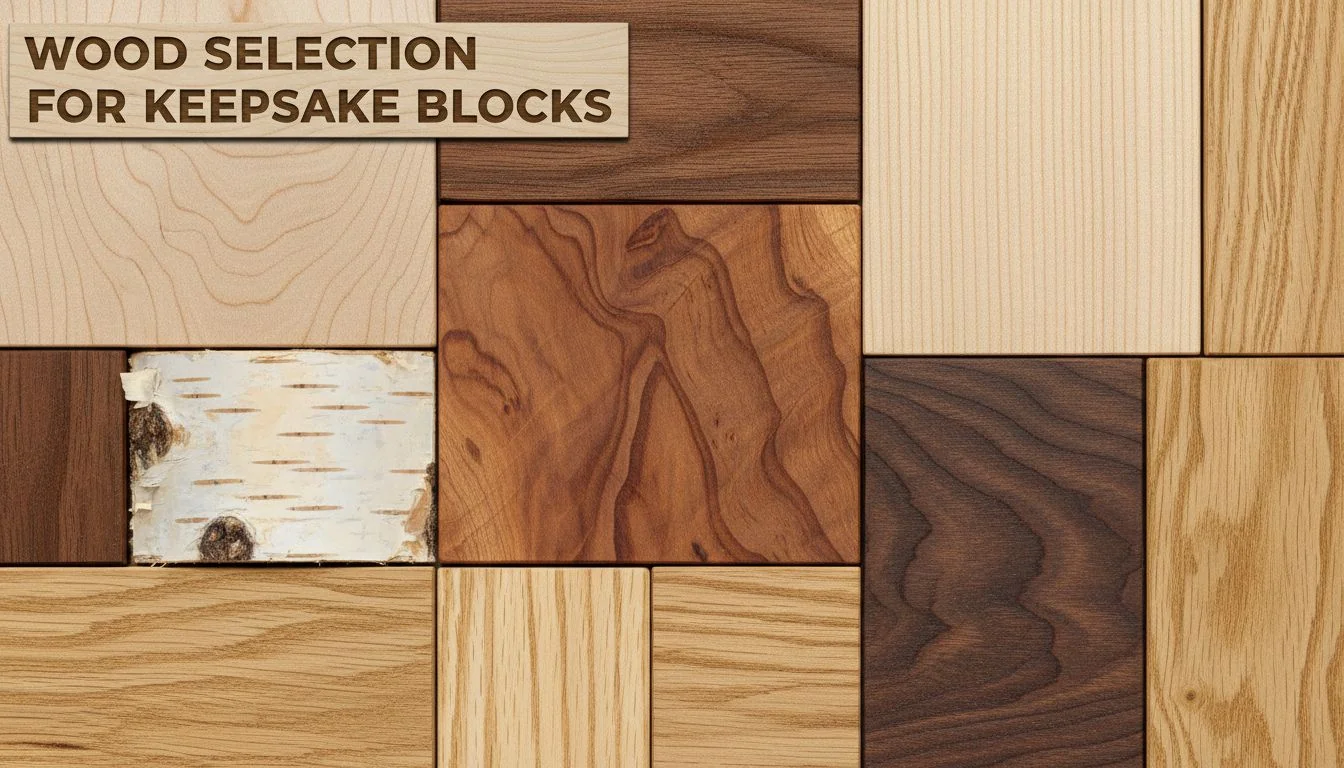
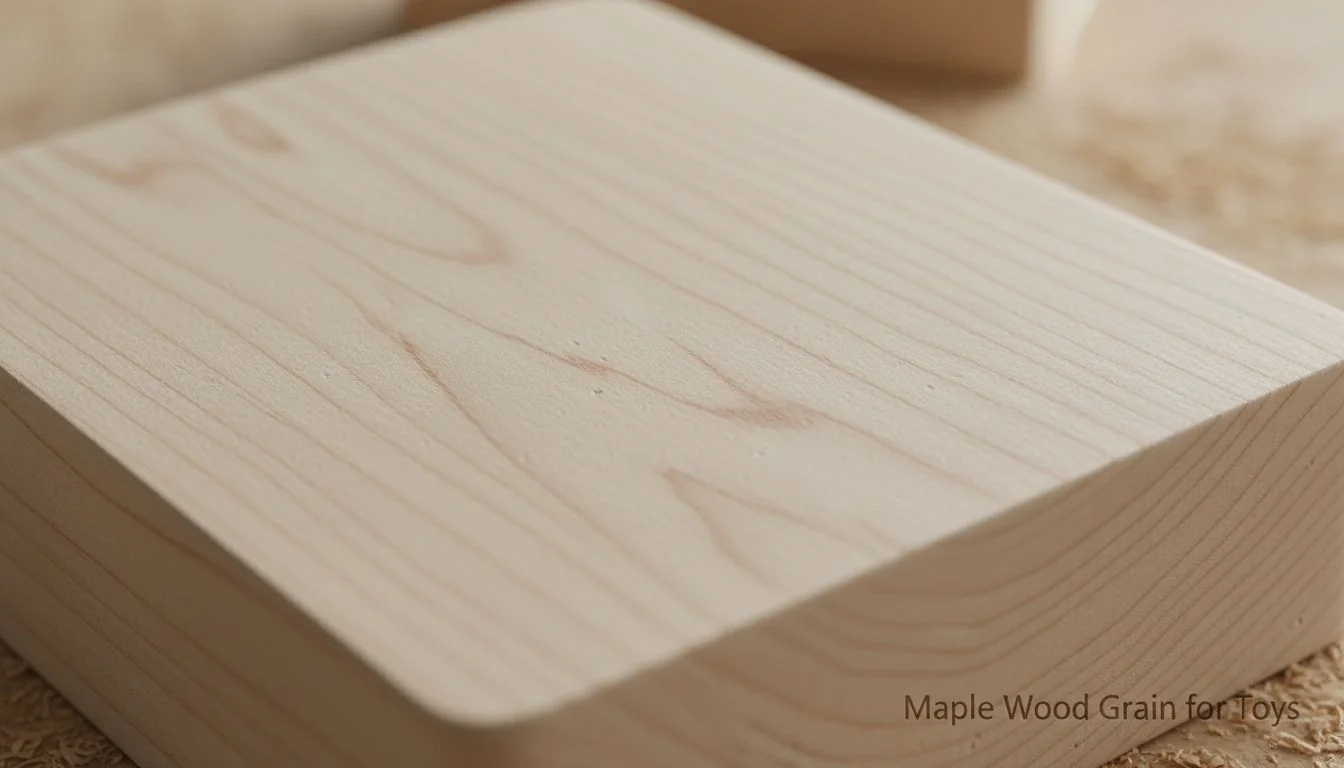
For a baby keepsake block, choose a durable, non-toxic hardwood like Maple, Beech, or Birch. These woods have a fine grain, are less prone to splintering, and hold engravings well. Always specify the exact wood type and quality grade in your contract.
Dive Deeper
Material selection is a critical step in product design. For a product intended for a baby, safety and durability are the top priorities. You can't afford to cut corners here. The wood must be hard enough to resist dents, have a low tendency to splinter, and be non-toxic. This is why softwoods like pine are generally a poor choice for toys, even if they are cheaper.
Comparing Common Hardwoods
Kwa kizuizi cha ubora wa juu, aina tatu za mbao ni chaguo bora: Beech, Maple, na Birch. Yote ni miti migumu yenye nafaka laini, zilizonyooka ambazo zinaonekana vizuri na ni salama kwa watoto. Nimefanya kazi na wauzaji kama Woddlon, ambao hushirikiana na chapa kuu za vinyago. Wanaelewa nyenzo hizi ndani na nje kwa sababu chapa kubwa zinahitaji usalama na ubora. Hapa kuna ulinganisho wa haraka kukusaidia kuamua:
| Aina ya Mbao | Ugumu (Janka) | Nafaka/Muundo | Gharama | Bora Kwa |
|---|---|---|---|---|
| Maple | lbf 1,450 | Mzuri sana, sare | Juu | Hisia ya hali ya juu, uimara, rangi nyepesi |
| Beech | lbf 1,300 | Sawa, sawa | Kati | Kudumu, inashikilia maelezo vizuri, rangi ya joto |
| Birch | lbf 1,260 | Sawa, hata | Kati-Chini | Gharama nafuu, kumaliza laini, rangi ya rangi |
Specifying Wood Quality
Kutaja kuni tu haitoshi. Lazima ubainishe ubora. Uliza "Daraja A" au "FAS (Sekunde ya Kwanza na ya Kwanza)," ambayo ni daraja la juu zaidi la mbao ngumu, kuhakikisha ina mafundo au kasoro ndogo. Muhimu zaidi, lazima ueleze kiwango cha unyevu (MC). Kwa bidhaa ya ndani kama hii, kuni inapaswa kukaushwa kwa MC ya 8-10%. Hii huzuia kizuizi kutoka kwa kupasuka au kupindana kinapojirekebisha kwenye unyevunyevu katika nyumba ya mteja. Hatimaye, taja kumaliza. Ni lazima ithibitishwe kuwa haina sumu na ni salama kwa mtoto, kama vile mafuta asilia au laki inayotokana na maji ambayo inakidhi viwango vya kimataifa vya usalama wa vinyago (k.m., EN71 katika Ulaya au ASTM F963 nchini Marekani).
Miti yote ngumu ni mnene na ina nguvu kuliko miti yote laini.Uongo
While generally true, there are exceptions. For example, Balsa wood is technically a hardwood but is extremely soft and light. Conversely, Yew is a softwood but is very hard and dense.
Beech wood is naturally anti-bacterial, making it a popular choice for kitchen utensils and children's toys.Kweli
Beech wood contains natural compounds that give it anti-bacterial properties. Its fine grain also means it has very small pores, making it harder for germs to lodge and grow.
How Can You Guarantee Quality When Manufacturing Overseas?
You've placed your order, but now you're anxious. How do you know the final product will meet your standards without being there? Receiving a full container of defective goods is a designer's worst nightmare.
Ensure quality by using a multi-stage inspection process. This includes checking raw materials before production, inspecting products during manufacturing, and conducting a final random inspection before shipment. For objectivity, always use a third-party inspection service[^6].

Dive Deeper
You cannot be in the factory 24/7, so you need a system that acts as your eyes and ears. Trust is good, but control is better. This is a core principle in manufacturing, whether you're making molds worth hundreds of thousands of dollars or simple wooden blocks. A robust Quality Control (QC) process protects your investment and your brand's reputation. It's not an expense; it's insurance.
The Three Key Inspection Points
A good QC plan involves checks at different stages of production.
- Pre-Production Inspection (PPI): Before mass production begins, an inspector checks the raw materials. For our block, they would verify the wood is the correct type (Beech), grade, and moisture content. This prevents a fundamental material error from ruining the entire batch.
- During Production Inspection (DPI): When about 20-30% of the order is complete, an inspector goes to the factory floor. They pull random samples to check for consistency. Are the dimensions correct? Is the engraving depth uniform? This catches problems early so the factory can correct them before making thousands of defective units.
- Pre-Shipment Inspection (PSI): This is the most critical step. When the order is 100% complete and at least 80% packed, an inspector performs a final random check based on AQL standards (Acceptable Quality Limit[^7]). They follow a detailed checklist to verify quality, quantity, and packaging. The goods do not ship until they pass this inspection.
Creating a Quality Checklist
Your inspector is only as good as your instructions. You need to provide them with a detailed QC checklist. This is a non-negotiable document that defines what is acceptable and what is a defect.
| Kituo cha ukaguzi | Specification/Requirement | Uvumilivu | Test Method |
|---|---|---|---|
| Dimensions | 50mm x 50mm x 50mm | +/- 0.5mm | Caliper check |
| Edge Sanding | All 12 edges rounded and smooth, no splinters | 3mm radius | Visual and touch test |
| Uso Maliza | No scratches, dents, or glue marks | None acceptable | Visual inspection under bright light |
| Engraving Alignment | Centered on each face | +/- 1mm | Visual check with template |
| Uthabiti wa Rangi | Natural Beech wood color, no dark stains | Per sample | Comparison with approved pre-pro sample |
| Mtihani wa Kuacha | Drop from 1 meter height, no cracks or chips | None acceptable | Perform on 3 random samples |
Orodha hii ya ukaguzi, pamoja na huduma ya ukaguzi ya watu wengine, hukupa udhibiti wa uzalishaji wako, hata ukiwa umbali wa maelfu ya maili.
AQL inawakilisha 'Kiwango cha Ubora Uliohakikishwa' na ni dhamana ya bidhaa zisizo na kasoro 100%.Uongo
AQL inasimamia 'Kikomo cha Ubora Kinachokubalika.' Ni mbinu ya sampuli ya takwimu inayobainisha idadi ya juu zaidi ya vitengo vyenye kasoro ambavyo vinaweza kuchukuliwa kuwa vinakubalika katika kundi, si hakikisho la kasoro sifuri.
Huduma za ukaguzi za watu wengine huwa na ufanisi zaidi zinapoajiriwa na kulipwa na mnunuzi, si kiwanda.Kweli
Wakati mnunuzi anaajiri huduma ya ukaguzi, inahakikisha uaminifu na usawa wa mkaguzi. Ikiwa kiwanda kitawaajiri, kunaweza kuwa na mgongano wa kimaslahi, unaoweza kusababisha ripoti zenye upendeleo au upole.
Hitimisho
Sourcing custom products from China is a powerful way to save costs. Success depends on three things: vetting suppliers, specifying materials precisely, and enforcing strict quality control. Master these steps.
Marejeleo
[^1]: Understanding the nuances of sourcing custom products can help you avoid costly mistakes and ensure quality.
[^2]: Finding a trustworthy manufacturer is crucial for successful sourcing and can save you from potential scams.
[^3]: A factory audit report can provide insights into a supplier's capabilities and reliability, helping you make better sourcing decisions.
[^4]: A well-crafted Product Specification Sheet can significantly reduce misunderstandings and improve communication with suppliers.
[^5]: Specifying the correct moisture content is crucial to prevent issues like cracking or warping in wooden products.
[^6]: Third-party inspections provide an objective assessment of product quality, ensuring that your standards are met.
[^7]: Understanding AQL is essential for setting quality standards and ensuring that your products meet acceptable defect levels.
