

Sizning odatiy o'yinchoqlaringiz uchun to'g'ri yog'ochni tanlash juda qiyin. Noto'g'ri tanlov sifatli va xavfsizlik xavfini anglatadi. Men sizni eng yaxshi materiallar orqali eng yaxshi materiallar orqali boshqaraman.
Yuqori sifatli odatiy o'yinchoqlar uchun eng yaxshi materiallar Bekek, zarang va qayin kabi qattiq daraxtlar[^ 1]. Ular bardoshli, ikkiga bo'linmaydigan va bolalar mahsulotlari uchun juda mos keladi. Nufuzli xitoylik ishlab chiqaruvchilar bu o'rmonlarni juda yaxshi ishlash va xavfsizlik profillari uchun afzal ko'rishadi.
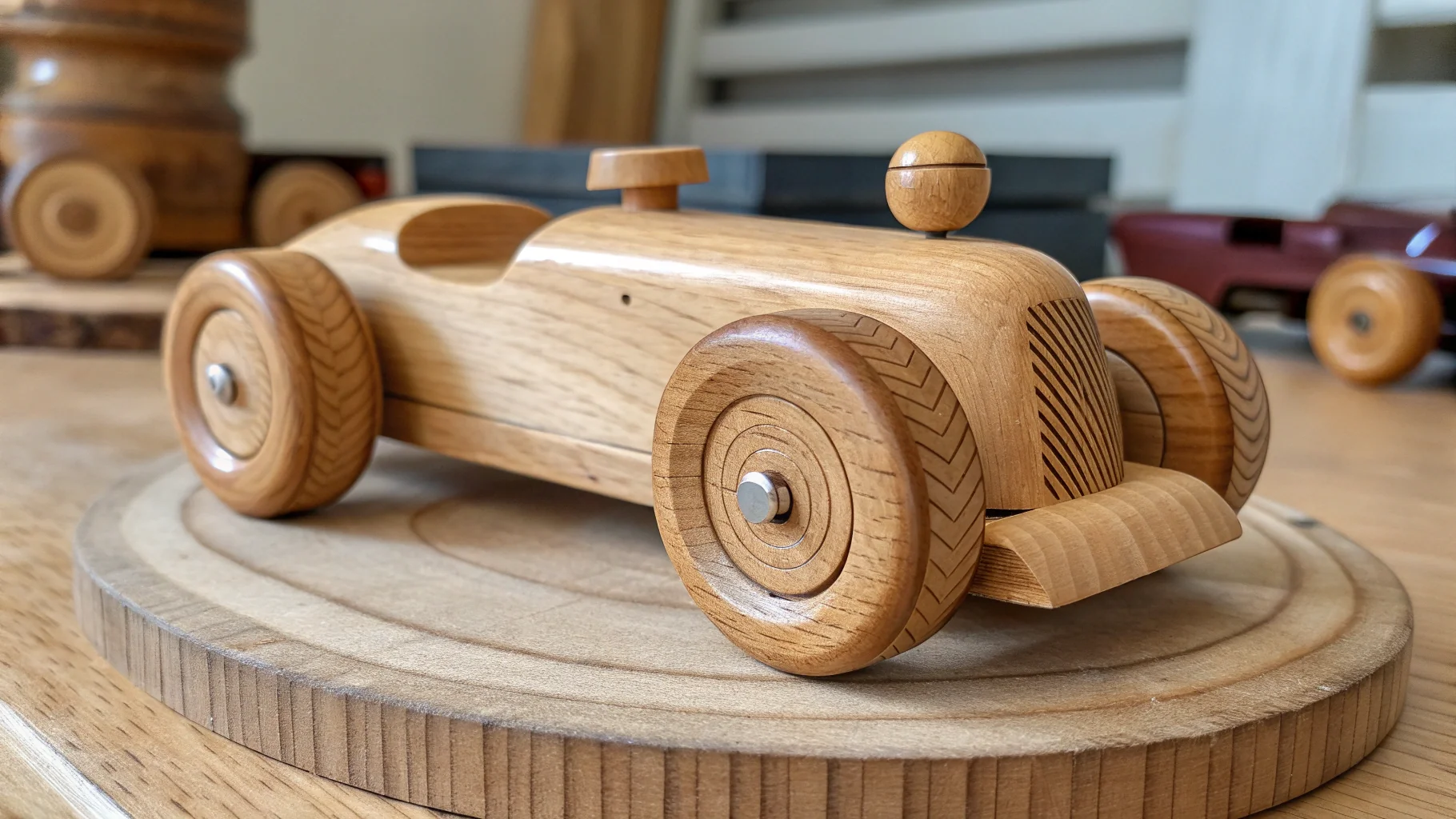
Selecting the right wood is just the first step in creating a successful product. I've seen many designers, even experienced ones like you, focus solely on the material and overlook other critical parts of the process. It's a classic mistake that can cost you time and money.
But what about safety compliance[^2], customization, pricing, and production timelines? These are the questions that separate a good idea from a profitable product. I've spent years navigating the manufacturing landscape in China, and I've learned these lessons the hard way. Let's break down what you really need to know to get it right.
All wood sourced from China for toys is FSC certified.Yolg'on
This is a common misconception. While many reputable suppliers can and do offer Forest Stewardship Council (FSC) certified wood, it is not the default. You must specifically request it, and often pay a premium, then verify the certification chain.
Hardwoods like Beech and Maple are less likely to splinter than softwoods like Pine.To'g'ri
This is due to their dense, tight grain structure. This density makes them more durable and resistant to chipping or splintering, which is a critical safety feature for toys that will be handled, dropped, and chewed on by children.
How do Chinese manufacturers ensure safety standards in custom wood toys?
You're worried about toy safety standards when manufacturing in China. Non-compliance can lead to recalls and harm your brand. Here’s how top suppliers meet international standards like ASTM and EN-71.
Reputable manufacturers ensure safety by using Toksik, qo'rg'oshinsiz bo'yoqlar[^ 3] va tugatadi. Ular ASTM F963 (AQSh) va En-71 (Evropa) kabi xalqaro standartlarga javob berishadi va sizning odatiy o'yinchoqlar bozor uchun xavfsiz va xavfsizdir.

When I first started, I assumed safety was a given. I quickly learned you have to be proactive. A good supplier doesn't just build your product; they build it to be safe and legal in your target market. This involves a multi-step process that you, as the designer, need to understand and oversee. It's not just about the final product, but about the choices made at every stage, from raw material sourcing to the final coat of paint. Let's look at the key areas they focus on.
Material and Finish Controls
Hammasi xom ashyodan boshlanadi. Ishonchli fabrika uning yog'ochini keskin norvati, zararli davolash usullaridan xoli ekanligini ta'minlaydi. Eng muhimi, ular faqat zaharli bo'lmagan, qo'rg'oshin bo'lmagan, qo'rg'oshinsiz va og'ir metallardan xoli bo'lgan bo'yoqlar va laklarni ishlatishadi. Siz buni texnik paketingizda ko'rsatishingiz va mahsulotingizda foydalanishni rejalashtirish uchun maxsus marralarni (MSDS) so'rang.
Physical and Mechanical Testing
This is where the design meets reality. Factories perform internal tests to check for potential hazards. This includes drop tests to ensure durability, tension tests on small parts to prevent choking hazards, and checks for sharp points or edges. These tests are designed to simulate real-world use and abuse by children, ensuring the toy's structural integrity.
Third-Party Certification
Never take a factory's word for it. The most crucial step is independent verification. You should always budget for third-party lab testing[^4]. Your supplier can help arrange this with labs like SGS, Intertek, or TUV. They will test your final product against the specific standards for your country.
| Standart | Primary Region | Asosiy e'tibor sohalari |
|---|---|---|
| ASTM F963 | AQSh | Mechanical hazards, flammability, lead/heavy metals. |
| UZ-71 | Europe (EU) | Broader scope, includes chemical, physical, flammability, electrical safety. |
| ISO 8124 | Xalqaro | Similar to ASTM/EN-71, used in Australia and other regions. |
Chinese factories automatically test every batch of toys for safety compliance.Yolg'on
Testing is typically done per production run, not for every single batch within that run. You, the client, must specifically request and pay for third-party testing. It is not an automatic service.
The EN-71 standard is a comprehensive set of regulations covering multiple safety aspects.To'g'ri
EN-71 is not a single test. It's a series of standards (EN-71-1, EN-71-2, EN-71-3, etc.) that cover everything from physical properties and flammability to the migration of specific chemical elements.
What customization options are available for wooden toys from China?
You have a unique toy design but don't know if it's manufacturable. Standard options are boring, and you need your product to stand out. Chinese suppliers offer vast customization, from shape to finish.
Customization is extensive. You can specify wood type, shape (via CNC ishlov berish[^5]), colors (with Pantone matching), and finishes (lacquer, oil). You can also add branding through laser engraving or printing. Your detailed CAD files are the starting point for any custom project.
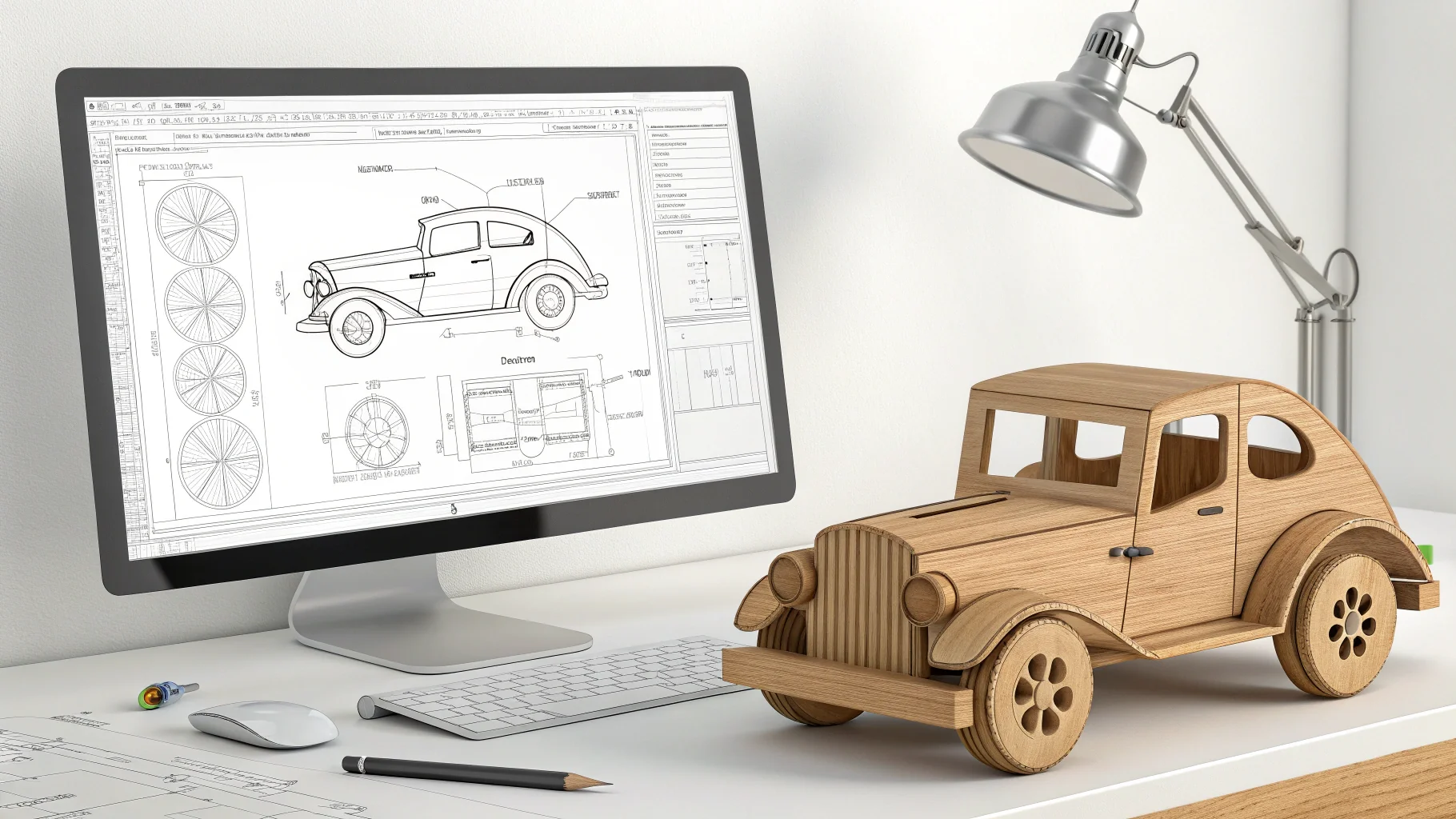
As a designer, your creativity is your greatest asset. The good news is that modern Chinese factories have the technology to bring even complex ideas to life. I've worked with clients on everything from simple alphabet blocks to intricate, multi-part mechanical toys. The key is to provide clear, detailed specifications. Your CAD files are the blueprint, but you also need to think about the details that make the product uniquely yours. The level of customization is one of the biggest advantages of working directly with a manufacturer.
From Design to Prototype
Jarayon sizning 3D CAD fayllaringiz (E.G.,. Yoki .igs) bilan boshlanadi. Zavod muhandislari ularni ishlab chiqarish uchun ko'rib chiqadilar. U erdan, ular yog'ochni aniq shakllarga kesib tashlash uchun CNC (kompyuter raqami) dan foydalanadilar. Ushbu texnologiya aql bovar qilmaydigan aniqlik va murakkablikka imkon beradi. Keyin ular "birinchi maqola" yaratadilar" yoki tasdiqlash uchun prototip. Bu sizning dizayningizni qo'lingizda ushlab turish va ommaviy ishlab chiqarishdan oldin o'zgarishlarni talab qilishingiz.
Finishes and Branding
This is where your product's personality comes through. You can choose from a variety of finishes, from a natural oil that shows off the wood grain to a fully opaque, colorful paint job. For colors, you can provide Pantone (PMS) codes to ensure perfect brand consistency. For logos or detailed graphics, you have two main options: laser engraving for a premium, etched look, or screen/pad printing for vibrant, multi-color designs.
Maxsus qadoqlash
Don't forget the box! Your product's packaging is a critical part of the user experience and a key branding opportunity. Suppliers can produce fully custom-printed retail boxes, simple mail-order boxes, or even cloth bags. You provide the artwork, and they handle the production.
| Customization Method | Eng yaxshisi | Asosiy mulohaza |
|---|---|---|
| CNC ishlov berish | Complex shapes, precise dimensions | Design must be manufacturable; undercuts can be difficult. |
| Lazer o'ymakorligi | Logos, text, fine details | Creates a permanent, high-end look. Best on flat surfaces. |
| Screen/Pad Printing | Multi-color graphics, branding | Requires specific setup for each color; Pantone matching is key. |
| Custom Painting | Full-color products, branding | Specify non-toxic, child-safe paint. |
You can make unlimited changes to your design after production has started.Yolg'on
This is incorrect and a recipe for disaster. Once you approve the final prototype and mass production begins, changes are extremely costly and often impossible without stopping the entire line and starting over. All changes must be finalized at the prototype stage.
Pantone (PMS) color matching is a common service offered for custom painted toys.To'g'ri
Reputable manufacturers are very familiar with the Pantone Matching System. Providing specific PMS codes is the professional standard for ensuring the colors on your final product match your design intent and brand guidelines perfectly.
How does the pricing compare for bespoke wooden toys from Chinese suppliers?
Budgeting for a custom toy project feels like guesswork. Unexpected costs can derail your project and eat into your profit margins. I'll break down the key factors that influence the final price.
Pricing depends heavily on wood type, design complexity, order quantity, and finishing. Hardwoods like Beech are more expensive than Pine. Larger orders significantly reduce the per-unit cost due to economies of scale in manufacturing and material sourcing.
I always tell my clients that the price you're quoted is a direct reflection of the decisions you make as a designer. Every curve, every color, and every material choice has a cost associated with it. Understanding these cost drivers is essential for designing a product that is not only beautiful and functional but also commercially viable. A cheap quote isn't always a good quote. Let's dig into what really makes up the final unit price.
Material Costs
Siz tanlagan yog'och turi - bu asosiy xarajatlar omili. Import qilingan Evropa Beech yoki Shimoliy Amerikalik Maple import qilinadigan Evropa Beech yoki Shimoliy Amerika Maple kabi eng ko'p narxlanadi. Basswood yoki qayin kabi mahalliy xitoy o'rmonlari sifat va narxning yaxshi muvozanatini taklif qiladi. Eng arzon variant ko'pincha qarag'aydir, lekin bu yumshoq daraxt va tishlash va chayqalish uchun ko'proq moyil va ttikaga moyil bo'lib, uni yuqori sifatli o'yinchoqlar uchun ideal qiladi.
Ishlab chiqarishning murakkabligi
Sizning dizayni qanchalik murakkab bo'lsa, shuncha ko'p bo'ladi. Oddiy blokda tezda ishlab chiqariladi. Ko'pgina murakkab egri chiziq o'yinchoqlari CNC-ning CNC mashinasi vaqtini talab qiladi. Qo'l bilan yig'ilishi kerak bo'lgan bir nechta qismlar bo'lgan mahsulot yuqori mehnat xarajatlariga ega bo'ladi. Ranglar soni va tugatish turi narxga ham qo'shadi.
Order Volume (MOQ)
Bu sizning narxingizdagi narxning eng muhim omili. Zavodlar minimal buyurtma miqdori (MOQ), ko'pincha 500 dan 2000 donagacha. O'rnatish xarajatlari (CNC dasturini dasturlash, mixlash, aralashmalarni yaratish) 100 yoki 1000 birlikni yaratganligingiz bir xil. O'rnatish narxini keng tartibda yoyish katta tartibda sezilarli darajada pasaytiradi.
| Xarajat komponenti | Tavsif | Narxga ta'sir |
|---|---|---|
| Xom ashyo | Yog'ochning o'zi narxi. | Yuqori (Bech) past (qarag'ay) |
| Mehnat / ishlov berish | Kesish, qum, yig'im. | Murakkab dizaynlar uchun yuqori |
| Pardoz qilmoq | Rasm, matbaa, o'yma. | Ko'proq ranglar / qadamlar bilan ko'payadi |
| Qadoqlash | Maxsus qutining / sumkasining narxi. | Murakkablik bilan farq qiladi |
| Mot | Buyurtma qilingan birliklarning umumiy soni. | Oliy hajmli balandlik = pastki qism narxi |
Yetkazib beruvchining boshlang'ich narxi har doim yakuniy narxdir.Yolg'on
An initial quote is an estimate based on your design. The final price can be affected by feedback from the prototype (e.g., a design change), fluctuations in raw material costs, or changes in shipping rates. Always confirm what is included in your quote (e.g., testing, shipping).
The tooling cost for wooden toys is generally much lower than for plastic injection molding.To'g'ri
This is a key advantage. Wooden toys are shaped with CNC programming and simple jigs, which have minimal setup costs. Plastic injection molding requires creating a large, complex steel mold, which can cost tens of thousands of dollars before you produce a single part.
What are the typical lead times for ordering custom wooden toys from China?
You need to plan your product launch but are unsure about production timelines. Miscalculating lead times[^6] can mean missing key sales seasons, like the holidays. Here’s a realistic timeline from design to delivery.
Typical lead times are 60-90 days from order confirmation to delivery. This breaks down into 10-20 days for prototyping, 30-45 days for mass production, and 20-30 days for sea freight. This can vary based on complexity and factory schedules.
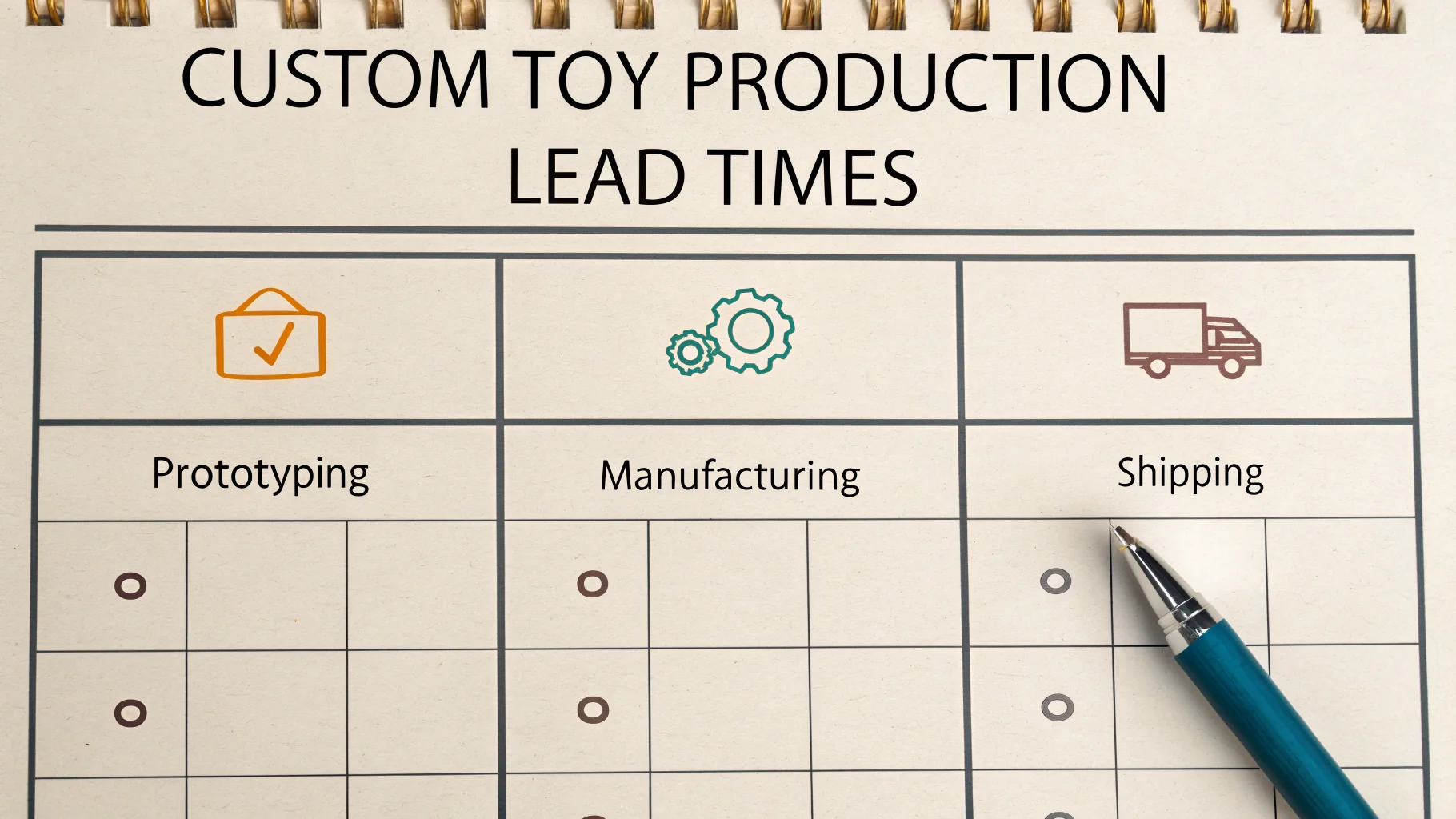
Time is money, and in manufacturing, timing is everything. I've seen promising products fail because they launched a month late, completely missing their market window. You need to think of the lead time not as a single number, but as a series of phases, each with its own potential for delays. Planning for this timeline is just as important as designing the product itself. A realistic schedule, with buffers built in, is your best defense against last-minute panic.
Phase 1: Prototyping and Refinement (10-20 Days)
After you submit your designs, the factory will create a physical sample. This process can take one to three weeks. This sample will be shipped to you for approval. If you need to make revisions, you'll have to account for the time to make a new sample. Clear communication and detailed feedback are key to keeping this phase short.
Phase 2: Mass Production (30-45 Days)
Once you approve the final prototype and place your bulk order, mass production begins. This is the longest phase. It includes sourcing all the raw materials, cutting and shaping the parts, sanding, painting, assembly, and final packaging. The exact time depends on your order quantity and the complexity of the toy.
Phase 3: Quality Control and Shipping (20-30+ Days)
Before the goods leave the factory, a final quality control inspection should be performed. After that, the goods are booked for shipping. Sea freight from China to North America or Europe typically takes 20-30 days on the water, plus a few extra days for customs clearance at both ends.
| Production Phase | Typical Duration | Asosiy tadbirlar |
|---|---|---|
| Prototiplash | 10 - 20 days | Sample creation, shipping, your review and approval. |
| Mass Production | 30 - 45 days | Material sourcing, CNC cutting, sanding, painting, assembly. |
| Shipping (Sea) | 20 - 30 days | Ocean transit time. Does not include customs clearance. |
| Total Estimated | 60 - 95 days | From final design approval to port of arrival. |
Chinese New Year has no significant impact on production schedules.Yolg'on
This is dangerously false. Chinese New Year is the single biggest disruption to the manufacturing calendar. Factories shut down completely for 2-4 weeks. You must plan for this by placing orders well in advance or expecting significant delays for any production happening between January and March.
Air freight is much faster but significantly more expensive than sea freight.To'g'ri
This is correct. Air freight can cut shipping time from a month to about a week, but the cost can be 5-10 times higher than sea freight. It's only viable for very small, high-value shipments or emergency situations.
Xulosa
Choosing the right wood, ensuring safety, understanding customization, and planning for costs and lead times are crucial for success. Master these elements, and you can effectively source high-quality toys from China.
Ma'lumotnomalar
[^1]: Explore the advantages of these hardwoods for durability and safety in children's toys.
[^2]: Learn about the critical safety standards and testing processes for toy manufacturing.
[^3]: Find out why using safe finishes is crucial for the health and safety of children.
[^4]: Learn how independent testing ensures compliance with safety standards.
[^5]: Explore how CNC technology allows for precision and complexity in toy design.
[^6]: Get insights into the production timeline to effectively plan your product launch.
