
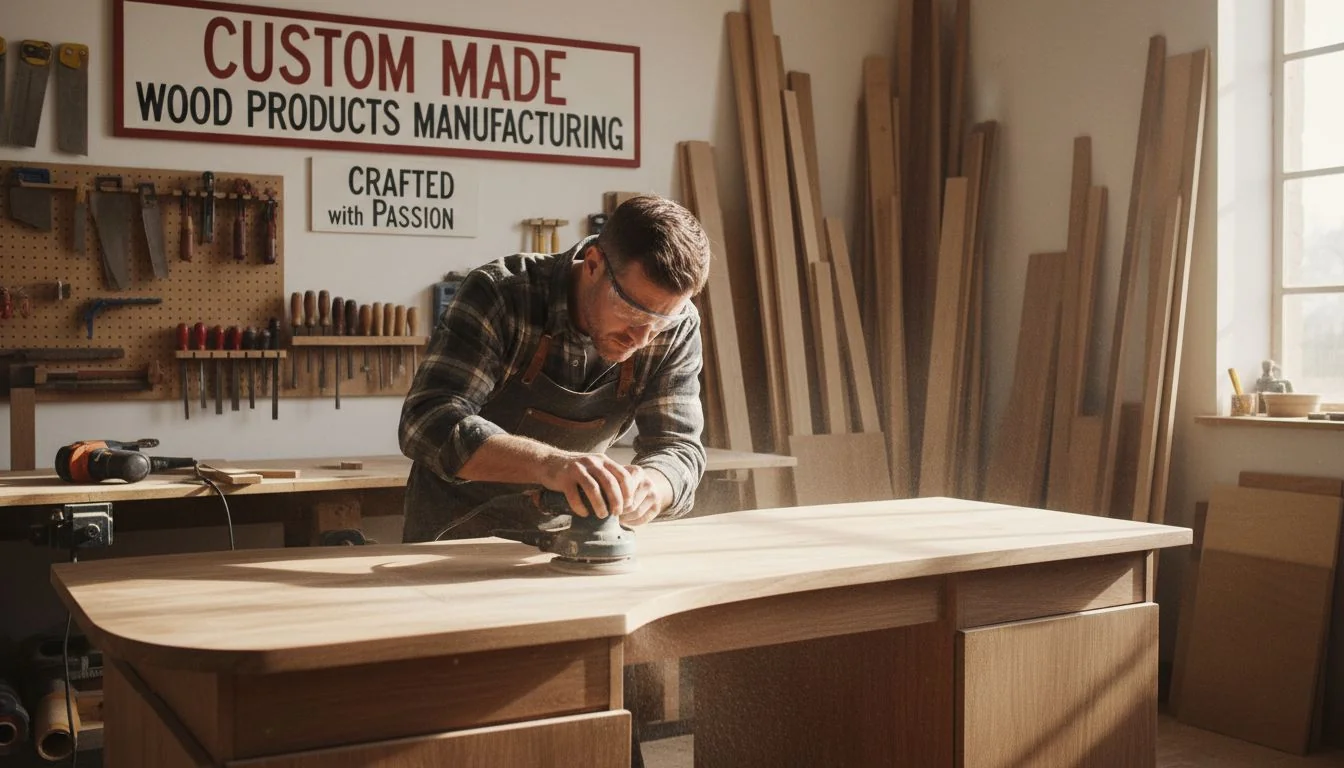
Sliter du med å gjøre ideen om treprodukt til virkelighet? Du bekymrer deg for å finne en god fabrikk, få riktig kvalitet og ikke kaste bort penger. Det føles som en stor risiko.
Nøkkelen til mestring spesialtilpasset treproduktproduksjon[^1] er en strukturert fem-trinns prosess: finne en kontrollert produsent, gi detaljerte tekniske skisser, velge riktig materiale for bulkproduksjon, implementere et strengt kvalitetsgarantisystem og godkjenne en perfekt pre-produksjonsprøve før masseproduksjon starter.
Du kjenner meg kanskje fra verden av sprøytestøping av plast. Men mange av prinsippene er de samme. Reisen min startet i en formfabrikk og vokste til et handelsselskap, og underveis har jeg ledet utallige produksjonsprosjekter, inkludert mange i treleketøysområdet. Leksjonene jeg lærte om presisjon, kvalitetskontroll og leverandørstyring gjelder direkte for tilpassede treprodukter. Jeg skal lede deg gjennom den nøyaktige prosessen vi bruker hos Moldle for å sikre suksess, fra å finne den rette partneren til å få det perfekte sluttproduktet i hendene. La oss bryte det ned.
Generer krav
Forest Stewardship Council (FSC) ble grunnlagt i 1993.ekte
FSC ble opprettet i 1993 som svar på bekymringer over global avskoging. Det gir en anerkjent standard for ansvarlig skogforvaltning.
Alle tresorter har samme svinnhastighet ved tørking.falsk
Ulike treslag krymper i forskjellig hastighet og i forskjellige retninger (tangensielt, radialt og langsgående). Dette er en kritisk faktor ved høypresisjons trebearbeiding.
Hvordan finner du en spesialtilpasset trevareprodusent i Kina?
Å lete etter en pålitelig produsent i Kina kan føles overveldende. Du ser tusenvis av oppføringer på nettet, men du hører skrekkhistorier om svindel og dårlig kvalitet, noe som gjør at du nøler med å fortsette.
For å finne en god produsent, bruk en blanding av strategier. Start på plattformer som Alibaba, men ikke stopp der. Delta på bransjemesser som Kantonmessen[^2] for å møte leverandører personlig. Viktigst av alt, utfør en grundig gjennomgang av alle potensielle partnere før du forplikter deg til noe.

Å finne den rette partneren er det mest kritiske første trinnet. Jeg har sett flotte design mislykkes på grunn av et dårlig fabrikkvalg. Ikke bare se på prisen. Se etter en ekte partner.
Overvåking av nettleverandører
When you're on a site like Alibaba, look past the professional photos. Check for "Verified Supplier" badges, but dig deeper. Ask for their business license and any quality certifications like ISO 9001 or, for wood, FSC. See how long they've been in business and check their transaction history if available. A good factory will be transparent and provide these documents easily. If they hesitate, it's a red flag for me.
Kraften til ansikt til ansikt
Hvis du kan, gå til en messe. Ingenting slår å holde et produkt i hånden og snakke med fabrikkeieren direkte. Du kan vurdere deres kvalitet og kommunikasjonsevner umiddelbart. Det er her jeg har funnet noen av mine beste langsiktige partnere.
Sourcing-agenter vs. direkte kontakt
Du kan også velge mellom å gå direkte eller bruke en innkjøpsagent. Her er en enkel oversikt:
| Nærme | Fordeler | Ulemper |
|---|---|---|
| Direkte til fabrikken | Høyere margin, mer kontroll | Mer arbeid, høyere risiko, språkbarriere |
| Bruke en agent | Sparer tid, lavere risiko, eksperthjelp | Lavere margin, mindre direkte kontroll |
For nybegynnere kan en agent være en sikker innsats. For erfarne designere som Jacky kan det å gå direkte være mer lønnsomt hvis du er villig til å styre prosessen tett.
Generer krav
Alibaba is the world's largest B2B e-commerce platform.ekte
Alibaba.com ble grunnlagt i 1999 og er en ledende plattform for global engroshandel, som forbinder millioner av kjøpere og leverandører over hele verden.
A 'Gold Supplier' på Alibaba har blitt fysisk inspisert av Alibaba-ansatte.falsk
The 'Gold Supplier' status is a paid premium membership. While it involves a verification check of the company's existence, the 'Verified Supplier' merket indikerer en mer grundig inspeksjon på stedet av et tredjepartsselskap.
Er enkle skisser nok for tilpassede treprodukter?
Du har en klar visjon for produktet ditt, men den enkle skissen din blir borte i oversettelsen. Den første prøven kommer feil tilbake, kaster bort tid og penger og forårsaker enorm frustrasjon.
utdragsavsnitt:
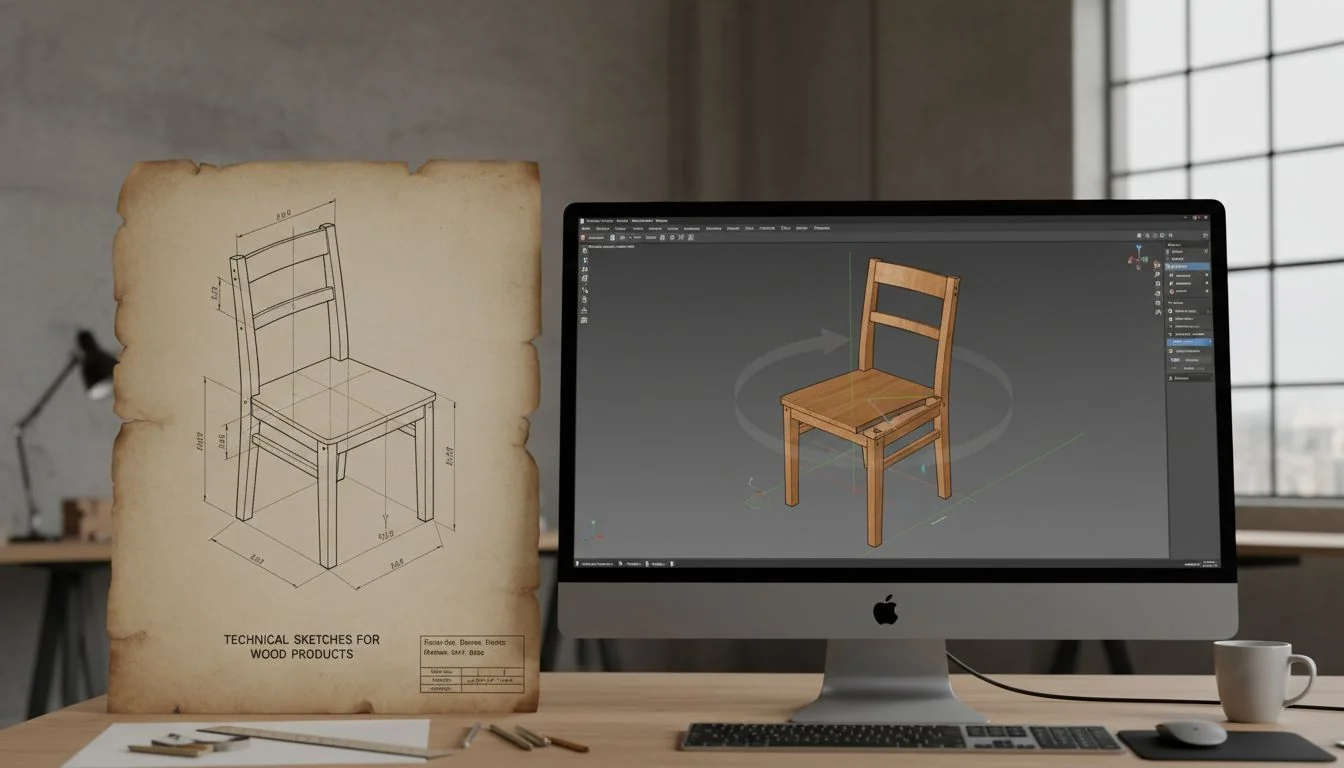
A simple sketch is a great starting point for discussion. However, for manufacturing, you must provide detailed technical drawings or CAD files. These files need to include precise dimensions, tolerances, material types, and finish specifications to prevent any misunderstanding and ensure accuracy.

In my experience, ambiguity is the enemy of manufacturing. The more detail you provide upfront, the smoother the process will be. This is just as true for wood as it is for a complex plastic mold.
From Sketch to Professional CAD
Don't worry if you can't create a perfect CAD file yourself. Many good manufacturers, including our team at Moldle, have engineers who can help. You provide the initial concept, sketches, and key requirements. Then, a sales engineer can work with you to create professional 2D and 3D drawings for your approval. This collaborative step ensures your design intent is perfectly captured before any wood is cut. It's a service that separates the great suppliers from the average ones.
Key Information for Your Drawing
Your technical drawing is a contract. It must be clear. Here are the essentials to include:
- Critical Dimensions: Length, width, height with clear units (mm or inches).
- Tolerances: How much can a dimension vary? For wood, +/- 0.5mm might be tight, while +/- 2mm could be acceptable. Be specific.
- Material: Don't just say "wood." Specify "Grade A Beech Wood, kiln-dried."
- Finish: Be precise. "Matte polyurethane lacquer, 2 coats" is much better than "clear coat."
- Grain Direction: For some aesthetic products, specifying the direction of the wood grain is important.
Generer krav
CAD stands for 'Computer-Assisted Design'.ekte
CAD software is used by architects, engineers, and designers to create precision 2D and 3D drawings and models.
All CAD file formats are interchangeable between all software.falsk
While there are neutral formats like STEP and IGES designed for interoperability, native file formats from software like SolidWorks (.sldprt) or AutoCAD (.dwg) are not always compatible with other systems without conversion.
How Do You Select the Right Wood for Bulk Production?
You chose a beautiful but expensive wood for your product. Now, your production cost is too high, and the material is hard to source consistently, putting your entire project in jeopardy.
Selecting the right wood for bulk production[^3] is a balance of four key factors: cost, aesthetics, durability, and manufacturability. For volume orders, focus on readily available and consistent woods like Beech, Rubberwood, or Pine. Always base your decision on physical samples, not just pictures.

The material you choose defines your product. It affects the look, the feel, the price, and the durability. When I was working on a line of wooden toys, we spent weeks testing different woods to find the perfect balance of safety, durability, and cost.
Common Woods for Custom Products
The choices can be confusing. Here is a simple table to help guide your decision for common custom products.
| Wood Type | Cost | Hardness/Durability | Best For… |
|---|---|---|---|
| Pine | Lav | Soft | Rustic furniture, crates, items to be painted |
| Beech | Medium | Hard | Children's toys, kitchen utensils, durable parts |
| Rubberwood | Low-Medium | Medium-Hard | Eco-friendly furniture, cutting boards |
| Oak | Høy | Very Hard | Premium furniture, flooring, high-end items |
| Walnut | Very High | Hard | Decorative items, luxury goods, veneers |
| MDF/Plywood | Very Low | Engineered | Painted items, cabinet backs, structural parts |
Think About Sustainability
For many markets, especially in Europe and North America, sustainability is not just a buzzword; it's a requirement. Ask your supplier if they can provide FSC (Forest Stewardship Council) certified wood. This proves the material comes from a responsibly managed forest. It can be a powerful selling point for your brand.
Generer krav
Janka hardness test measures the softness of wood.falsk
The Janka hardness test measures the resistance of a sample of wood to denting and wear. It measures the force required to embed an 11.28mm steel ball halfway into the wood. A higher number indicates harder wood.
Rubberwood is considered an eco-friendly material.ekte
Rubberwood is harvested from rubber trees that have completed their latex-producing cycle. Using it for furniture and other products makes use of wood that might otherwise be destroyed.
How Can You Guarantee Quality in Custom Wood Manufacturing?
You're thousands of miles away from the factory, feeling powerless. You can only hope they are building your product correctly, but hope is not a manufacturing strategy.
You guarantee quality with a system, not hope. This involves creating a clear quality control checklist[^4], approving a "golden sample," and scheduling inspections during and after production. A Final Random Inspection (FRI) before shipment is non-negotiable and protects your investment.

Quality is not something you inspect at the end; it's something you build into the process from the start. My background in precision molds taught me that if you don't define the standard, you can't enforce it. This is where my team's experienced technicians really shine.
Define Your Quality Standard
Before production, you and your supplier must agree on what is acceptable. Create a detailed QC checklist.
- Cosmetic Defects: What size of scratch, dent, or knot is acceptable? Be specific (e.g., "No knots larger than 5mm on visible surfaces").
- Structural Integrity: Joints must be secure with no gaps. The product must not wobble.
- Color & Finish: Color must match an approved Pantone number or physical sample. The finish must be even, with no drips or bubbles.
- Dimensions: Key dimensions must be within the tolerances you defined in your technical drawing.
The Inspection Process
I use a three-stage process:
- Pre-Production: You approve the final pre-production sample[^5]. This is your "golden sample" that the factory must match.
- In-Process Quality Control (IPQC): Someone checks the products as they are being made. This catches problems early before thousands of bad units are produced.
- Final Random Inspection (FRI): This is your final defense. Before you pay your final balance, an inspector checks a random portion of your shipment. They use your QC checklist to pass or fail the batch.
Generer krav
AQL stands for 'Acceptable Quality Limit'.ekte
AQL is a statistical method used for quality control inspections. It defines the maximum number of defective units that can be considered acceptable during a random sampling of a production lot.
AQL 2.5 means that every batch with more than 2.5% defects will be rejected.falsk
AQL 2.5 is a standard that means the buyer is willing to accept batches with up to 2.5% defects, on average, over the long term. A specific batch might be rejected even if it has fewer than 2.5% defects, depending on the sample size and number of defects found.
Why is the Sampling Stage So Critical for Custom Wood Products?
You're tempted to skip sampling to save a few hundred dollars and a couple of weeks. But this is a huge gamble that could lead to an entire shipment of unusable products.
Sampling is your only chance to physically hold and test your product before committing to a large order. It validates the manufacturer's ability to meet your standards for material, construction, dimensions, and finish. Approving a perfect sample is the most important milestone before mass production.

I never, ever skip the sampling stage. It is the single best investment you can make in your project. A sample is not just a product; it's a test of your supplier's understanding, their machinery, their materials, and their attention to detail. It's where you catch misunderstandings before they become five-figure mistakes. Our sales engineers work closely with clients during this stage to ensure their feedback is understood and implemented perfectly.
Types of Samples
There are a few different samples you might encounter:
- Mock-up Sample: A rough version, maybe not in the final material, just to check the size, shape, and basic function.
- Pre-Production Sample (PPS): This is the most important one. It must be made with the final materials, on the final machinery, with the final finish. This is the "golden sample" that you approve for mass production.
- Production Sample: A sample pulled from the actual mass production run to check for consistency against the PPS.
What to Check on Your Sample
When your PPS arrives, be methodical. Use a checklist.
- Measure Everything: Use digital calipers to check dimensions against your drawing.
- Check the Material: Does it look and feel like the wood you specified?
- Test the Finish: Is it smooth? Is the color correct? Is it durable?
- Test the Strength: Try to pull joints apart. Does it feel solid?
- Compare to Drawing: Put it side-by-side with your technical drawing. Does everything match?
Generer krav
The color of a wood sample can change over time.ekte
Wood is a natural material, and its color can change when exposed to UV light and oxygen. Lighter woods can darken, and darker woods can lighten over time. This is an important consideration for product consistency.
A pre-production sample is usually free of charge.falsk
Manufacturers almost always charge for pre-production samples. The cost covers materials and the labor to set up and create a single unit. However, this cost is often credited back to you if you proceed with a bulk order.
Konklusjon
Success with custom wood products comes from a clear, repeatable process. By vetting partners, providing details, and controlling quality at every step, you can confidently bring your designs to life.